I know I am not alone in Dead Poet’s Society playing a large part in my childhood/adolescence/adulthood. I have watched it many times. I cry every time. Hearing the excerpts of poetry inspired me to find out more about poetry. I was very fortunate in going to County Upper School, which had an excellent library, and, within 6 months of us starting there, a coin operated photocopier. This is 1993. This is before logging on to a school PC got you on to the interwebtubes to be able to search within seconds for poems. This took graft. I spent many happy lunchtimes reading whole volumes of poetry to find the full poems from which individual verses quoted in Dead Poet’s Society came from, specifically Ulysses by Alfred, Lord Tennyson (“Come, my friends. Tis not too late to seek a newer world…”) and Song of Myself by Walt Whitman (which is, absolutely, the source of “I sound my barbaric yawp over the rooftops of the world”).
Why mention this when I’ve spent 5 days in Northern France learning more about the history of World War I and II?
It’s because times like this to explore take me back to Ulysses. Ever since finding the full poem, from which the character Neil Perry reads the last 12 lines (ending “To strive, to seek, to find. And not to yield”), I hear lines of it in my head when exploring new places or learning new things. The full poem is around 75 lines and, during a particularly quiet time, I committed the whole thing to memory. I have had the photocopy that I originally took from that book in 1993 and have had a copy on the wall of every place I’ve lived since, and still now. I’ve reproduced the whole text at the end of this post to you can take a look as to why, perhaps. You may also hear Dame Judi Dench’s voice when reading it – she reads a lot of the poem at a particularly dramatic point in the James Bond film, Skyfall
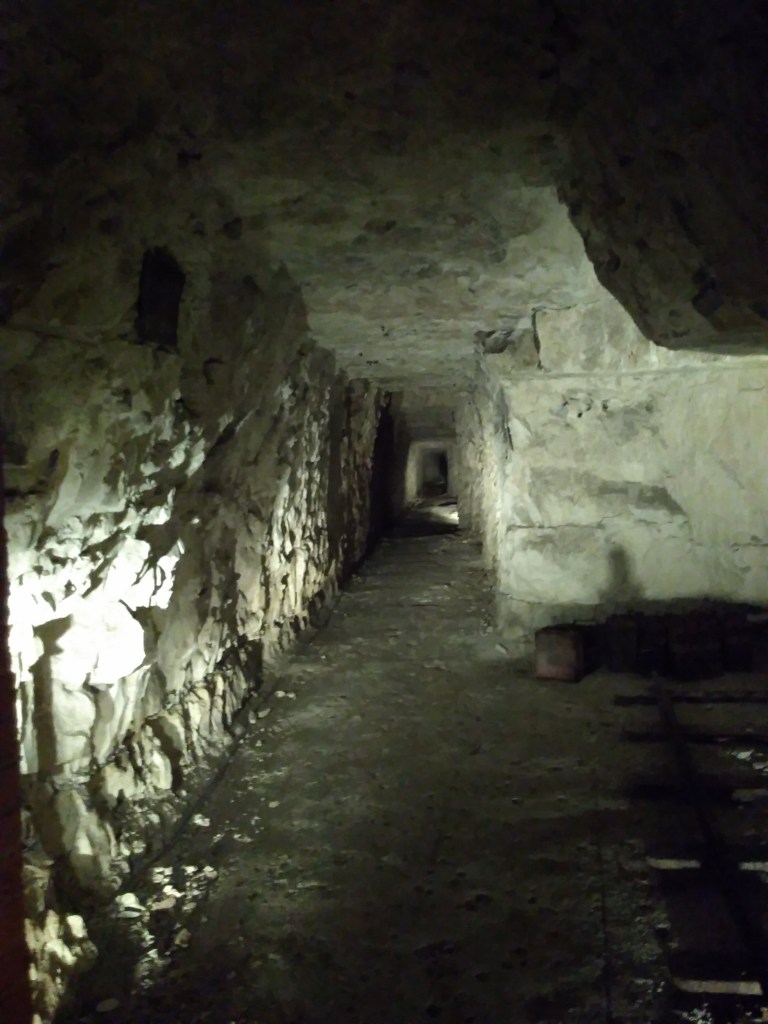
So, exploring, and Tennyson. Arras, where I stayed for 4 nights, is a lovely, welcoming town in a part of France I’d not had the chance to visit properly before. It has two former limestone quarries that can be seen as part of a tour – the first, underneath the second town square, was a quarry in medieval times. The tunnels were then used storage for merchants, bomb shelters and barracks. The second tour, about 15 minutes from the town centre, is now known as the Wellington Quarter – Wellington as in the capital of New Zealand. In WWI, many soldiers and retired miners from New Zealand were brought over in 1916-17 to tunnel under the German trenches, with a view to blowing them up. This plan was modified to dig out vast tunnels to hide thousands of Allied troops to build up numbers for a surprise offensive in 1917, the battle of Arras, which finally started to push back the German front line. Both are fascinating tours to do.
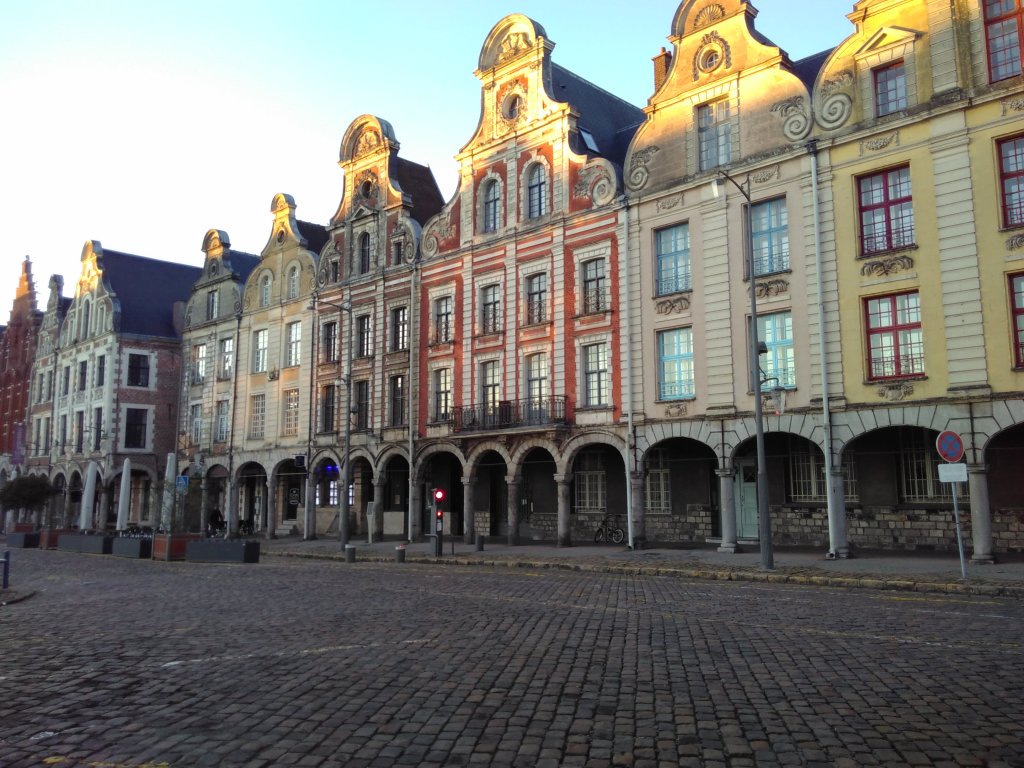
The Arras Museum of Fine Arts is an excellent collection alongside the town library, in a glorious building – the former Bishop’s residence (not too shabby) plus monastery. Alongside the cathedral, the art gallery, some other notable buildings and two Flemish-style main squares, the council of Arras had a choice to make after WWI – 80% of the buildings and infrastructure had been destroyed by shelling. Arras chose to rebuild historic and notable buildings as exact replicas and invest in modern infrastructure and residential buildings for existing returning citizens: Arras kept a very small population during WWI – the citizens of Arras, along with 8 million other French, Belgian and Dutch citizens in this part of Europe fled as refugees when shelling started. The German front line was as close as 4km away from Arras for most of WWI. Rebuilding so that the points of pride for the citizens of Arras could be seen again was important – the war had not taken away people’s identity or pride in their town and its history.
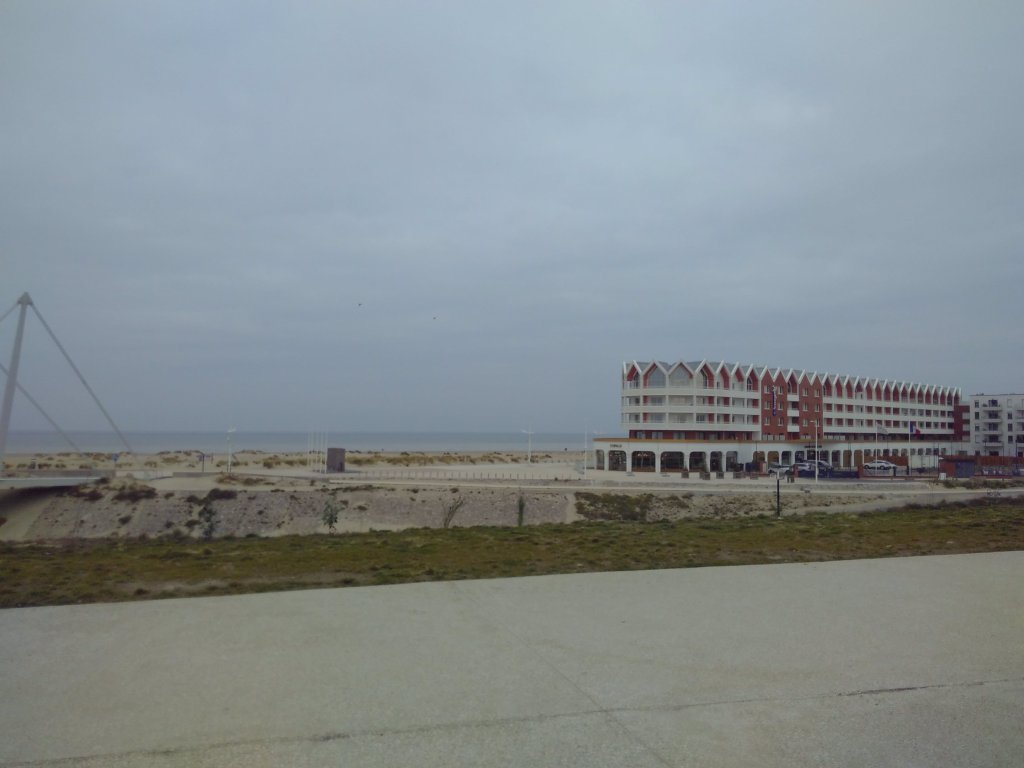
I went to nearby Dunkerque for a day, too. It was quite a day. The 1940 Museum Operation Dynamo is really impressive. It is set in a barracks that is part of the old city wall. It was where part of the French Navy was stationed and where the French retreat and rescue effort was co-ordinated. It was genuinely standing in a piece of history. The museum is excellent – many displays of local artifacts – abandoned stuff, stuff found on beaches or washed up, local diaries, oral histories of solders and citizens. Photos and film footage of an incredibly short amount of time – 9 days – when 338,000 Allied and French troops were evacuated off one stretch of beach. Standing on the roof of the wall, you can see the beach and how long and deep the tide line is. Soldiers had to build temporary jetties of abandoned vehicles to get to the bigger boats that could not get close, or walk 1.5 km out to sea when the tide was out, often at night. 5000 soldiers died on the beaches, from shelling from German fighter planes or from drowning or boats that were shelled as they were in harbour. The French and Allies did not originally coordinate intelligence or plans that both armies were caught in the German pincer movement and were both falling back to Dunkerque at the same time. The rescue plan was being put together as troops were amassing on the beach, named Operation Dynamo, as the British forces were coordinating their plan in the dynamo room of Dover Castle back in the UK. It was incredible to learn so much more about such a famous part of WWII in situ, with an excellent chronology and interpretive panels as well as well-curated displays. My Grandfather was one of the soldiers evacuated during those 9 days. I was very much a part of what I met on that Wednesday.
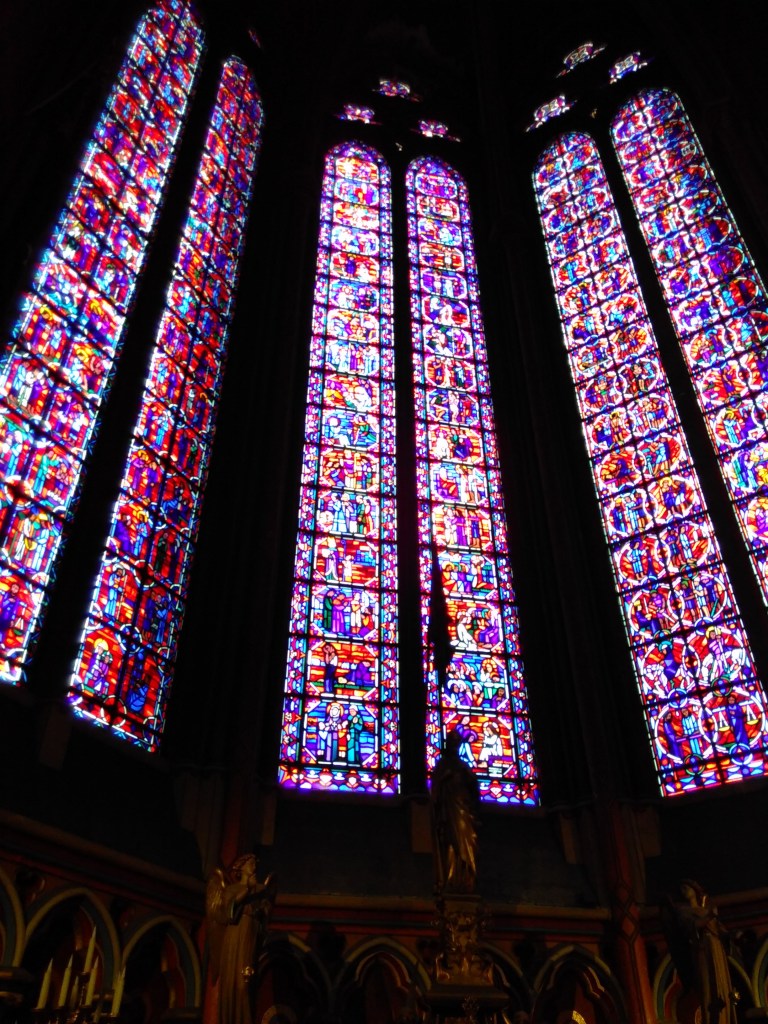
Amiens was the following day’s trip. I knew about the cathedral, which is an absolute medieval Gothic knock-out. One of the chapels is now dedicated to the soldiers of WWI, WWII and the fighters in the Resistance – a gorgeous stained-glass chapel, below. I didn’t know that Amiens is referred to as the French Venice – there is a section of town all canals and old houses – very lovely, too.
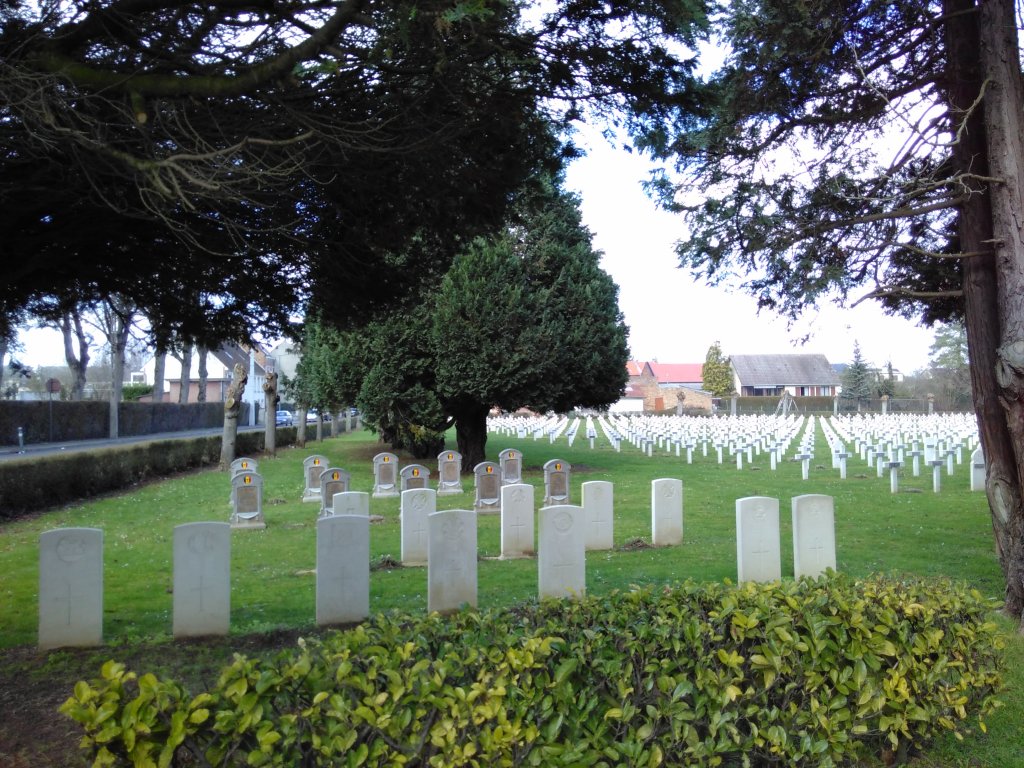
I also visited the first French National Mausoleum that I can remember going to. It had over 2,000 WWI graves of French soldiers. The French soldiers, as with the Allied troops from the Commonwealth, came from many French territories and colonial settlements. It was very moving to see the different shaped graves for soldiers from Northern African and Indo-French countries, and references to soldiers from French battalions, Zoaves soldiers, one Jewish soldier and the French Foreign Legion. Also buried in this cemetery are 9 Belgian and 12 British soldiers from WWI, each with their national war gravestones. I’ve recently become a volunteer for the Commonwealth War Graves Commission and check on war gravestones in Hull. It never ceases to move me to walk in war cemeteries, no matter where they are.
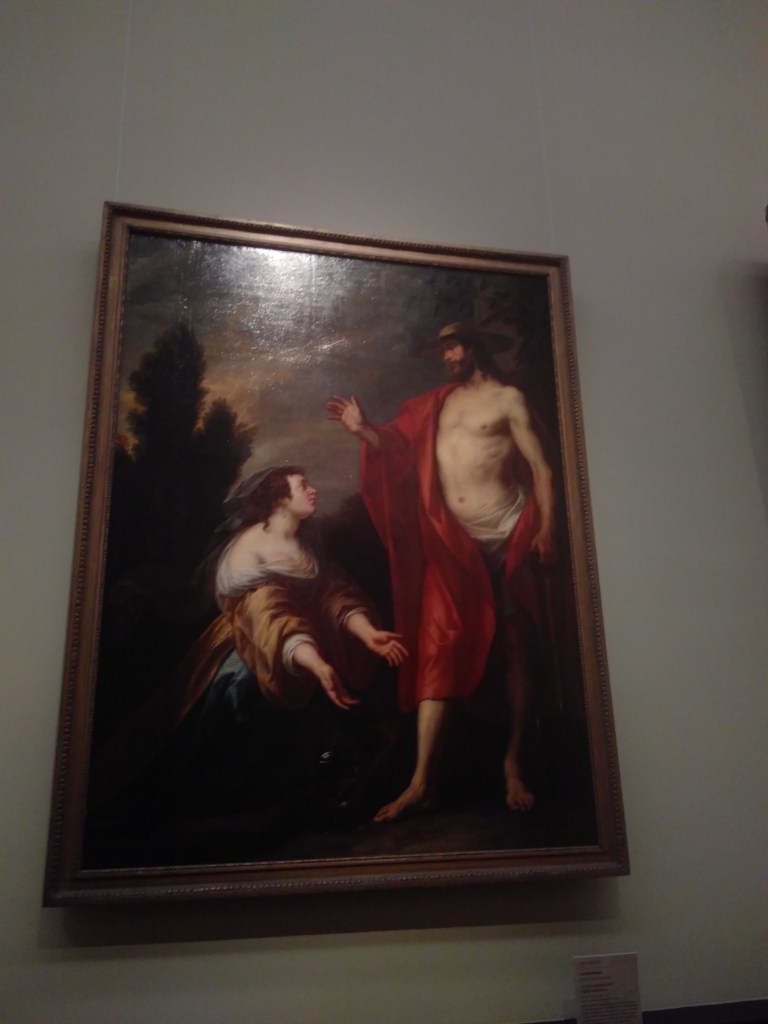
The Musee Picardie was one of the first French museums – designed and built for the purpose, starting with the acquisition of ancient Egyptian artifacts, including a Mummy that has been restored and just put back on display. Even more impressive was the Roman collection – Amiens was a significant Roman settlement and the spoils found under old streets and car parks is really impressive. The art collection in the museum features world-renowned artists and paintings, as well as showcasing local fine art. I would definitely recommend it, if only to see Jesus sporting this rather fine hat, having surprised Mary Magdalen in her posh frock on the way to Mecca Bingo (thanks, J).
Last day with a final run around Arras, and a day in Paris – the Cinematheque, specifically, for the history of spy films and a showing of Fritz Lang’s 1953 film The Last Hand. I didn’t know any of Lang’s espionage/double-cross films and this was excellent – there was a heartfelt round of applause at the end of the screening. The exhibition was fantastic too – not just about the films and story-lines, but technology (real-life as well as film fiction tech), storyboards, real-life vs. movie spying – particularly during the Cold War – lots to learn and see
I was originally going to be in Italy this week but the day before the journey, trains were cancelled due to strike action in France. Up the workers! I was happy to improvise a plan instead and see some new and unexpected experiences – cutting down some of that untravell’d world, one train a at time . . .
Ulysses by Alfred, Lord Tennyson
It little profits that an idle king,
By this still hearth, among these barren crags,
Match’d with an aged wife, I mete and dole
Unequal laws unto a savage race,
That hoard, and sleep, and feed, and know not me.
I cannot rest from travel: I will drink
Life to the lees: All times I have enjoy’d
Greatly, have suffer’d greatly, both with those
That loved me, and alone, on shore, and when
Thro’ scudding drifts the rainy Hyades
Vext the dim sea: I am become a name;
For always roaming with a hungry heart
Much have I seen and known; cities of men
And manners, climates, councils, governments,
Myself not least, but honour’d of them all;
And drunk delight of battle with my peers,
Far on the ringing plains of windy Troy.
I am a part of all that I have met;
Yet all experience is an arch wherethro’
Gleams that untravell’d world whose margin fades
For ever and forever when I move.
How dull it is to pause, to make an end,
To rust unburnish’d, not to shine in use!
As tho’ to breathe were life! Life piled on life
Were all too little, and of one to me
Little remains: but every hour is saved
From that eternal silence, something more,
A bringer of new things; and vile it were
For some three suns to store and hoard myself,
And this gray spirit yearning in desire
To follow knowledge like a sinking star,
Beyond the utmost bound of human thought.
This is my son, mine own Telemachus,
To whom I leave the sceptre and the isle,—
Well-loved of me, discerning to fulfil
This labour, by slow prudence to make mild
A rugged people, and thro’ soft degrees
Subdue them to the useful and the good.
Most blameless is he, centred in the sphere
Of common duties, decent not to fail
In offices of tenderness, and pay
Meet adoration to my household gods,
When I am gone. He works his work, I mine.
There lies the port; the vessel puffs her sail:
There gloom the dark, broad seas. My mariners,
Souls that have toil’d, and wrought, and thought with me—
That ever with a frolic welcome took
The thunder and the sunshine, and opposed
Free hearts, free foreheads—you and I are old;
Old age hath yet his honour and his toil;
Death closes all: but something ere the end,
Some work of noble note, may yet be done,
Not unbecoming men that strove with Gods.
The lights begin to twinkle from the rocks:
The long day wanes: the slow moon climbs: the deep
Moans round with many voices. Come, my friends,
‘T is not too late to seek a newer world.
Push off, and sitting well in order smite
The sounding furrows; for my purpose holds
To sail beyond the sunset, and the baths
Of all the western stars, until I die.
It may be that the gulfs will wash us down:
It may be we shall touch the Happy Isles,
And see the great Achilles, whom we knew.
Tho’ much is taken, much abides; and tho’
We are not now that strength which in old days
Moved earth and heaven, that which we are, we are;
One equal temper of heroic hearts,
Made weak by time and fate, but strong in will
To strive, to seek, to find, and not to yield
 All the punks are pushing fifty years and are hardly feared