Last steps in German were Berlin in 2017. This trip to Dresden in October was a proper treat and quite an insight in to a prosperous city in eastern Germany with a super-interesting history.
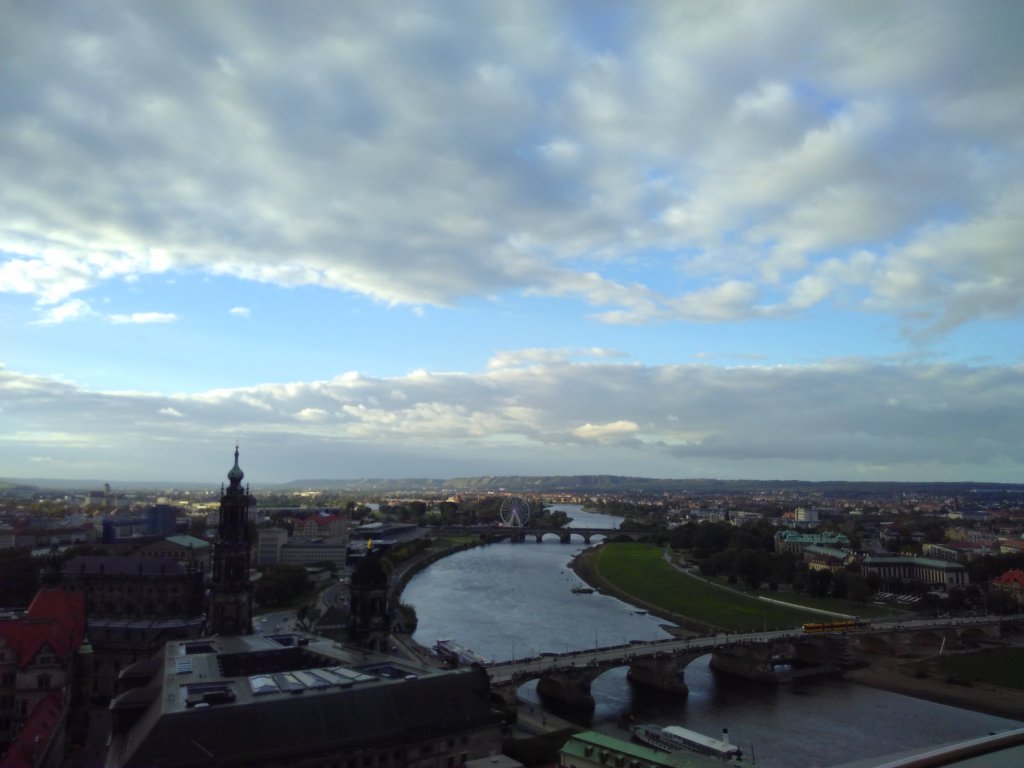
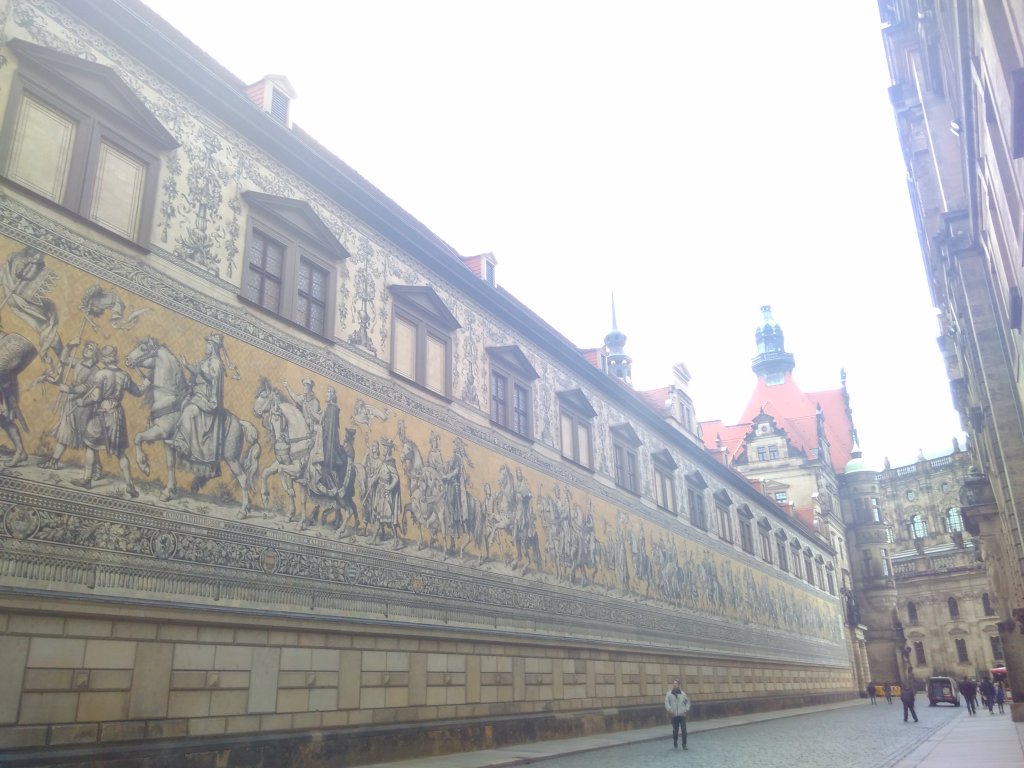
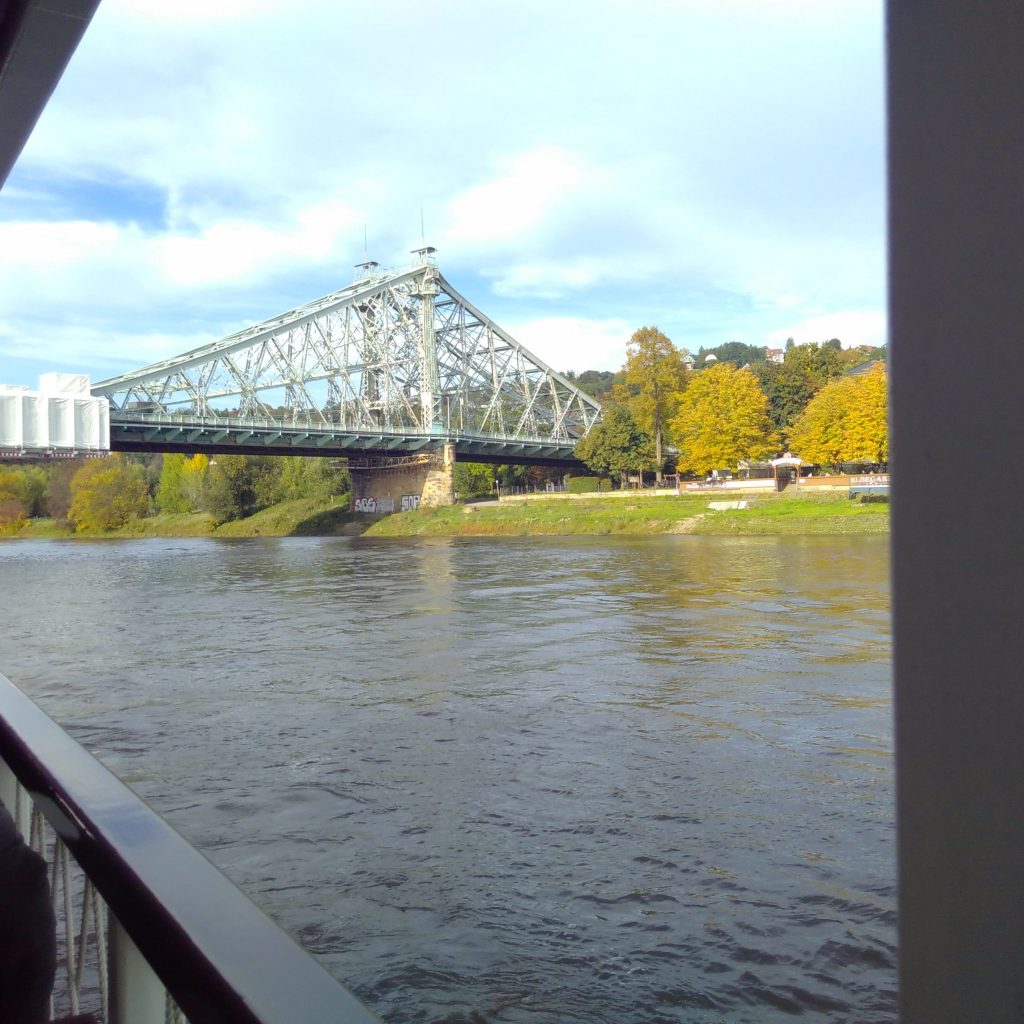
Dresden has excellent museums – I would definitely recommend the Transport Museum (the back wall of which is photographed above with this stunning mural), the Neue Meister art gallery and the Albertinum art gallery, the German Hygeine museum, the city history museum and the view from the tower of the Frauen Kirche. There are boat cruises to see the buildings of the city and the bridges. There are two funicular (one a Schwebebahn or hanging monorail, like Wuppertal but much shorter.
It took some time to get there. We set off on the Eurostar to Brussels on Saturday morning. On reaching Brussels, there had been an issue on the high speed line into Germany so we had to get regional trains an alternative – and longer- route into Germany. It meant going via Aachen, an old friend – my first trip to Germany with J was to Aachen. We bought some lunch from the station and sat out in the square, in front of the hotel where we stayed in 2008 (?) – you’ll be amazed to hear it is called Hotel am Bahnhof. It looks the same – a 1970s wonder, although from the website, the bathrooms have perhaps had a lick of paint. We took photos of my lovely North Yorkshire Moors Railway backpack in action then carried on to Cologne then Frankfurt (am Main). The train from Frankfurt was a service around 2 hours later than planned, so an expected arrival to Dresden of 23.30. However there was further disruption along the line and also waiting at Leipzig station as the last service of the night to Dresden. We rolled into the hotel at 1 am. So glad to have booked a Nobby* Ibis hotel with 24 hour reception!
Dresden over the next 4 days proper was a real delight. After finding bearings of the 1950s and more recent shopping streets around the station, it settled in to rebuild Baroque buildings and a market in the old town centre for German Re-unification weekend. There was so much to explore in the older half of the city, let alone stuff to the north of the city.
After a visit to the Dresden City Museum (we were, once again, the last people to leave at closing time – there is never enough time in museums!), we wandered down the street back towards the market and went in to a lovely bag, hats and other crafted goods shop. The owner was a brill chap who had lived for a while – around 5 years – in south Wales and travelled a lot through the UK. He has suppliers in the UK but is finding the red tape and tariffs after Brexit unbearable and instead is setting up with an Irish company for stock he is currently getting from the UK. He was asking us, politely and earnestly, why the UK had voted for Brexit. We are still at a loss, we tried to explain.
Food on the first night was to the local brewery, pork knuckle and sauerkraut-type place. I was back in Germany and in rapture.
I took the opportunity where possible to practice some German again, reading texts in museums in German, then English, to practice, and speaking when possible. We went to Kraftwerk Mitte, the former power station in Dresden, now a museum as well as workshop and theatre space. It’s a gorgeous complex of buildings and the museum has so much going on. The power station ceased operation in the last half of the 20th century and the workshops and exhibit rooms remain the hangout of previous employees – wonderful old boys who come down to maintain machines and exhibits. We were speaking to a local chap who looked to be in his 70s or even 80s. Thick Dresden accent, very polite and speaking carefully until his enthusiasm got the better of him and his speed picked up, telling us about the transformers and cable works in Dresden. He heard my accent and asked if I was Dutch, which was a compliment – my accent wasn’t completely off! The transformers for the tram lines were particular impressive – huge globes of glass and wires. I do not have a lot of technical German (and still, sadly, don’t but learned a lot of vocabulary in the museum); I was just about following him, with the visual aids of the museum, and appreciated his passion and time to explain things.
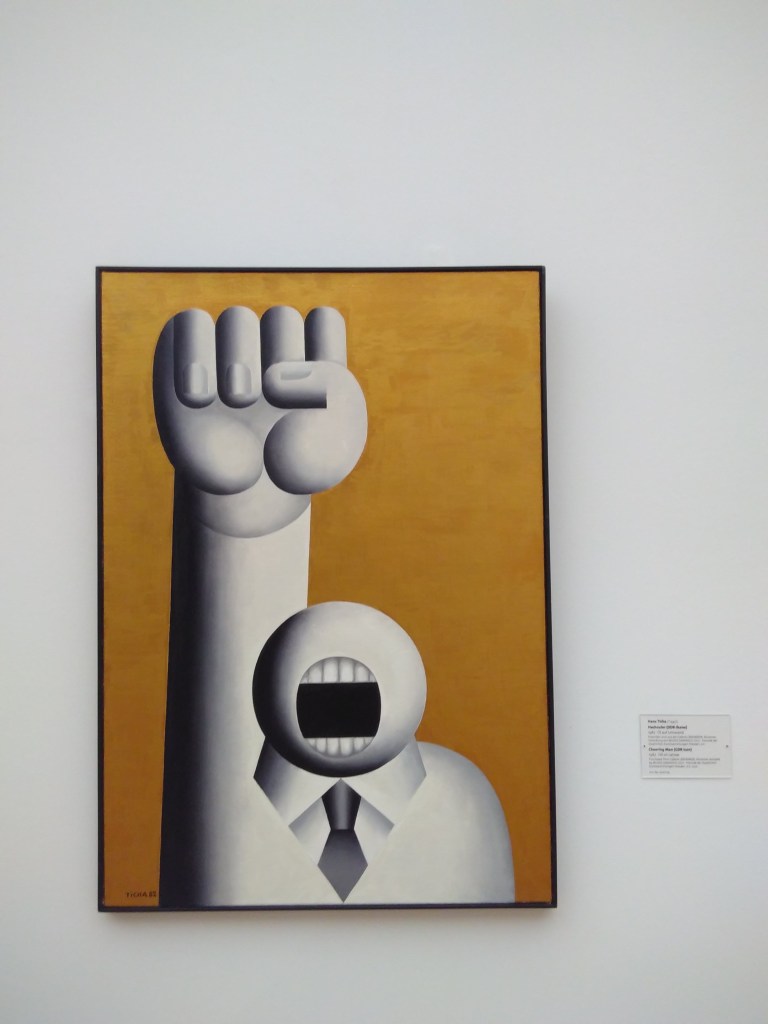
The Albertinum art gallery had some amazing pictures, including some Otto Dix that I liked – loved, actually. And a hefty line in proper socialist art, such as the Hans Ticha ‘Cheering Man’, above. But much more than that – Dutch Masters, German Realist art, French Impressionism, a van Gogh, post-Expressionist art, 21st Century working artists works bought and put straight on display. An excellent collection and very thought provoking. I was there while a school trip party was there – adolescents who were there because they had to be there, but after an hour or so, everyone was in front on a painting or sculpture that had caught their eye and people were really thinking about them. That was wonderful to be around.
Apart from all that, and the German Hygiene Museum – love a history of medicine museum – Dresden is a thoroughly lovely place just to walk around and take in. There is a lot to go back for and a lot more to explore.
Then it was onwards to Prague. Ahoj!
 All the punks are pushing fifty years and are hardly feared