Even though I really don’t like mustard. I’m in Dijon! It’s very lovely.
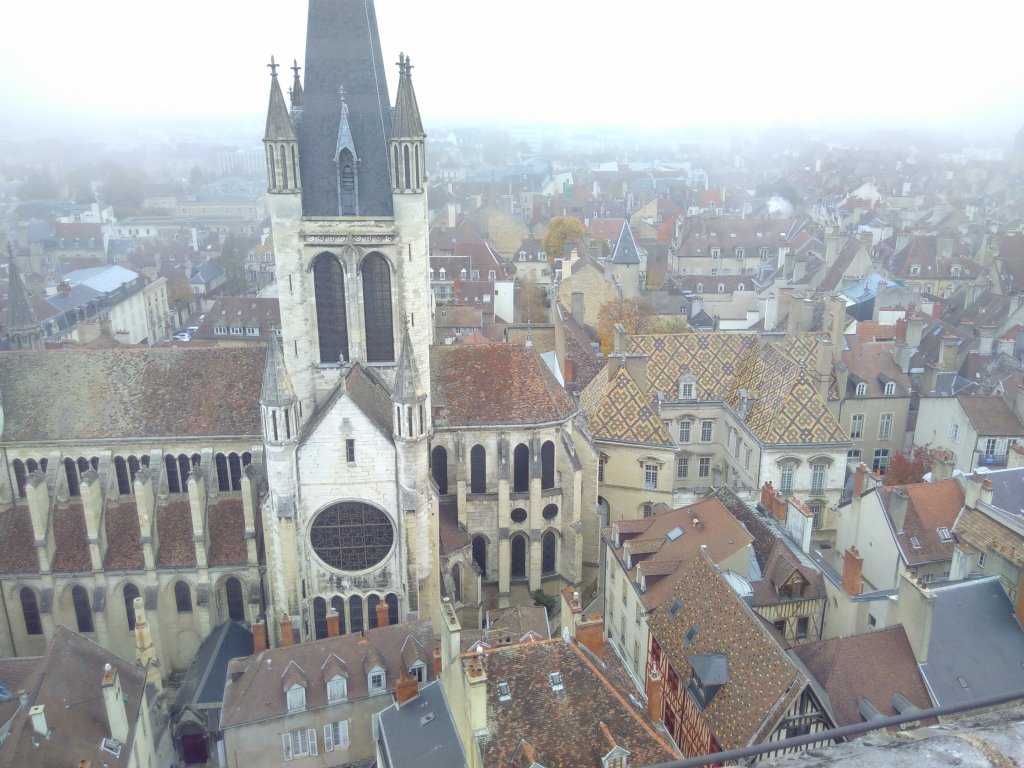
It’s a small city – a friendly one, proud of its history, heritage and overall contribution to gastronomy. Dijon is in Burgandy so there is wine as well as good food on offer. And cultural heritage to boot.
As described in one of the museums, there has been a settlement in Dijon since the Iron Age; then a Roman town, then a principal town that grew in wealth and stature as it was traded between invading peoples and traded in marriages. It includes links with Flanders (thorugh marraige to Eleanor of Flanders) as well as the Medici Family for formal ties to Northern Italy, part of various Dukedoms until Burgundy became part of the Kingdon of France, when this was set up proper in the 17th Century.
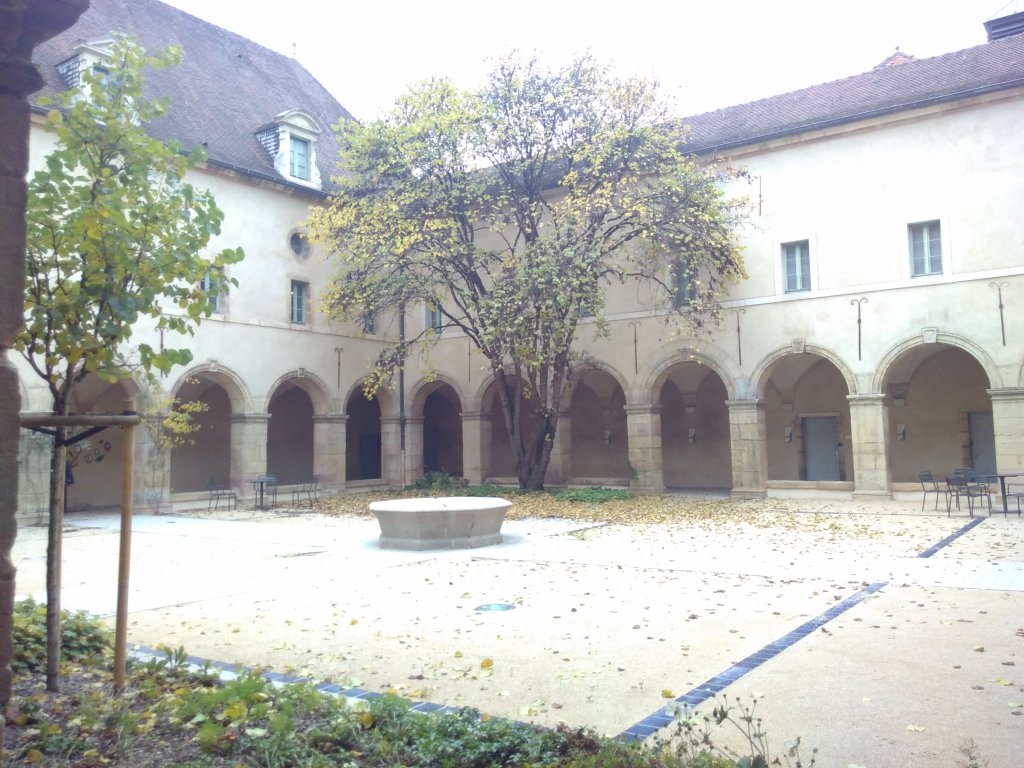
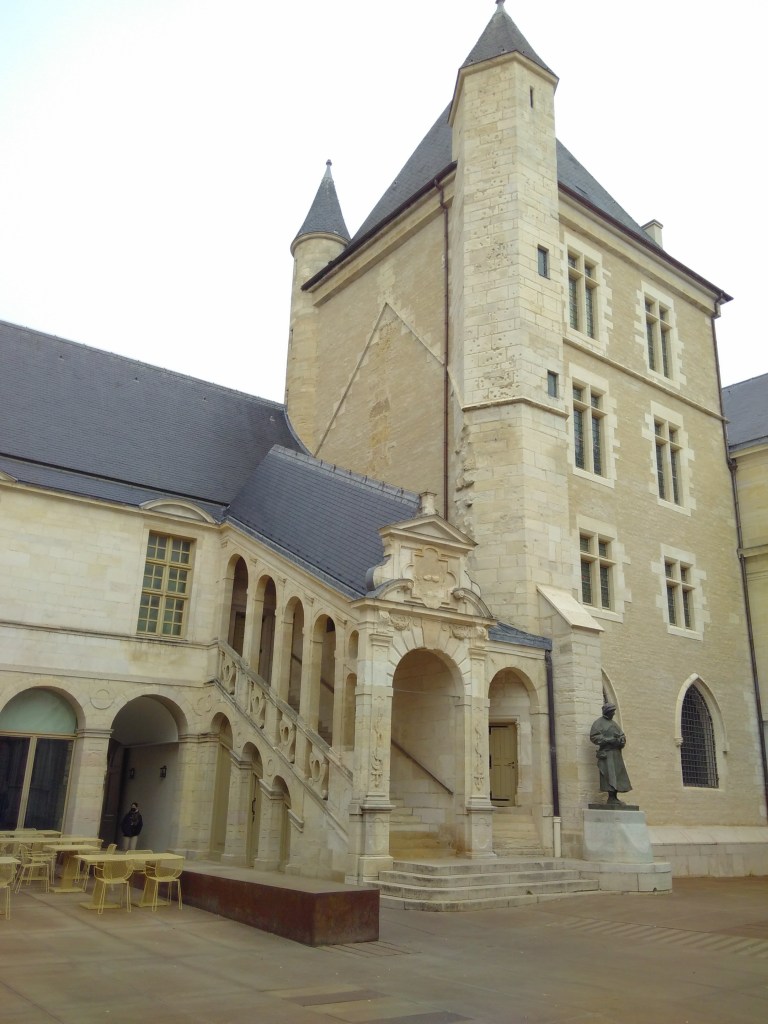
It is home of timber-framed houses, several huge churches, monestaries and abbeys; two of the town museums are houses in a former monestry and abbey each, and are very lovely. The Fine Art museum (of 47 rooms and 5.5 hours worth of visit today) is housed in the former Ducal Palace, which is also home now to part of the Town Hall, including an excellent fresco of the Universal Bill of Human Rights painted in the 19th Century.
I’ve enjoyed wandering around Dijon and visiting its museums, following the owl trail – there is a small carved owl in the side of the Church of Notre Dame. The reason why it is there has been lost over time, but I have bought a cartoon book to find out more from the Life of Burgundy museum. It is now a good-luck charm – you touch the owl with your left hand and think good throughts, and owl magic and luck will come to you. Or, more vividly, the sight of people touching the side of a building, remembering there is a still a pandemic going on, and immediately digging out the hand sanitizer. Being fully sanitized is good luck in itself, so clearly there is something to the owl.
All the local museums that are run by the city of Dijon are free entry – and there are 6 local museums. This is impressive when you consider the size and age of most of the museums – at least 4 are houses in buildings that are 300+ years old.
There are a lot of benefits to this, not just fiscal for locals and visitors alike. On Wednesday afternoon, I went to the Archeological Museum, based in a former monestry, which has a pre-historic section as then progresses from Roman onwards. There were quite a few families when I got there (just after school hours – French schools start and finish earlier than in the UK) – quite a few of the children commented that this is where they always go on a Wednesday afternoon – and parents saying (quite rightly) that there is always something new to learn. That was quite lovely. There is a temporary exhibition at this museum about tablewear and pottery in Dijon through time – properly interesting stuff and really well curated so that you can learn about the pottery, where is was made (or traded with), how it changed from the era before and included some family stories to help set things in context.
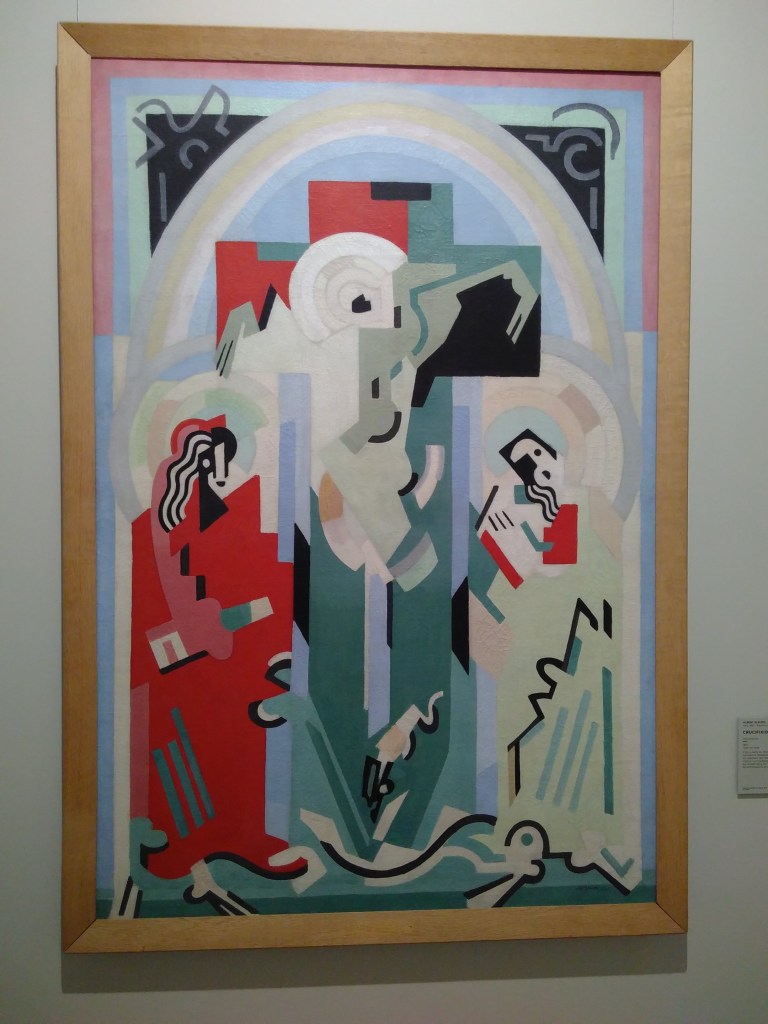
The Fine Art museum, as referenced above, it an extenstive collection starting from stuff pinched from other countries (Egypt and Greece particularly), moving to how art from antiquity inspired art partiuclarly pre-Renassaince. There was a lot of 11-15th Century pieces, not just Italian church art but church art from across Western Europe. Then the Renaissance (thank goodness) and then rooms for each major movement from the 16th century onwards. The museum start with many scenes of Jesus, and ends with a 20th Century version too. It certainly made me think.
Dijon has a good feel to it – there is excellent public transport, including a new tram system, parks for running and as breathing space, cinemas, museums, two theatres, and a very reaosnable cost of living, with lots of local produce available. There are some cycling maps in the apartments where I’m staying – definitely worth heading out on two wheels round these parts, too.
Tomorrow – Paris. And art!
 All the punks are pushing fifty years and are hardly feared