Bologna has 36km of portici. You know, portici.
Yes, this is a moment where I become all snobbish and use the Italian word. We do have the word ‘porticos’ but for some reason, this only makes me think of an archway, rather than an entire covered footway, like an arcade or a row in a cloiser.
Anyway, portici. Bologna is the city with the most portici. They are noticeably everywhere – all main pavements are covered walkways and a lot of minor doorways too. It makes for a lot of elegant shop fronts and tables outside cafés and must be so lovely and cool in summer.
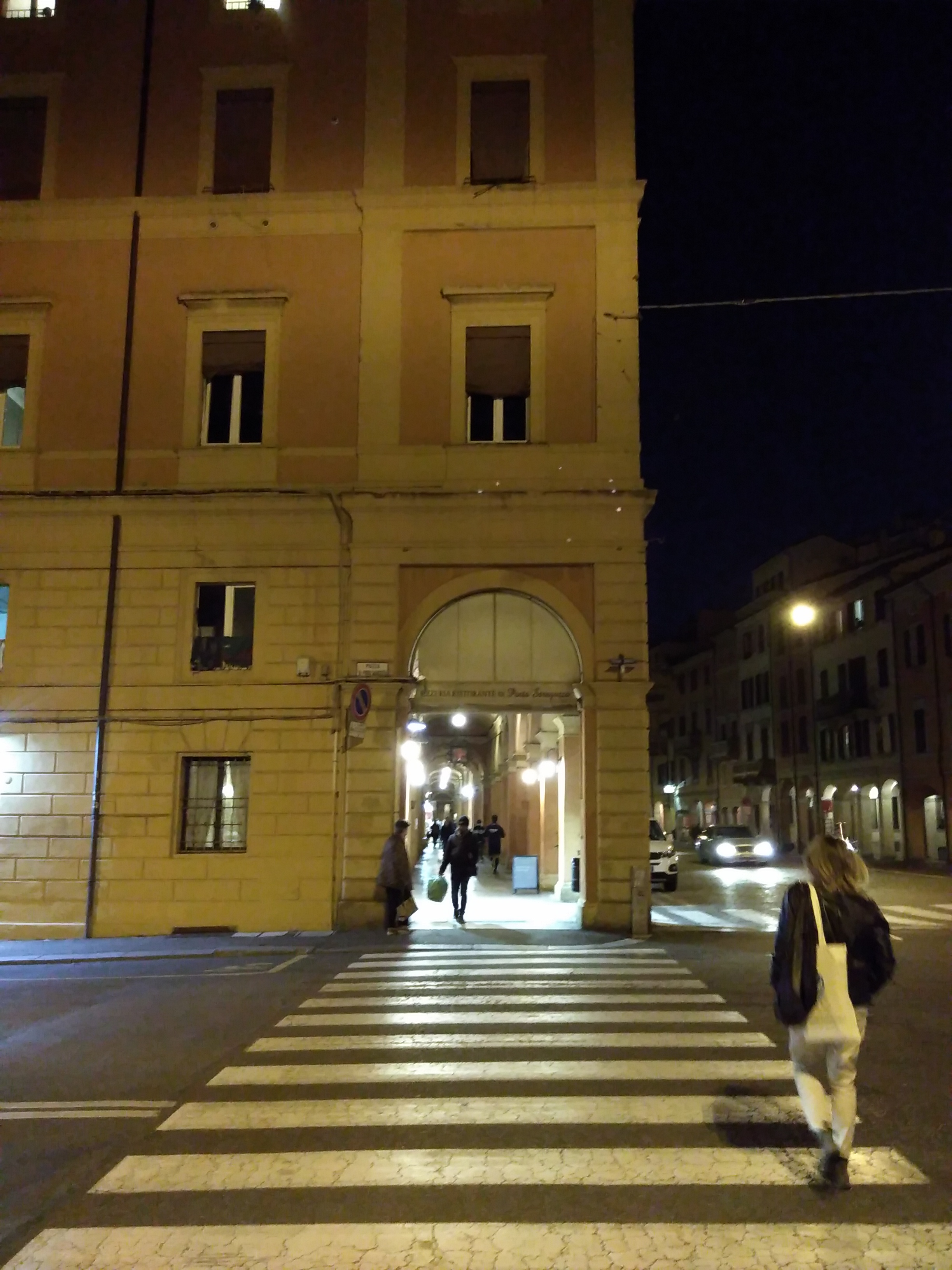
A typical portico.
Of course, this isn’t all I’ve learned in Bologna. As well as being a gastronomic centre of the universe, Bologna has a few other tricks up its sleeve. It is a modern-day centre of industry and commerce, centred around hundreds of small- and medium-sized companies based in and around Bologna. There is an excellent Industrial Heritage museum, which was my first stop of the day.
In a super piece of recycling, it’s based in an old brick works – Bologna first harnessed the power of water in the 16th century and progressed from using water for canals and to power water mills, to steam and cheap electricity.
The ground floor of the museum is mostly based in the central chamber of the old brick kiln – a huge 18-chamber tunnel that now houses the history of the industrial revolution in Bologna, which here was a combination of local entrepreneurs with foresight to insist on investment in technical education and high-quality manufacturing, and the local authority getting together the nous to recognise its local strengths and invest in local industry.
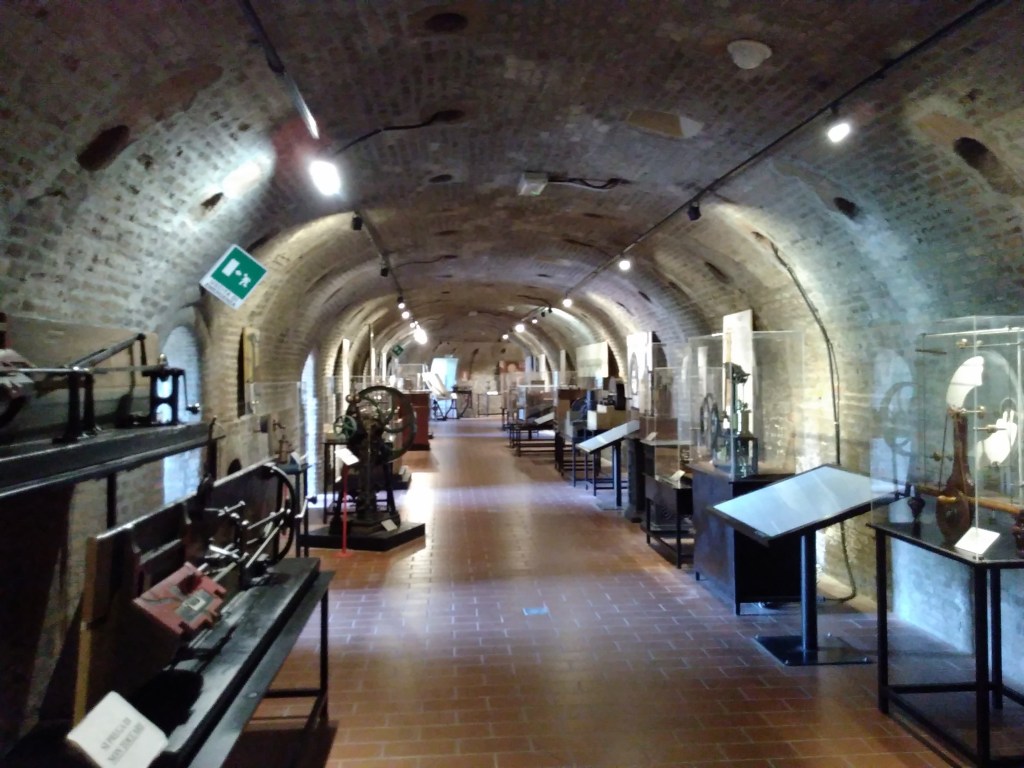
I won’t share the two pages of notes I took, suffice to say that I spent the whole morning here; there was a temporary exhibition about local women in industry, and thank goodness they were. Not only a source of labour to fill shortages in the 1940s, even before then, women were seen a reliable, precise workers and given their own opportunities in the larger local companies, particular Ducati and Weber. There was a technical college for women, which merged with the local technical school in the 1960s and at some points, women have been 70% of the local technical workforce. They were union organisers and members of the Resistance; there was a short documentary made by a local filmmaker with a historian from the University of Bologna. One of the women interviewed was a Ducati worker and union organiser; she remembers when Mussolini visited the factory and asked an otherwise adoring, or at least compliant, crowd if they had enough bread – the question being, ‘how wonderful am I to provide for you all?’. She dared shout out ‘no’ and wondered what all the fuss was about when she was arrested and interrogated. She said she could only tell the truth, even with the personal cost.
The documentary is called ‘We don’t have fear’. They absolutely did not.
What else? I went to the main art gallery, the Pinacoteca, which is full of art donated to the University and kept in a national collection; most of the art is religious (Christian) art and was kept safely, mostly hidden in a few secluded collections, in the 1790s, when Napoleon repressed religion in Italy, and depictions of holy scenes. I’ve walked through the rooms of medieval to Renaissance art in other museums but the progression in Italian art is something specific and quite special – by the time Titan comes along, the paintings, reflecting the style of art starting to emerge at the time, are dramatic, full of realism as to how people are depicted, capturing the drama and energy of a scene. It was a great way to end the visit – depictions of the victory of Samson, Paul on the road to Damascus, Jesus clearing the temple – excellent.
A final highlight of the day is the Old Operating Theatre. It’s a fairly famous one, not as renowned as the one in Padova (the original and, for many, the best), but considerably posher than its counterpart in London, for example. I’ve not seen this much carved wood, well, hardly ever, let alone in a place where anatomy lessons were given through the medium of autopsy:
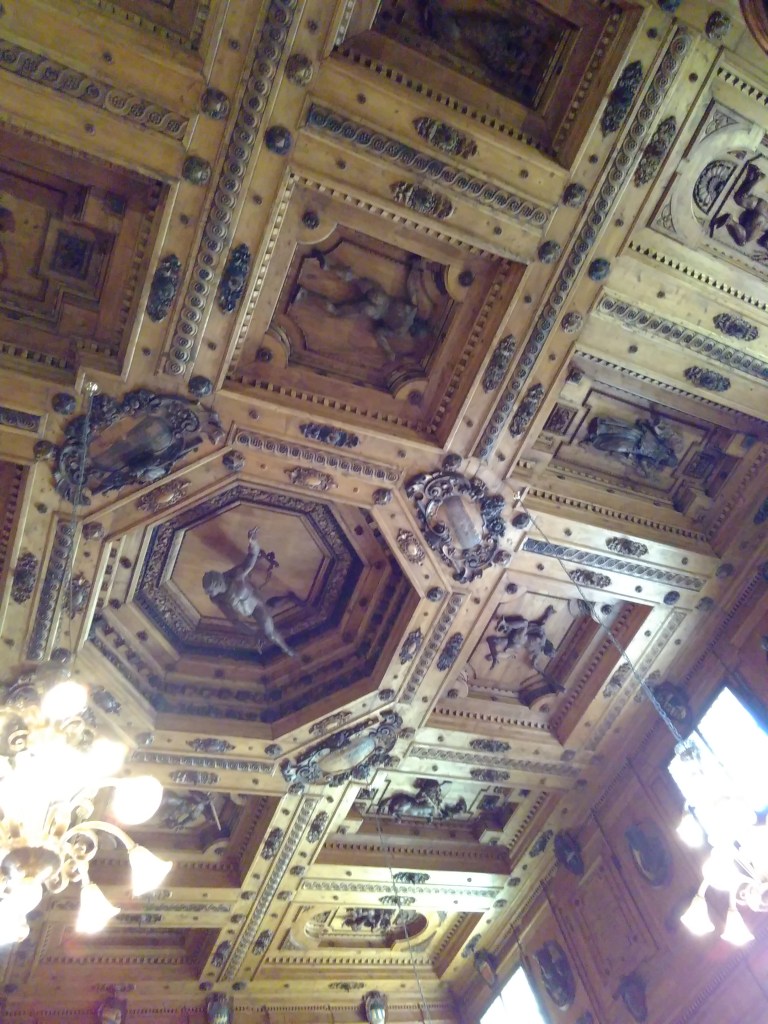
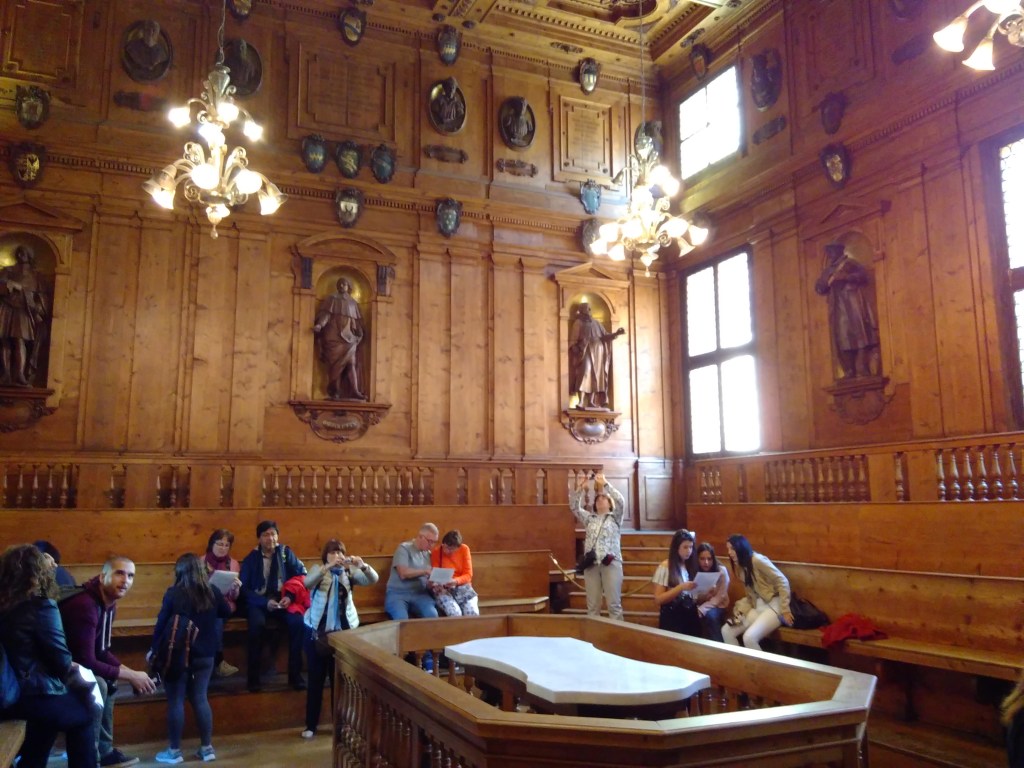
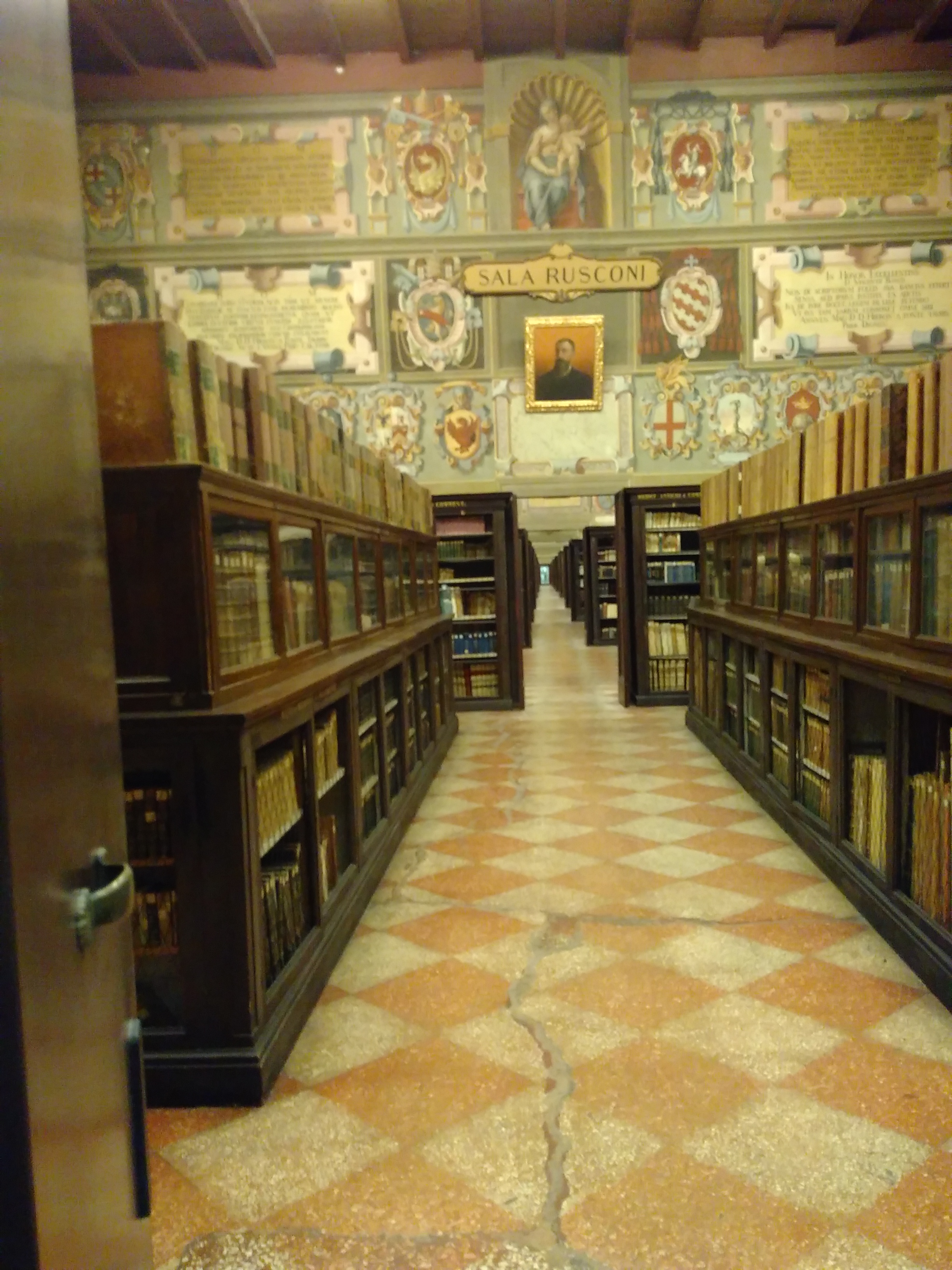
The building used to be the hospital; it then became part of the University and the cloister was turned in to the library. The library is not open to the public, it being a working, serious library, still, but you can visit the area around the Old Operating Theatre, and you are treated to a view of the old classrooms, now used as storage for some of the older items in the library:
 All the punks are pushing fifty years and are hardly feared