I spent the first part of this week in Toulouse. It’s a lovely city – small, friendly, proud of its history and a welcoming place. I associated it with rugby, a university and Airbus before I went and whilst these parts are important in Toulouse, there is a lot more on offer.
Firstly, the bed and breakfast I stayed in was a treat. It was the granny flat at the back of the owners’ property, giving me freedom of a small apartment (including kitchenette and washing machine) and breakfast – being breakfast that they put in your kitchenette the evening before, so that you can have breakfast whenever you wish in the morning. They were lovely people – genuinely interested in your stay, so helpful and generous – giving guests a table in their garden so that you can enjoy breakfast outside, and even being so thoughtful as to bring in the washing that I’d hung on the line in the morning when it was 30 degrees outside; however, I had not anticipated the thunderstorm later that afternoon.
Secondly, and I’m sure much more interesting to you, Toulouse:
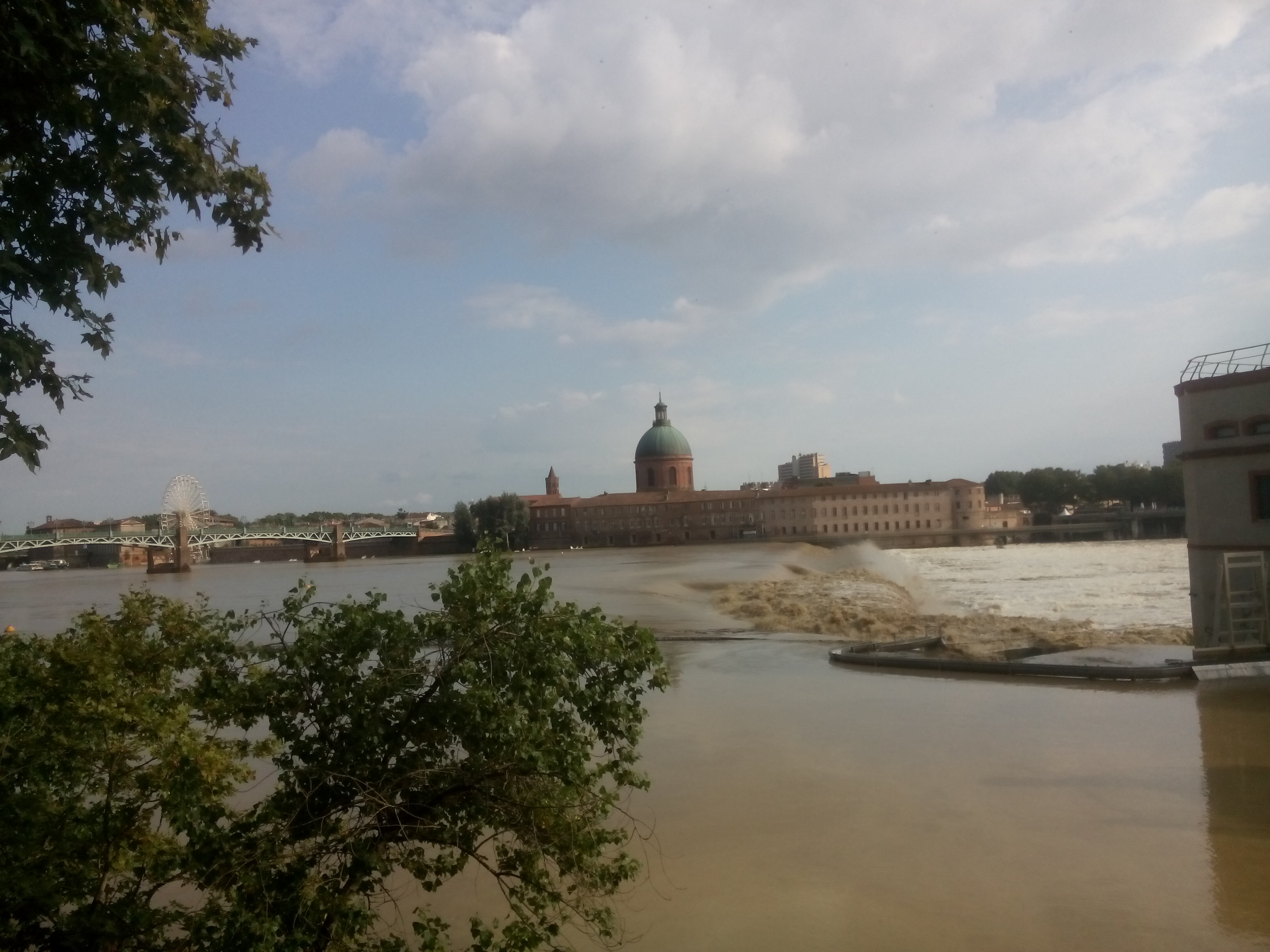
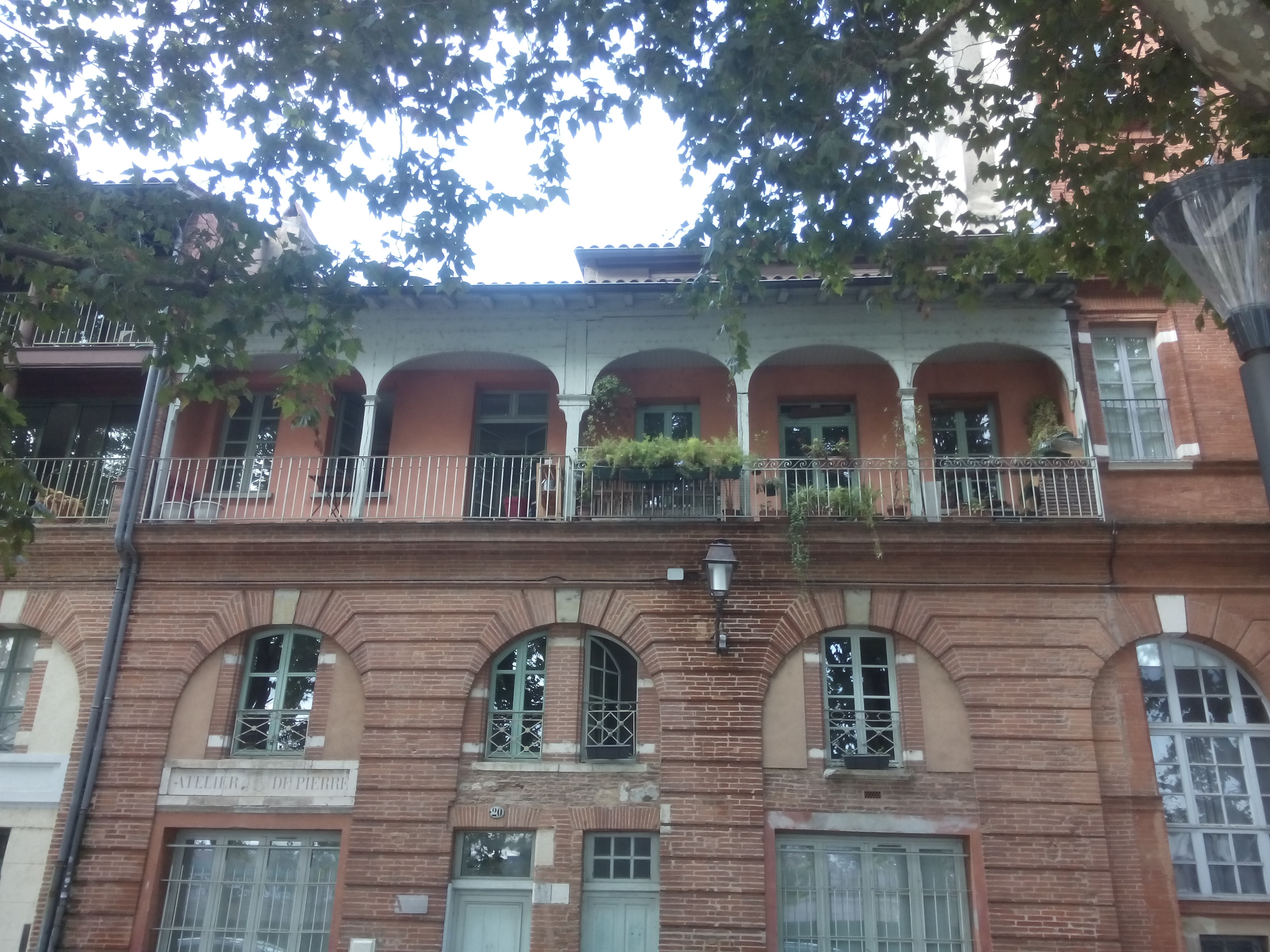
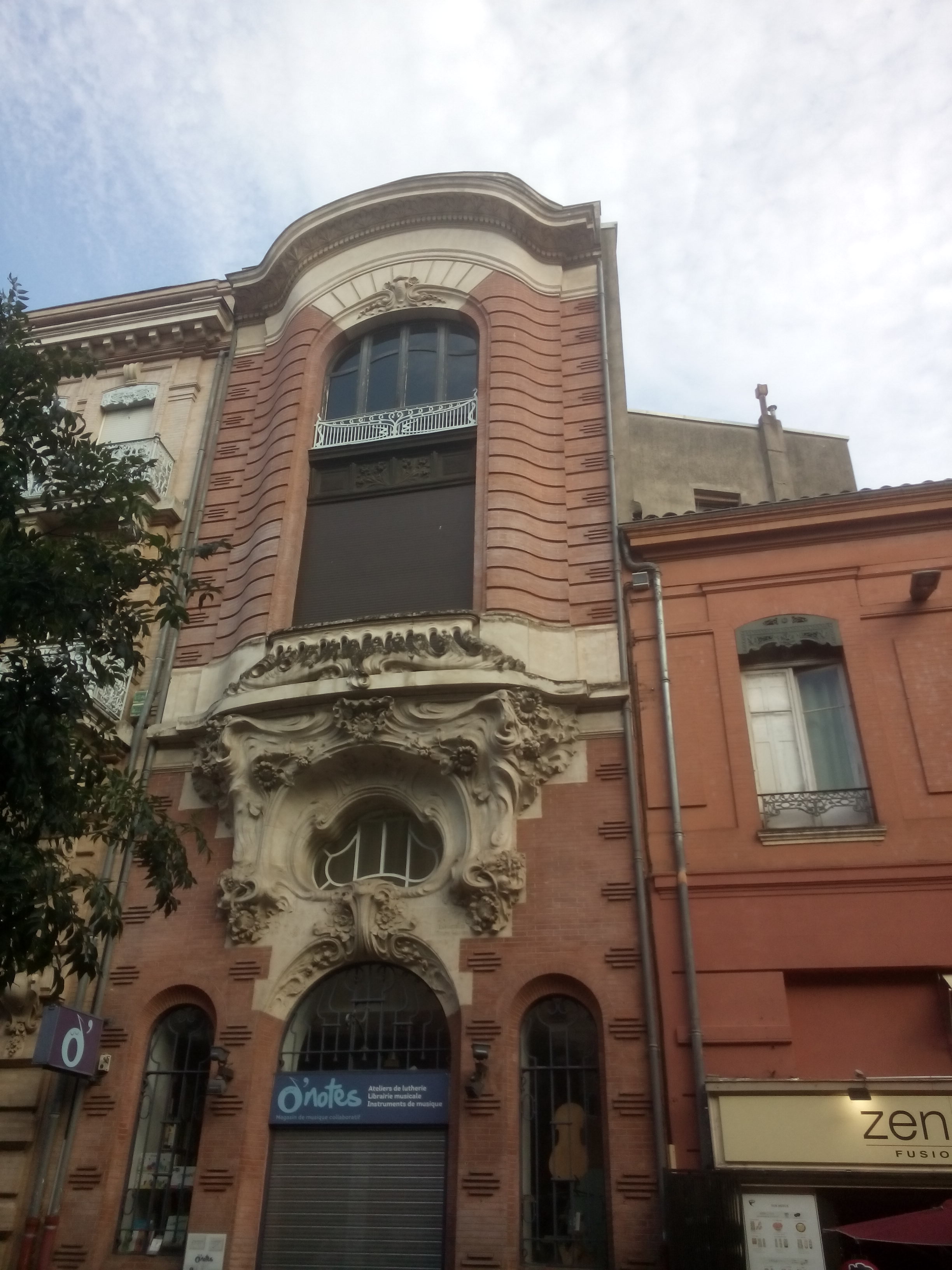
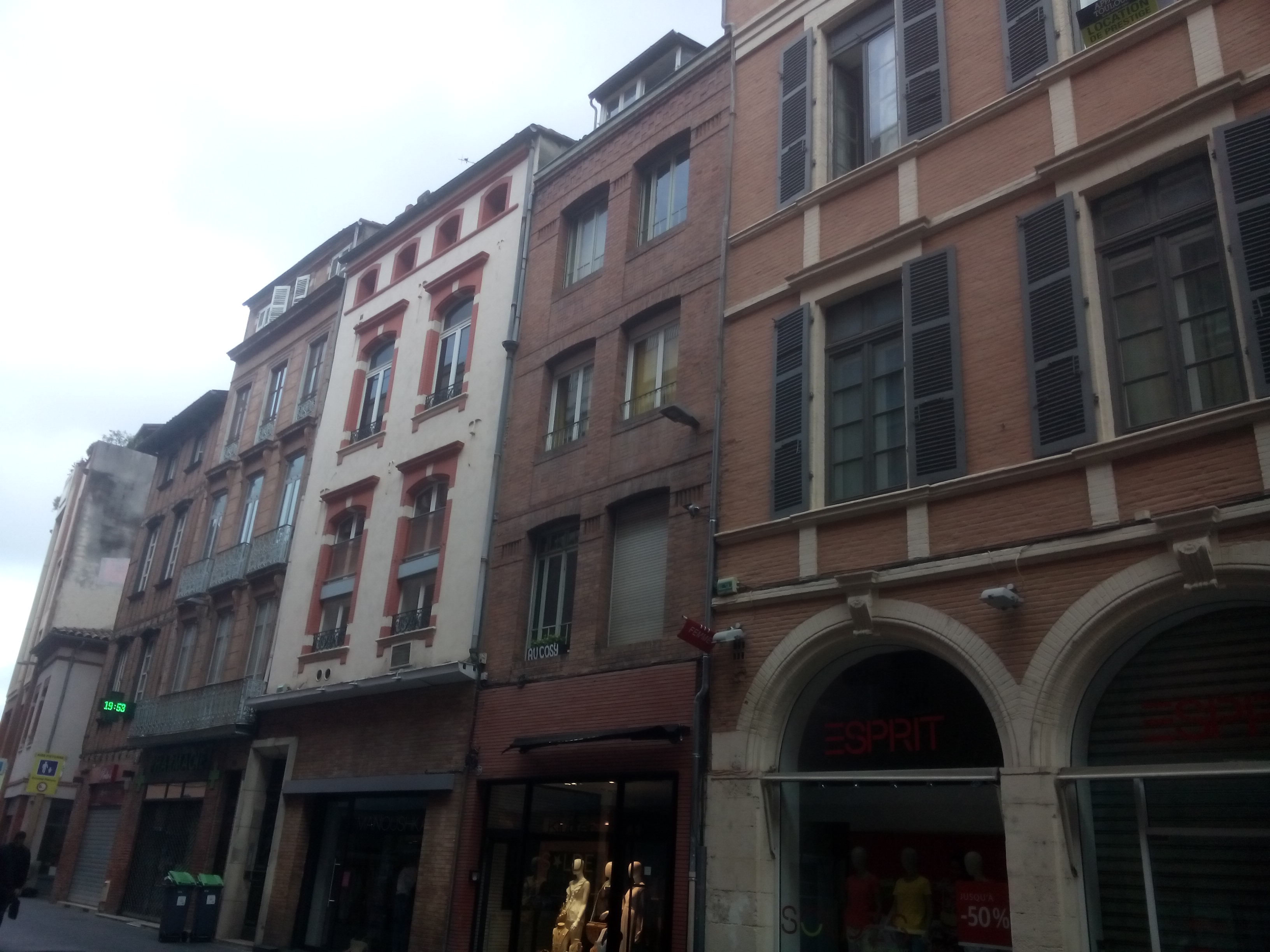
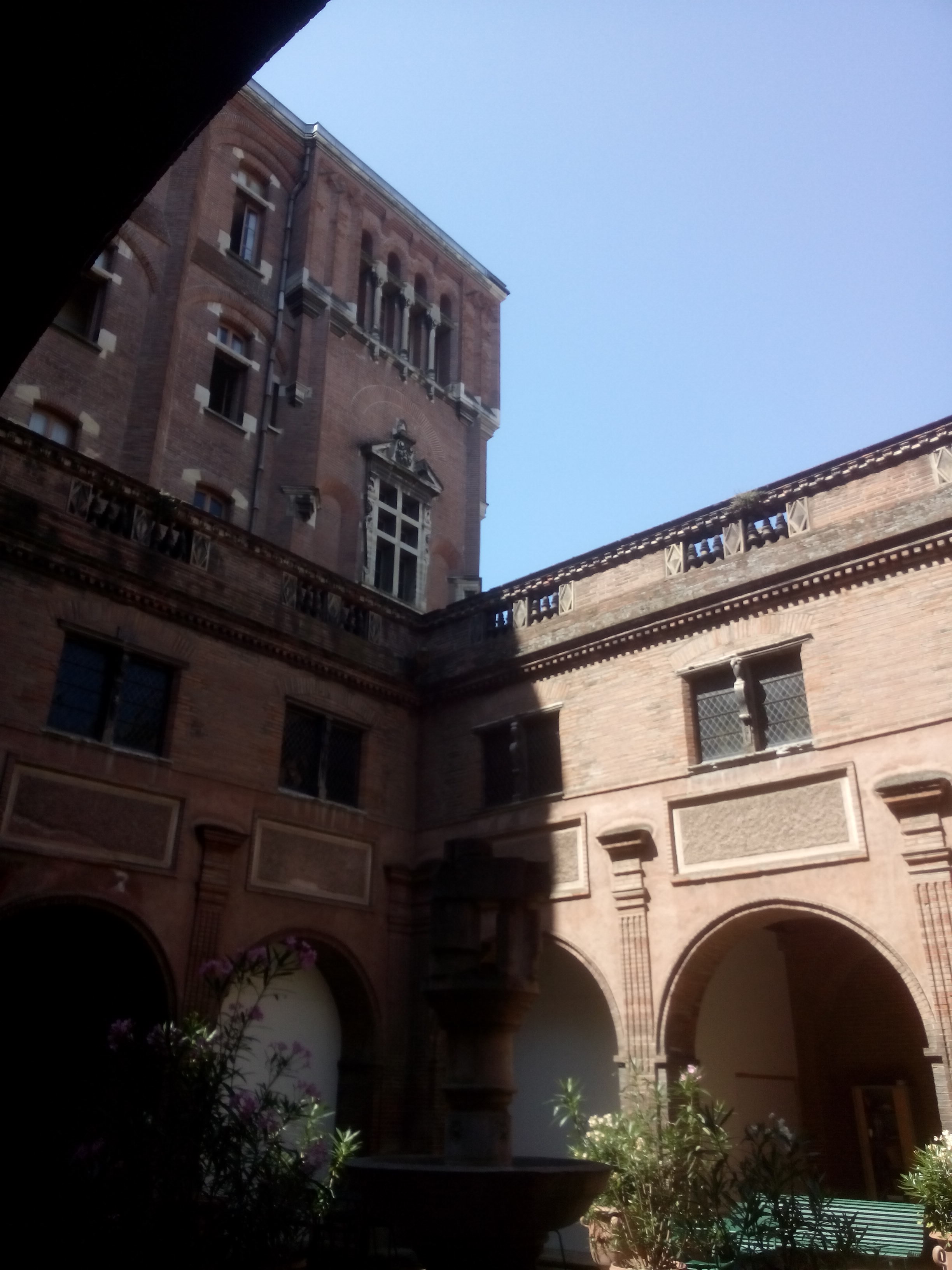
It’s known as La Ville Rose – I’m sure you can see why, sometimes also known as the red city. However, there was a city ordinance for 200 years, starting in the 1700s, that degreed that the buildings should have white façades and facing stone, so there are some white buildings thrown in to the mix.
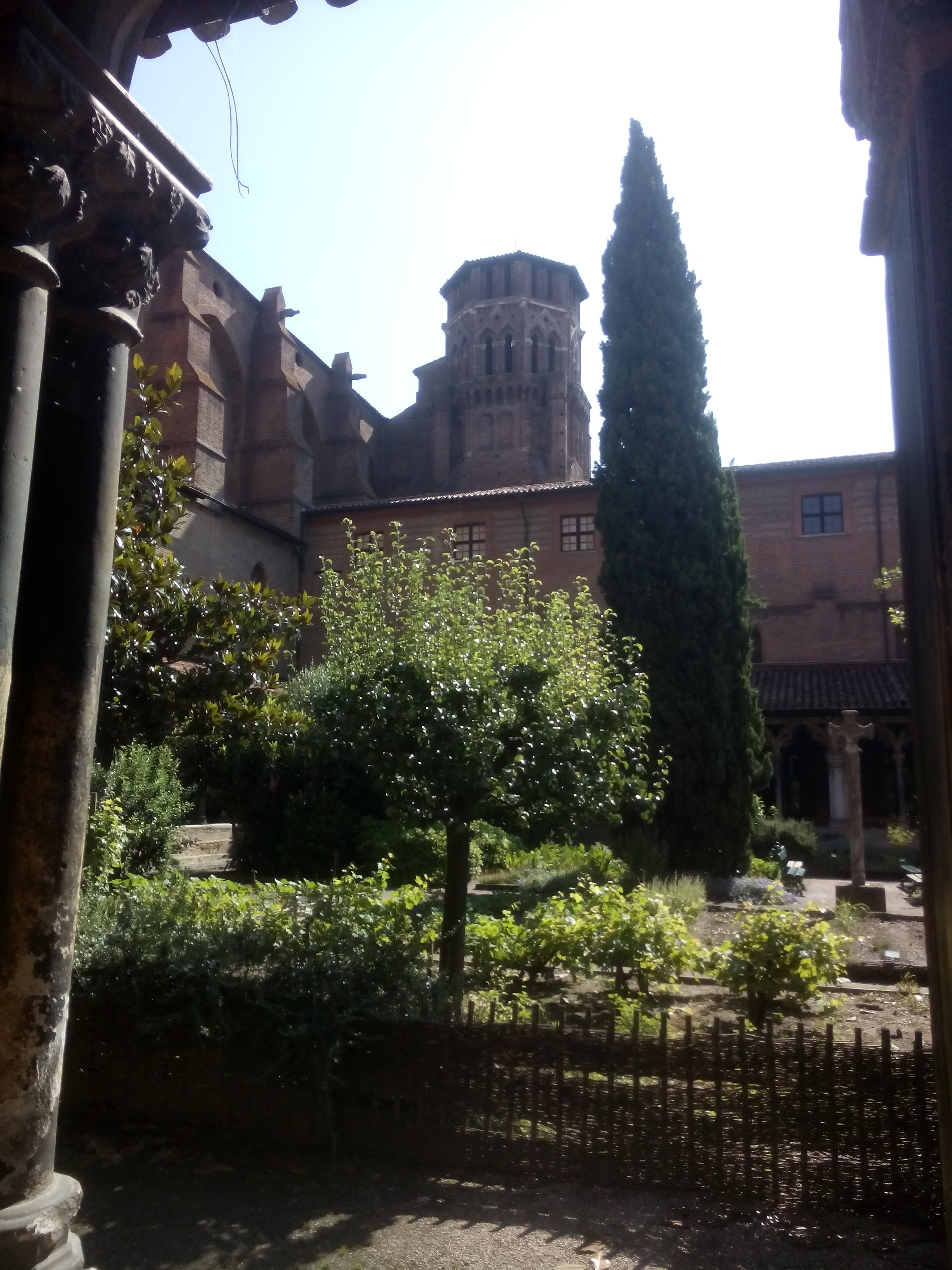
The city is founded on a southern Gaul tribal site, quickly prospering during Roman times, being part of the development of Gallic-Romano culture in the area. Toulouse has always been a significant administrative centre, not least when it had its own Parliament and was determinant of French law in the south of France. The city archives are fairly meticulous and some of which were on display in a temporary exhibition on the Renaissance of Toulouse in the 16th century. The exhibition was in the Musee des Augustines, which, true to its name, is set in a former monastery. It’s a gorgeous setting for a permanent art collection which contains Roman sculpture, Roman architectural pieces that have been salvaged (such as pillar heads), mediaeval arts and sculpture and a significant 19th century painting collection. The painting collection was under refurbishment, so gosh darn it, I’ll have to go back.
The museum is based in the monastery buildings around a lovely cloister. I’m very partial to a cloister:
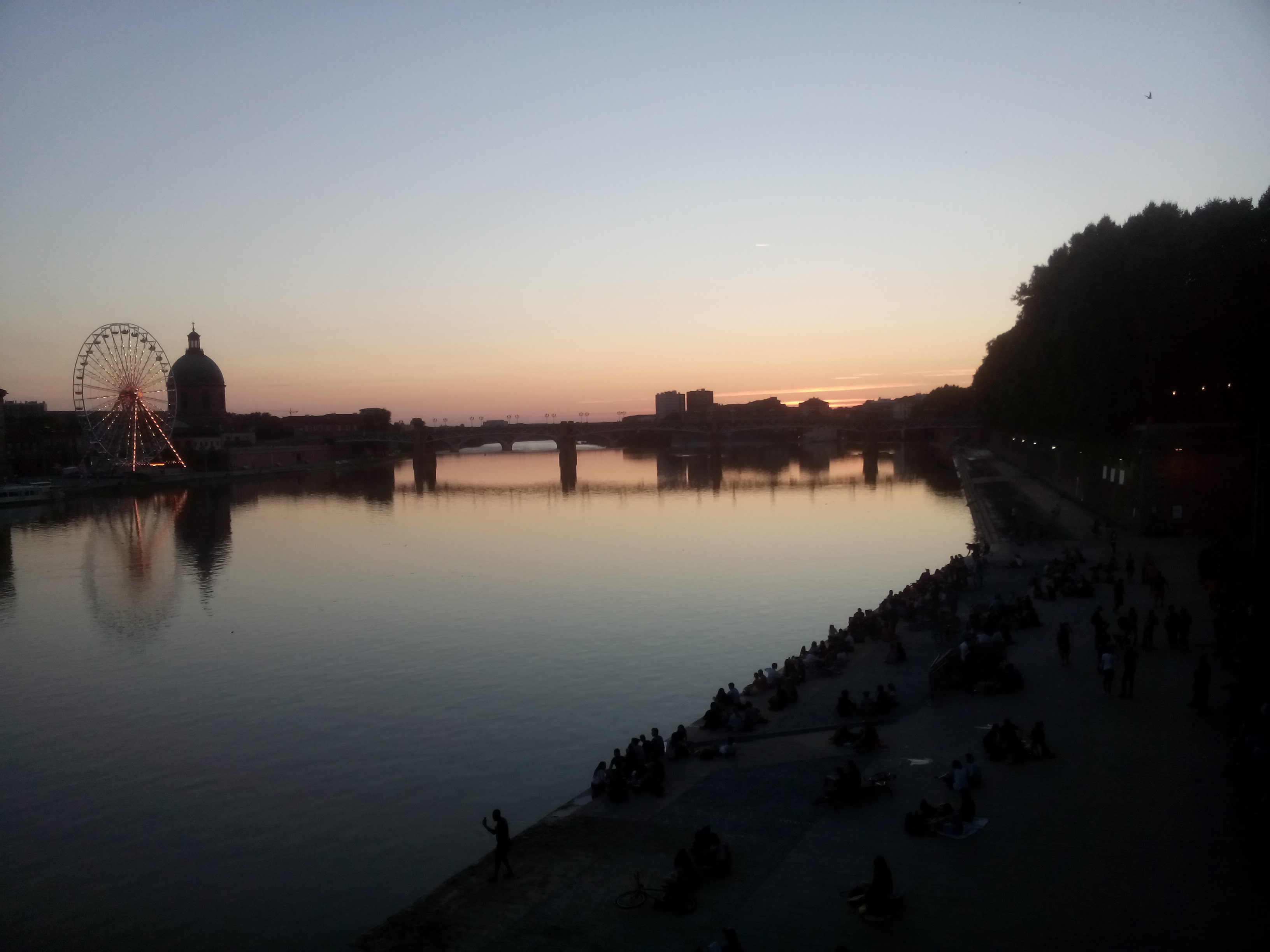
Being a city of rose also makes for some excellent sunsets:
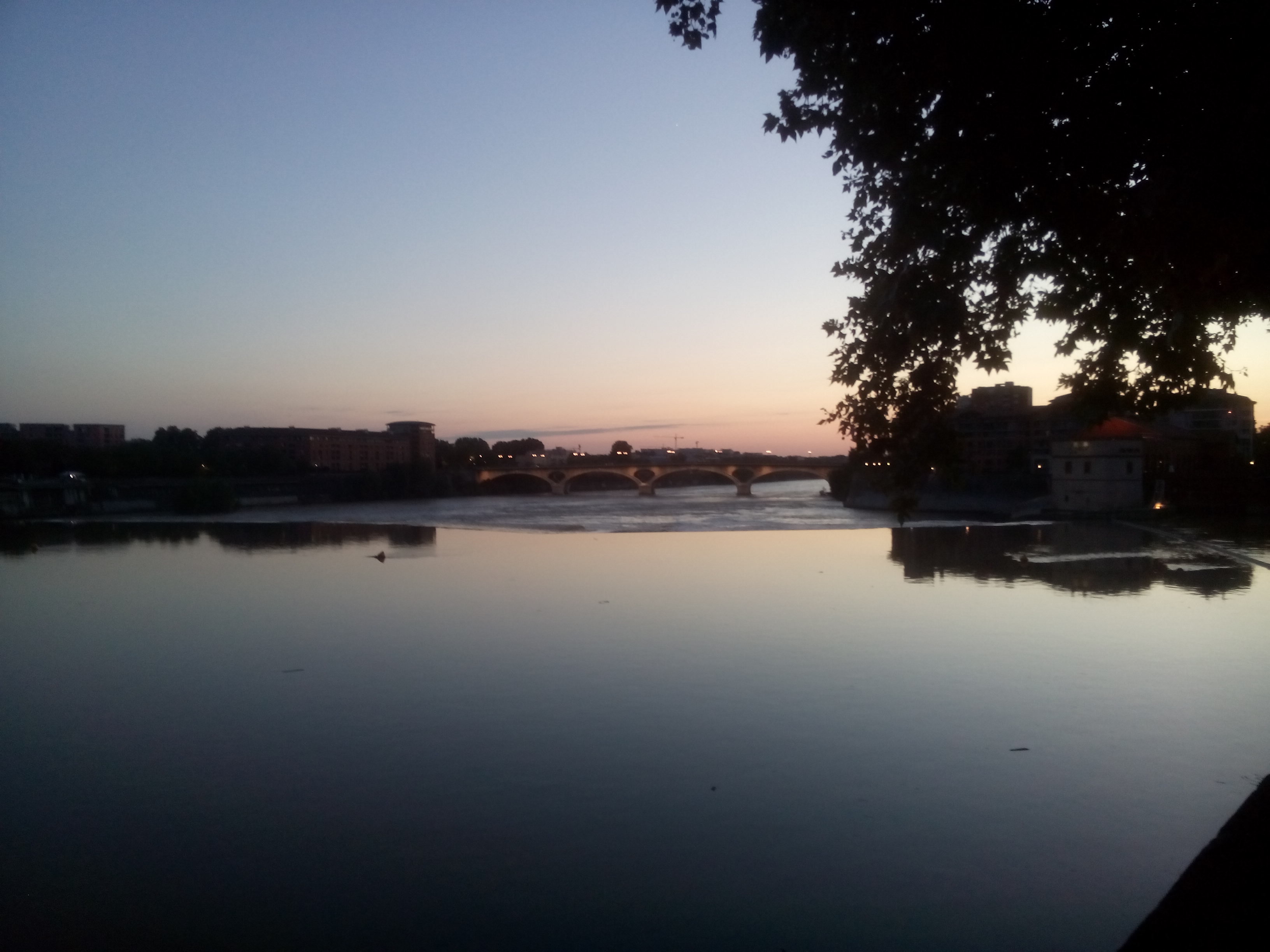
This is the river Garonne, upon which the town was founded and was the source of its wealth. The first industry in Toulouse was cloth – both weaving and dyeing of cloth. The sunset is over the old barrage, around which there were mill buildings until the 19th century, when the last ones swept away in what is quite a frequent occurrence – river flooding. EDF energy have installed a turbine in its place and a significant amount of the power for Toulouse now comes from the Garonne, as it has for centuries before. Just before the barrage is the entrance to the Brienne canal, which in turn joins at a basin with the Canal du Midi. Being in Toulouse has been my first experience of being on a train alongside the world-famous canal and seeing a city that is served by it. Logistics became an important part of Toulouse commerce and both canals are part of UNESCO World Heritage sites. I was staying just off the Canal de Brienne and it made for lovely running first thing in the morning – it has tress all the way along it, making it permanently in shade. And as the commentary on the river cruise stated, the leaf-fall is a constant headache to the city council – at any given time, the depth of the canal is meant to be 1.6 metres, but it is reckoned that should you have any reason to fall in to the canal, you will likely be in as little as 50 cm of water in some parts. The canal is however regularly dredged and remains navigable.
I learned a lot about Toulouse in the Museum of Old Toulouse, based in one of the oldest buildings in Toulouse (a rich merchant’s house). It had an excellent temporary exhibition on portraiture by Toulouse artists (a lot of the paintings and sketches owned by the museum) and a permanent collection of local history, crafts and industry. The museum is staffed by paid staff and keen volunteers, one of whom was very security conscious and took my rucksack to the cloakroom without first explaining this is what she was doing. It was a bit bemusing to be presented with a clothes peg with the number 73 written on a square of card, which I was obviously required to take, from the lady who had just whisked away my rucksack. However, all was resolved quickly and the same volunteer took the time to explain to me the important place of woad to Toulouse history – the precious blue dye on which some of the first wealth of the city was built, including the museum building. In French, it is called ‘pastel’ and I can see why the concept of pastel colours is related to this – the shade of blue is a gorgeous pastel blue. It takes an awful lot of work to extract this lovely blue, to boil down the woad, put the result in to a paste to ferment for two months, grind, oxidise and then use. There are a couple of shops that still undertake making goods of woad and for a birthday treat (birthday money – thanks, Mum), I treated myself to some woad-related goods. After that, I noticed that a lot of the metal work on buildings is painted in a woad colour and it suits the buildings from the contrast with the red sandstone very well.
Toulouse = calm, relaxing and very interesting.
I’m typing this in Nimes, as I can’t seem to get enough Roman history in to the this career break. I also learned more in Toulouse about the ‘Religion Wars’- the term often used here for the battles between the Protestant and Catholic churches in the 17th century. More on that another time.
Tomorrow, more history in Nimes and then on Sunday, hopefully a trip out on a train.
 Have a good weekend, everyone.
 All the punks are pushing fifty years and are hardly feared