Guten Tag!
Today’s blog is brought to you from Wuppertal, a German city you may not have heard of. Or have you? If you’ve bought any medication or DIY stuff recently and diligently read the packaging, if it’s made by Bayer, it may well have come from here. Or you might be a train/public transport buff and know Wuppertal’s claim to fame – the only suspended monorail in the world, called the Schwebebahn – translated literally, it is the ‘floating railway’.
It is AWESOME. The best I can describe it is an above-ground railway, but the railcar hangs down from the rail rather than riding on top of it, using the same counter-balance technology as cable cars.
Here are some photos that I hope make it make more sense:
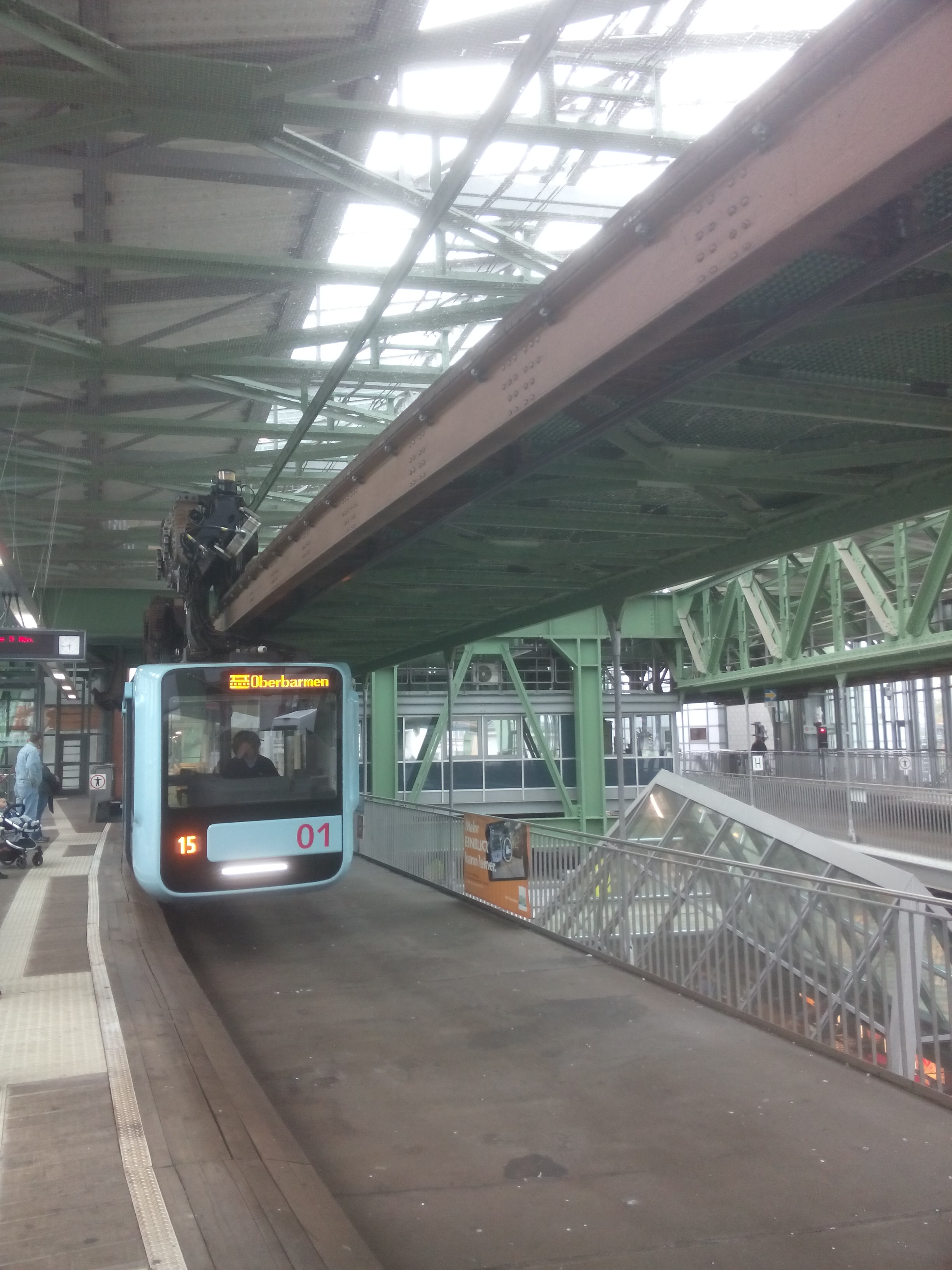
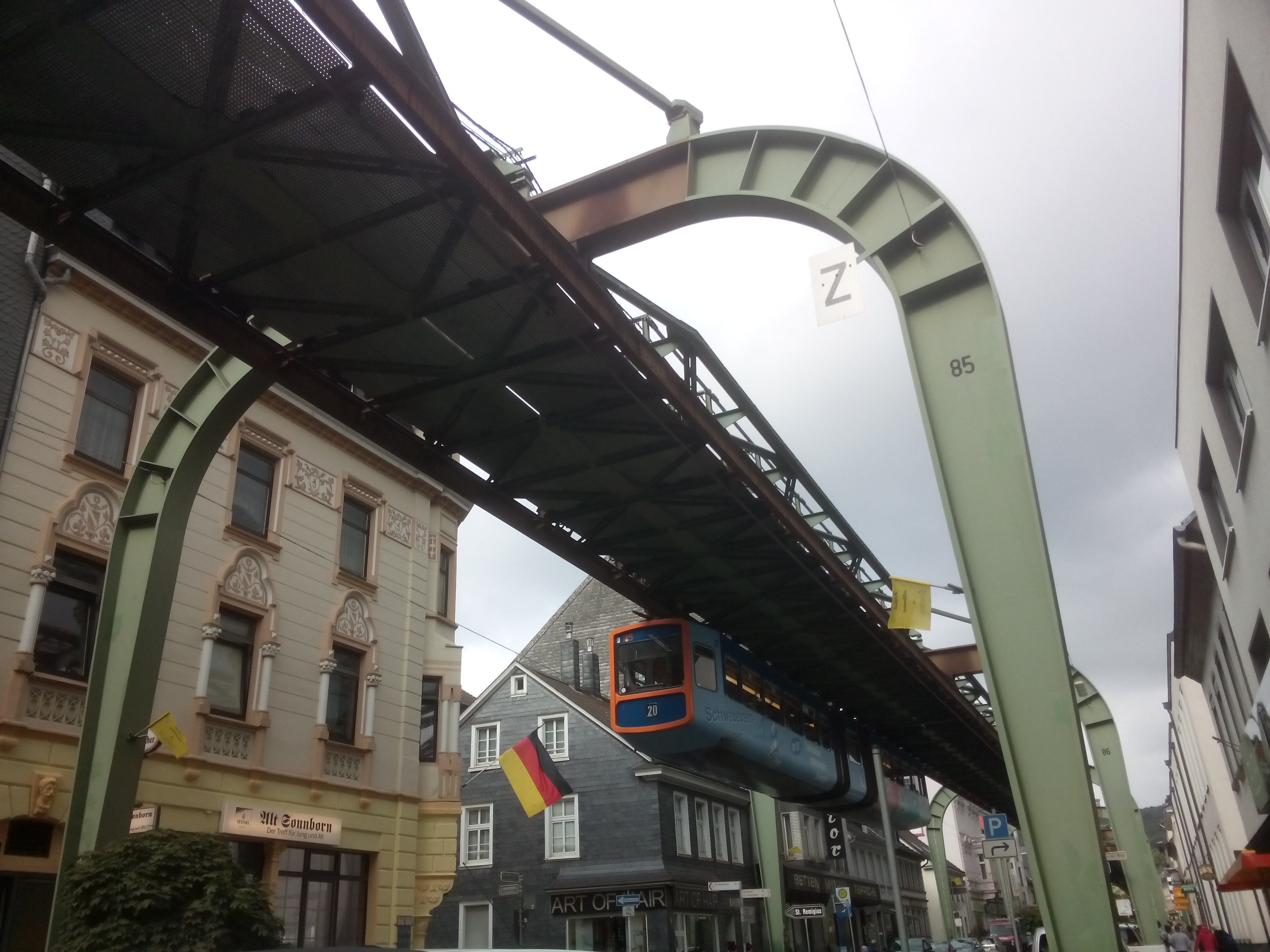
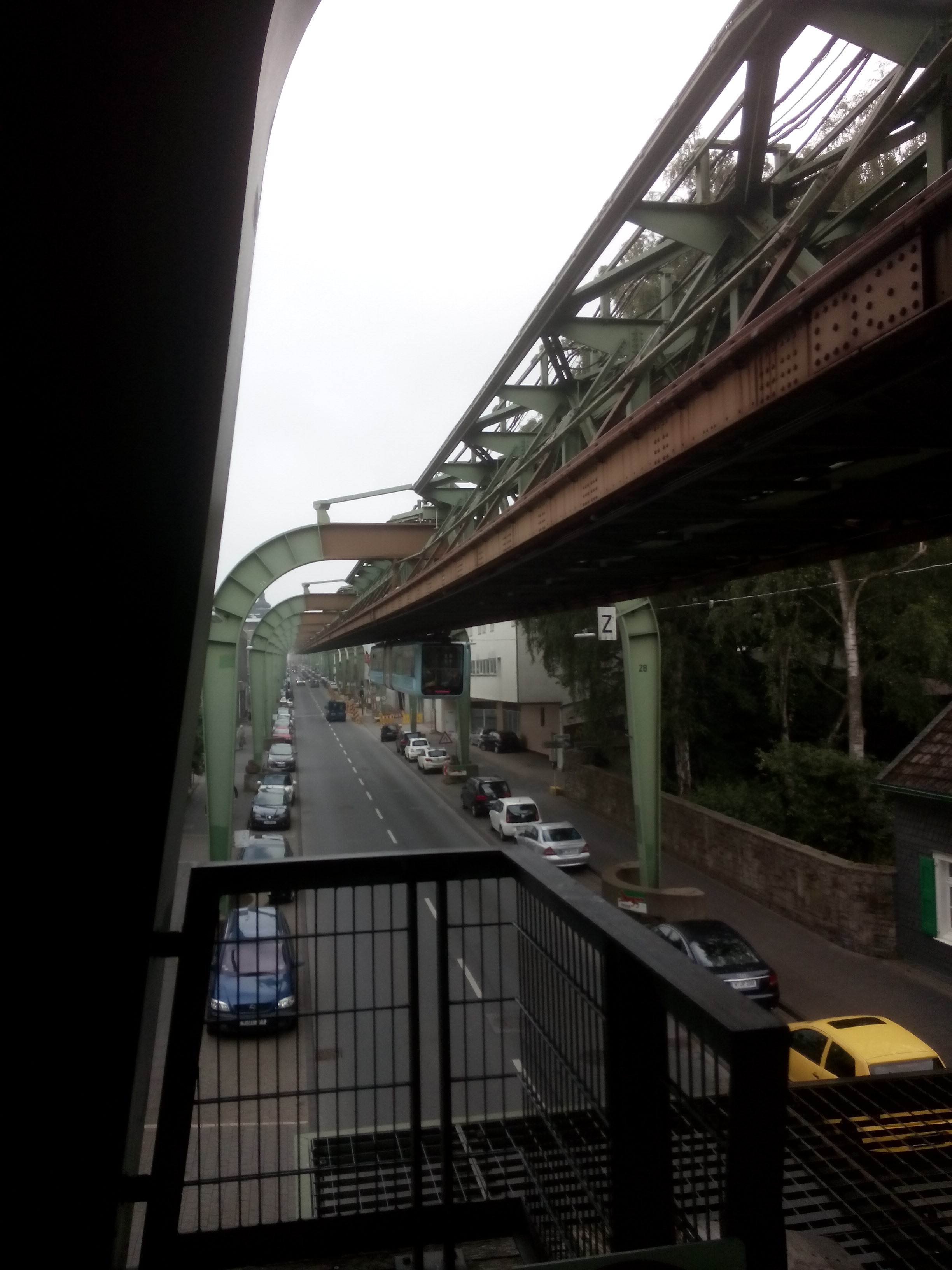
The Schwebebahn is 13.3km in length. Services commenced in 1905. 10 km of the rail hangs directly above the river Wupper and the rest directly above a main street. The clever folks who designed the Schwebebahn fitted it to Wuppertal’s needs. Wuppertal is a city that is the merger of the previous town of Wupper and the towns around it that had grown and merged in to one, through the length of this part of the Wupper valley. The river Wupper powered the industrial revolution that took place in this part of Germany, being the premier site for the textile industry for a few centuries. The population and its transport needs grew quickly. Wuppertal remains a large city – its current population is around 320,000, all based on the river and up the steep banksides. The Schwebebahn fitted the needs exactly. There’s not much room here but the town developed with technology. The river is the source of power – it includes turbines now that power the Schwebebahn and the nearby trolley car that pulls people up the riverbanks on one side of the river.
Imagine a river stretch of river running straight east to west (in this case, the Wupper) for about 20 km. On the southern side, where the land is a bit flatter and wider, you then put a main road running east to west. On the southern side of that, you run a (normal, not floating) railway east to west. You then run out of flat land for easy transport. However, that is the infrastructure that meant Wuppertal was, and is, the industrial strength of this part of Germany, until you get to Cologne. The banks of the river, even still today, are a long, long, long line of factories, warehouses and people’s homes. The Schwebebahn needed to run people to their jobs but how to fit it in? The answer is build the Schwebebahn directly over the river, making use of otherwise unused space. It is a little unnerving to realise that you are mostly travelling above a river or people’s heads, in a gently swaying train wagon . . . The Schwebebahn carries 85,000 people per day and is a treat to a visitor like me. The tourism of Wuppertal is largely built around the Schwebebahn – I remember staying with a family in Cologne during A Levels to practice German and one of the day trips we did at the weekend was to come to Wuppertal to ride the Schwebebahn.
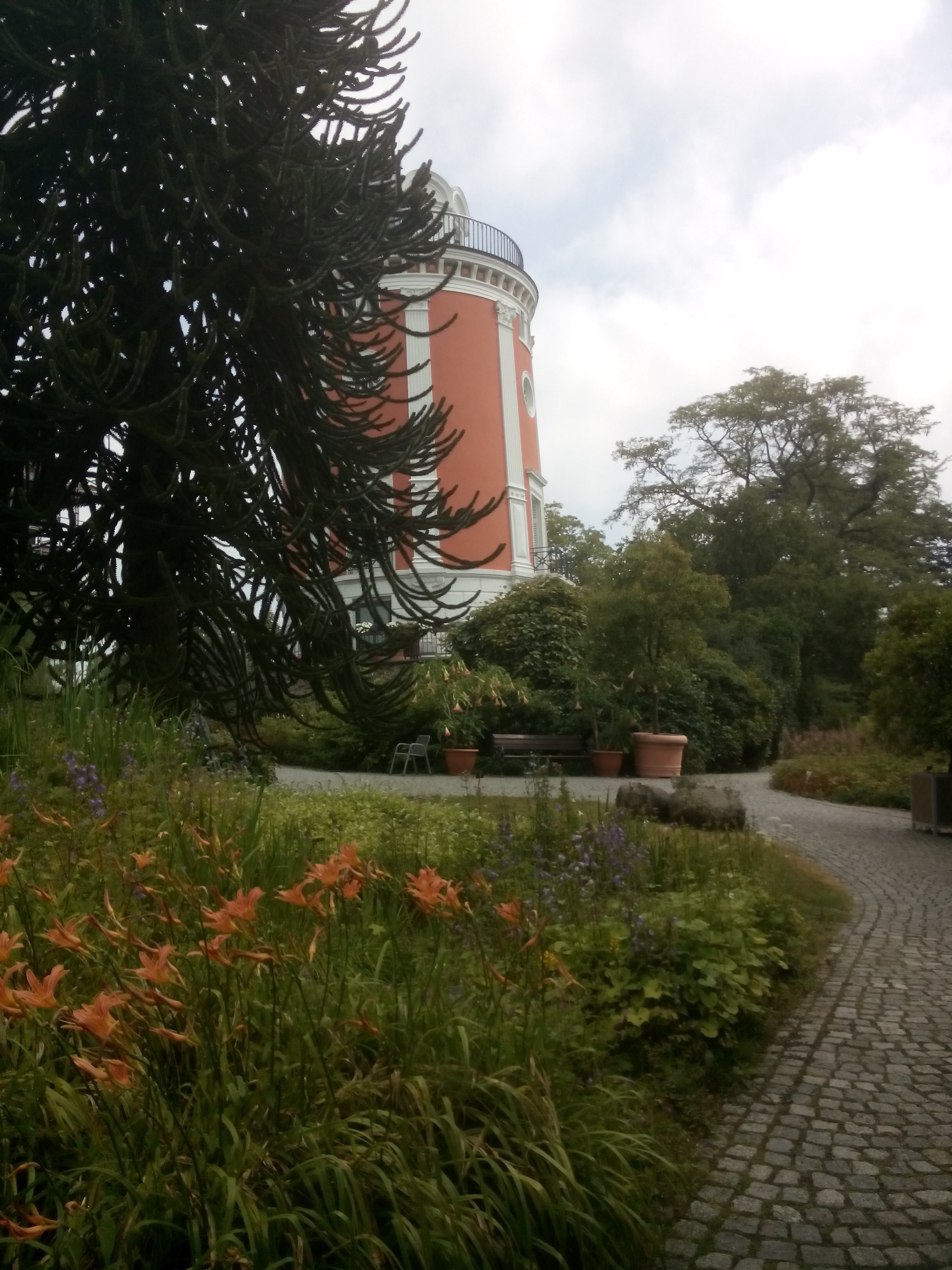
However, Wuppertal is not just floating trains. It has a wonderful botanical gardens (on one of the steep banks of the river) and a sculpture park on the other steep side. These are the first hills I’ve walked up in AGES, but totally worth it:
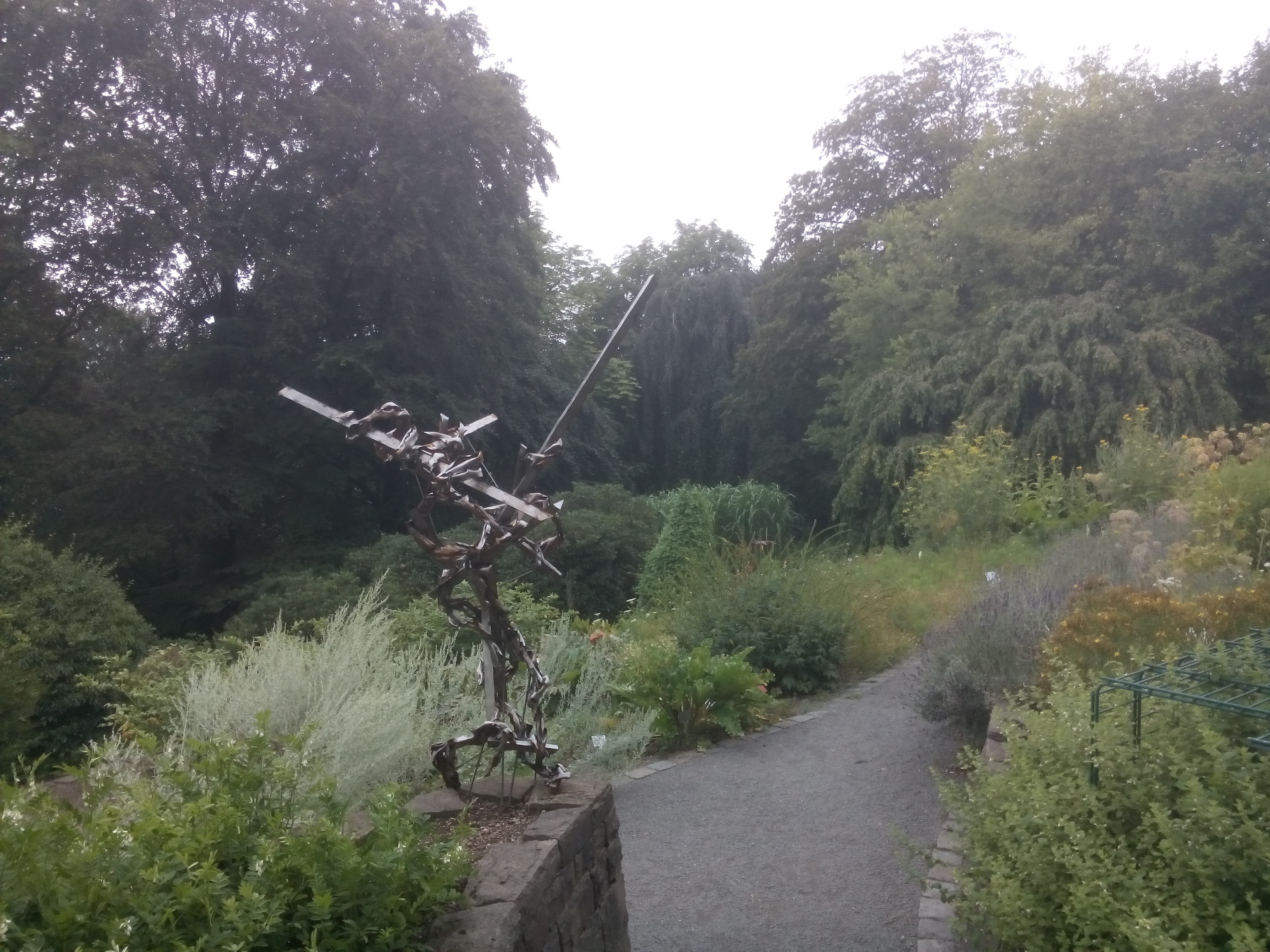
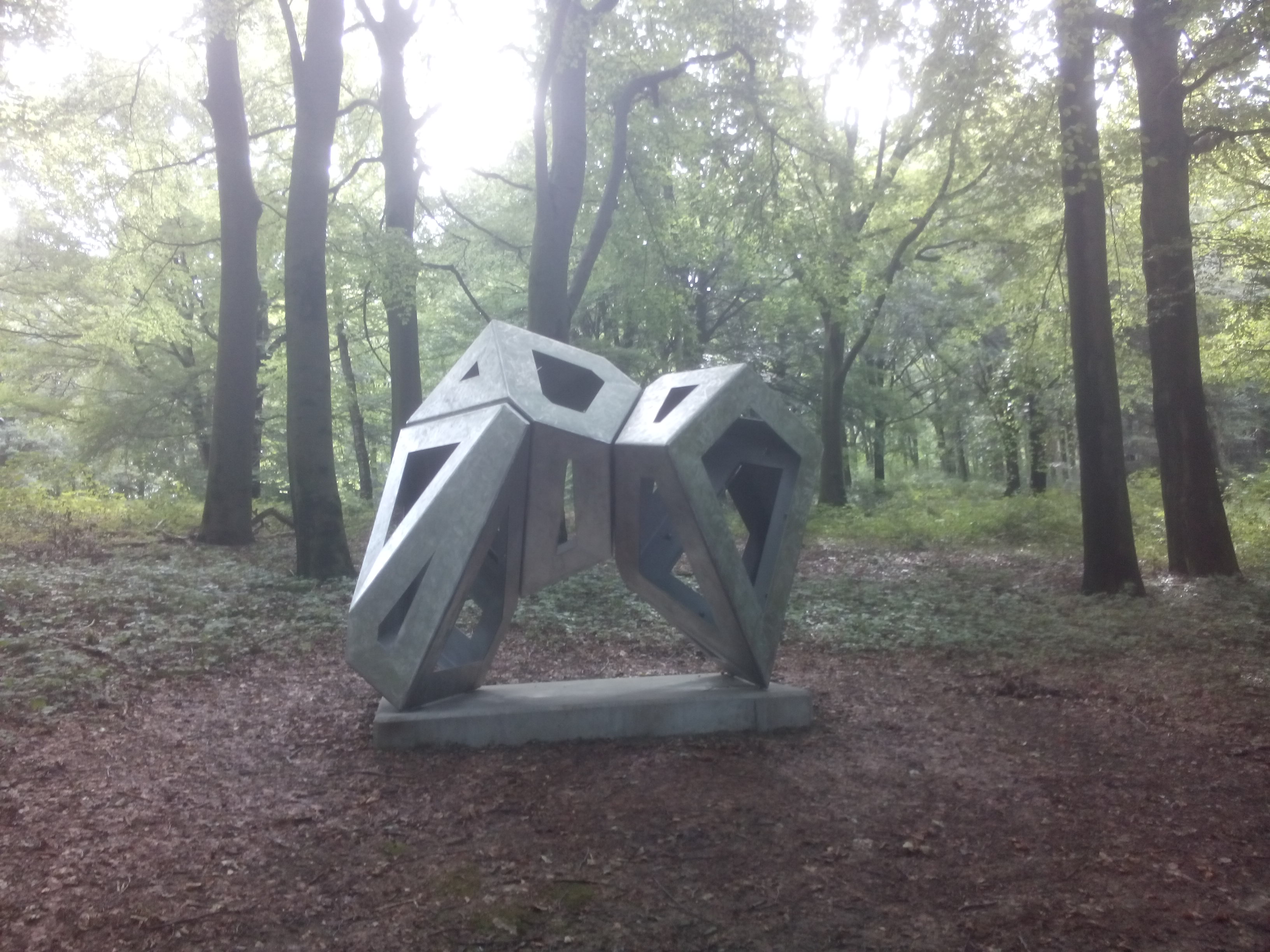
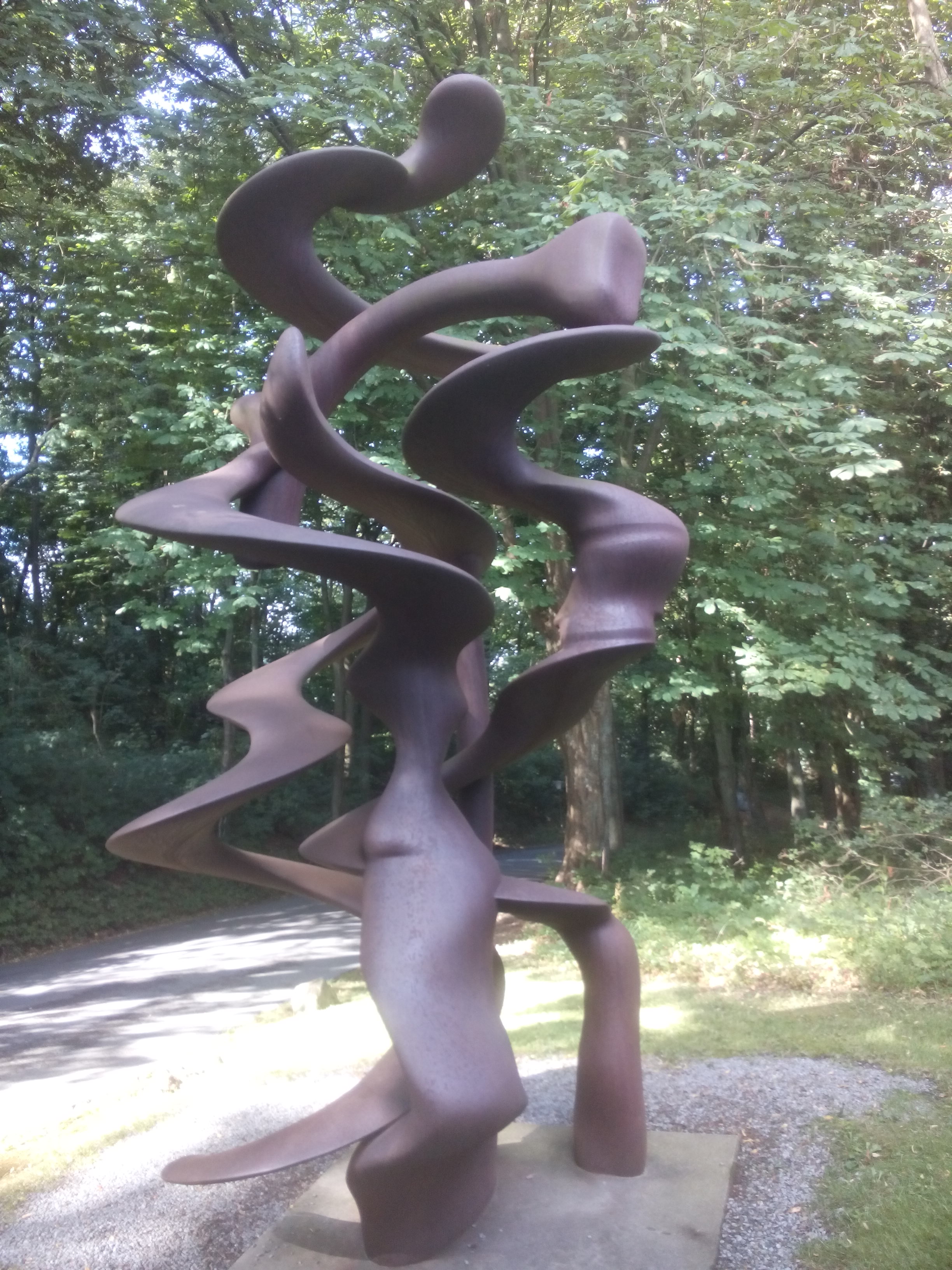
The city also houses the Von Der Heydt-Museum. For a city that is not particularly well known in cultural terms, the Von Der Heydt-museum has an art collection of the first order, more extensive than some of the better known galleries I’ve been to in Europe. The Von Der Heydt family are an important family of bankers in Wuppertal and set up a foundation to fund the arts, in this case, amassing a superb permanent collection of notable artists – there are some wonderful pieces by Picasso, Cezanne, Van Gogh, Adler, Kandinsky and many others. The collection starts from the 17th Century and runs to contemporary art. The foundation actively buys new art from established modern artists and there were some excellent pieces on display.
There was also a temporary exhibition on Jankel Adler, an artist about whom I knew very little. He was a Jewish artist who fled to France and then England during the rise of National Socialism and stayed in England after WWII. His work was influential to other artists, particularly other Jewish artists, in Europe at the time. He gave canvas, thought and reflection to art and artists in refuge. There is a lovely letter on display from Henry Moore. Adler had written to Moore after Adler went to see a new exhibition of outdoor sculpture at Battersea Park in 1948. Moore replied with a touching letter – he was clearly pleased that Adler had taken time to see the exhibition and to write to him. Moore was pleased with how the exhibition was going – 23,000 people went to visit it in the first 5 days of opening. He wrote ” . . . the exhibition may help towards demand in England for more sculptures in our parks + open spaces. I’ve always thought that out-of-doors in the open air is the right place for sculpture”. This, for me, explains a lot about the Henry Moore sculptures that I’ve seen but also that some of my favourite experiences of sculpture are in the open air, in sculpture parks but also out on the street, where I think it can often have more impact, in a setting often more fitting than a museum. The sculpture in the streets of Wuppertal is all about its industrial past and present. From the official merger, the city centre that started life in 1903 is now shopping mall after shopping mall and accommodates sculptures about local industries – practical and fitting for a city of workers. The pretty stuff is out in the older towns that have merged in to be part of the larger Wuppertal and on the river banks where people live.
Thus, Wuppertal is like going on holiday to Halifax (or Bankside in Hull), with a significant exception – all the factory buildings are still standing and are still in use – a lot of them repurposed as warehouses or accommodation, but there is plenty of industrial life still here. There is a Museum of Industrial Development, which includes Friedrich Engel’s house – I can see why he spent so much of his time thinking about the workers – that’s all there is here. The museum is shut for refurbishment until 2020, but I would like to come back for that.
Tomorrow, Bordeaux. I will be in France for Bastille Day, which will be my first such experience, during the Tour de France, which is always fun even if the Tour is nowhere near, and, a touchy subject, in France when their team play in the men’s World Cup Final.
I’m sure it will be loud.
 All the punks are pushing fifty years and are hardly feared
[…] of the city and the bridges. There are two funicular (one a Schwebebahn or hanging monorail, like Wuppertal but much […]
LikeLike