It’s been a super few days in Hannover. Hannover has everything! Parks! Theatres! An Opera House! The best railway station in Germany (official)! And, importantly, launderettes!
I arrived in Hannover on time. I was a little surprised at this, as the train from Amsterdam had developed a fault en route and we had to decant to a replacement train set that was waiting for us on the platform at the station located just over the German border. 15 minutes of baggage flinging and figuring out whether to stick with seat reservations or not, the replacement train continued onwards. The train arrived at Hannover at its booked arrival time so there must be some flexibility in the timetable.
I then checked in, and went for an initial wander around Hannover. Hannover has a red line painted on the pavement, which corresponds with a 4.6 km self-guided tour around town for its main sights. With the Hannoverplan in hand, I went for a bimble around the city and saw lots of lovely buildings, public art and a relaxed, fun city.
Here:
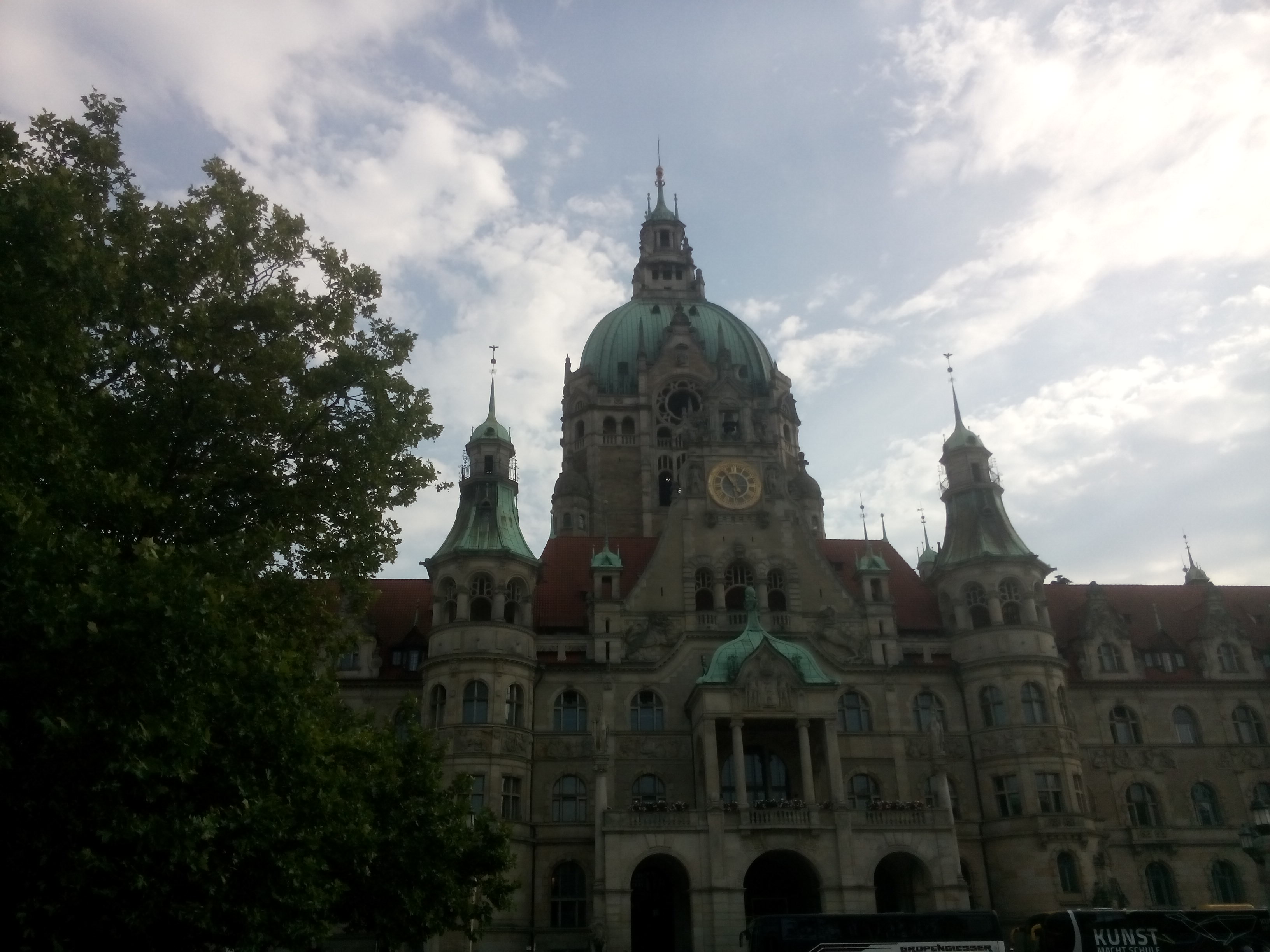
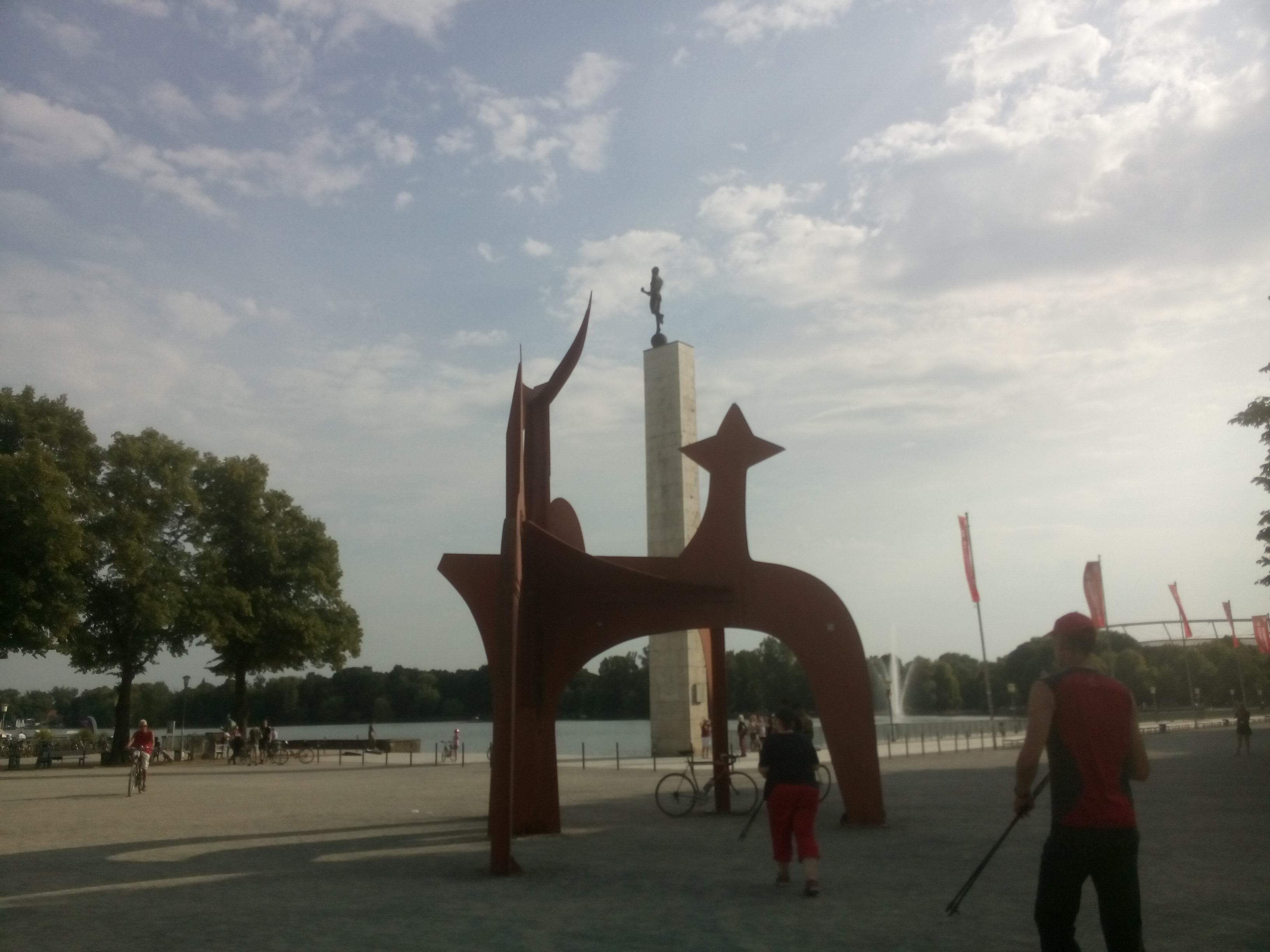
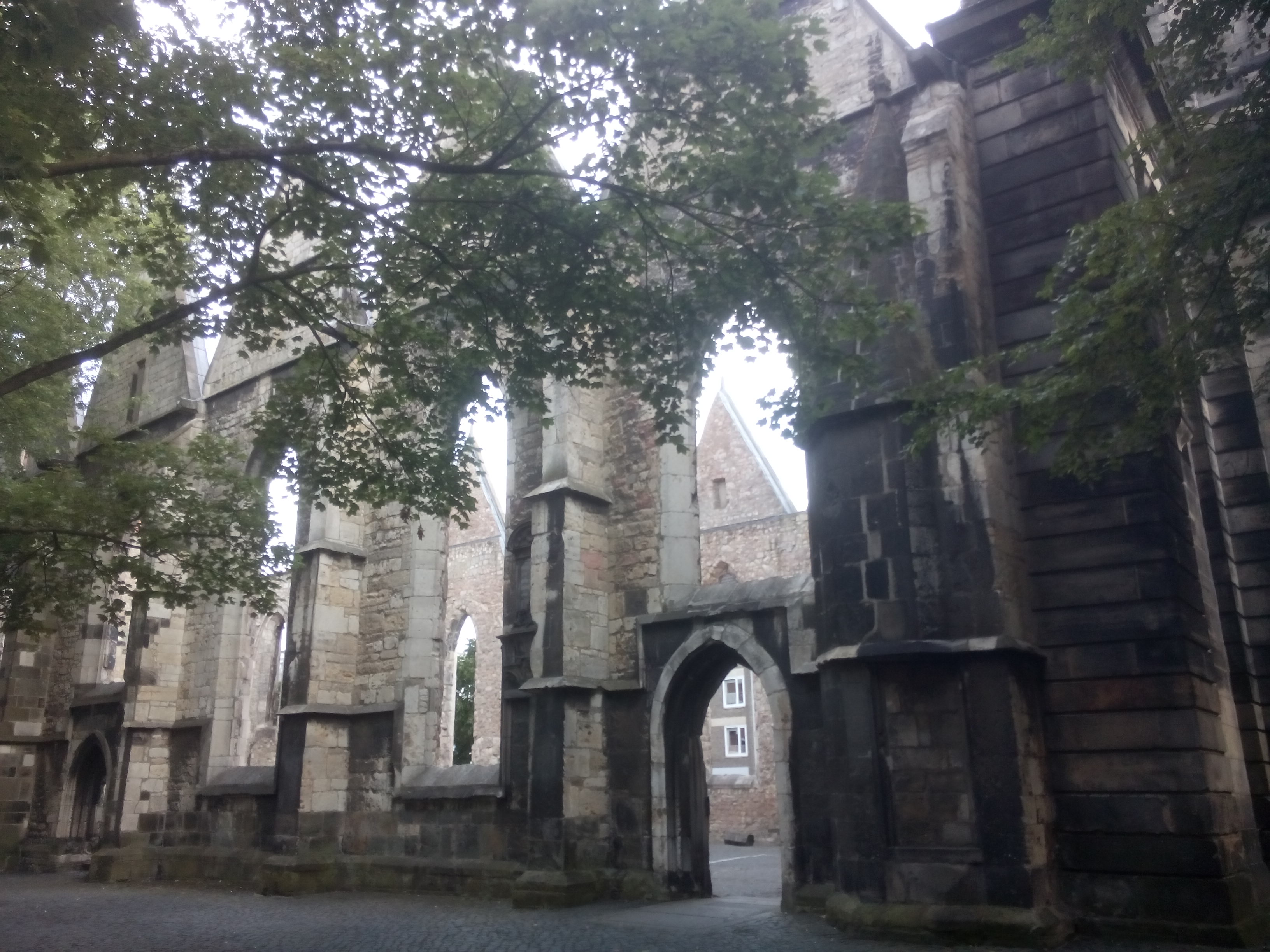
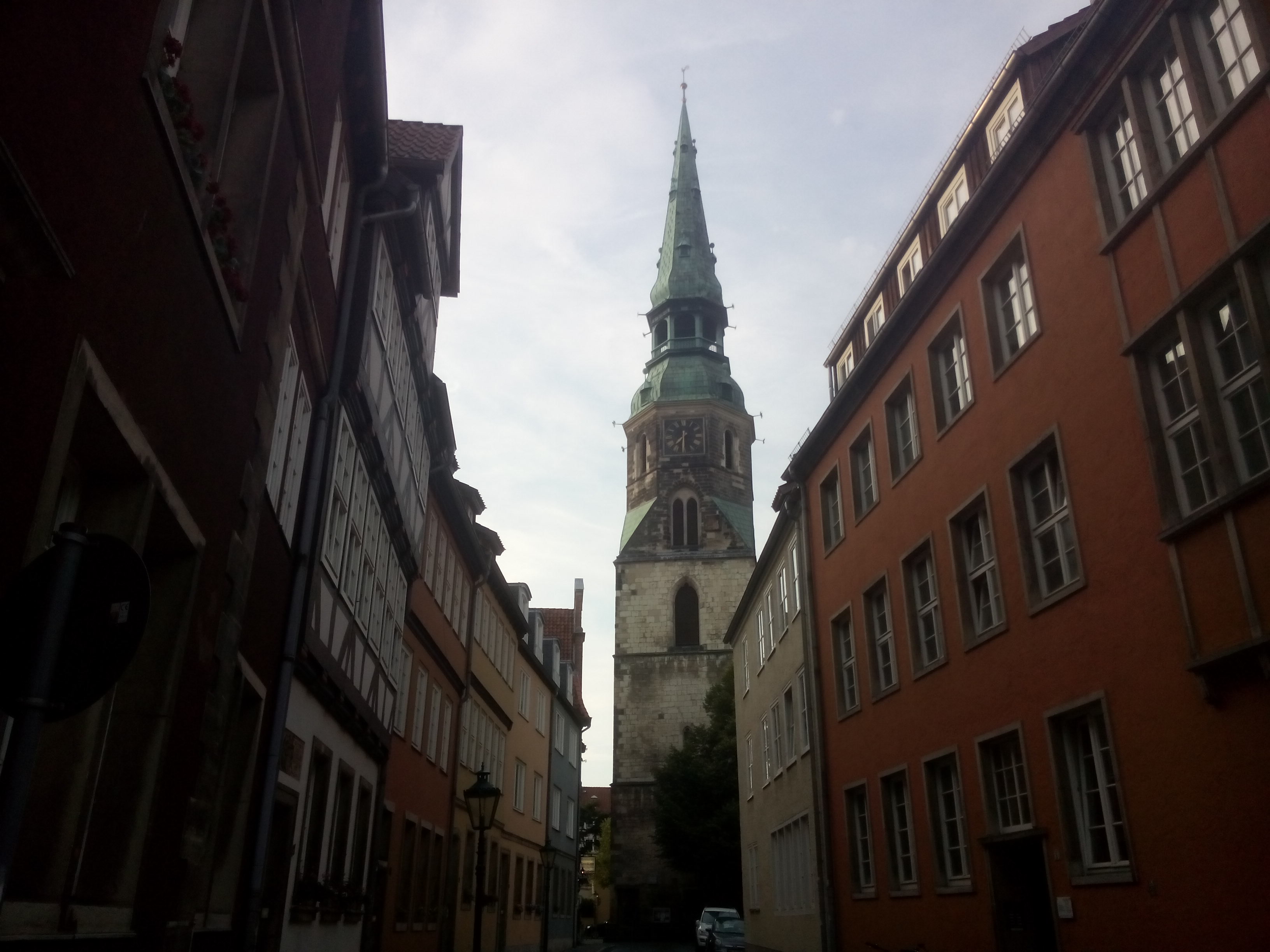
There is a lot of good food here. Good German food (for pig knuckle and sauerkraut fans – I am one), but lots of international cuisine, too.
My personal favourite is this:
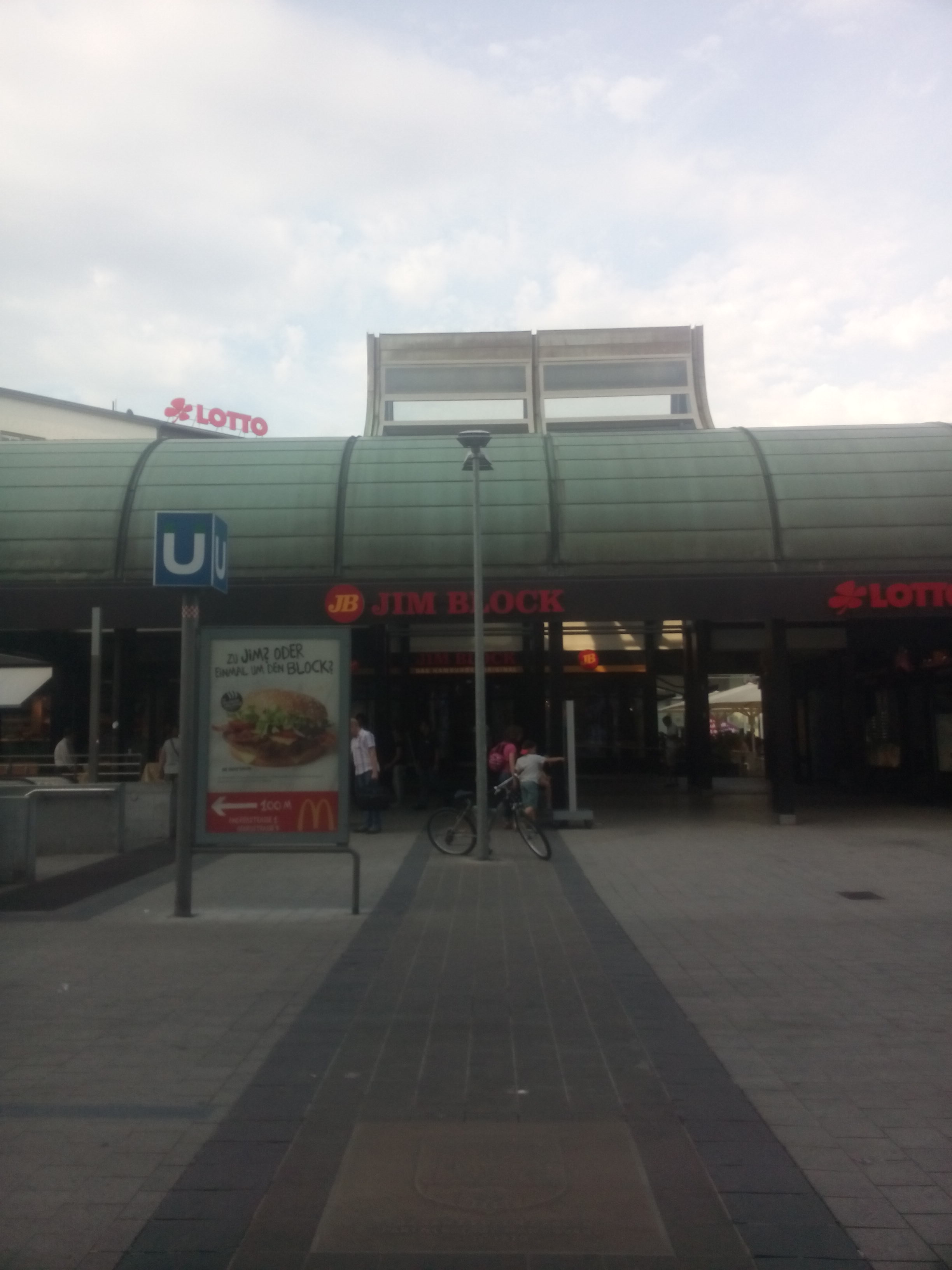
I apologise for the poor photo. It is the local burger joint, Jim’s, which inside is an American-style burger bar, also doing take-away, and serving a far greater range of burgers than McDonald’s, with fresh, local ingredients and still at a good price. I mention this, as there is a McDonald’s billboard placed directly in front of Jim’s, specifically asking ‘Jimz (cunningly misspelled to avoid some legal hoo-ha) or a trip around the block?’ and pointing out the Maccy D’s 100 metres down the road. Out of solidarity, I wandered towards Jim’s, however, the queue going out of the door reassured me that people are happy to wait as long for Jim’s food as they are at McDonald’s, and was not in imminent throes of closure due to McDonald’s subtle marketing. I love a tasty burger, but I had just indulged in one of my favourite German things – Bratwurst at a Standtisch (this is not code), so would have had to save up a burger for another day (shame, that).
But what have I learned?
In respect of Hannover, I learned that the city-run museums open for free on Fridays. I went to the town museum, which is being redeveloped at present so only partially open. However, I still learned a lot from that, and from the timeline at the town hall (you can go up to the top of the town hall for a view over Hannover), about the city’s history. The first semblance of a town came about in the year 150, as a Roman garrison town, then various Celtic/Germanic tribes and German administration, then briefly part of a kingdom under Napoleon, then part of the Prussian Empire, then West German and all the time, the principal city of the region. As well as the obvious ties with the British Royal family (vive la revolution!) there is a rich and proud history of this city. As a politically astute city, it has moved quickly with the times, including the adoption of Protestantism in the 16th century. There was an interesting exhibition in the city museum about the history and development of Catholicism in Hannover, given this overnight adoption and one week’s notice that everyone should be Protestant, please, from now on. Despite this, the presence of the Catholic church carried on, in a region that also continues to support a number of monasteries. Of particular success in a political city, some wealthy and prominent Catholic families helped the city keep up with the industrial revolution, through investment in the city, thereby securing the future of the Catholic church after three centuries of diminishing numbers; not through active oppression, as was seen in parts of France, for example, but through a lack of political support and recognition, until remedied through investment. Canny, that.
I also went to the Sprengel Museum, named after Bernhard Sprengel, a chocolate manufacturer. Clearly an excellent one, as he was also an art collector and donated his vast collection of 20th century art to the city of Hannover in 1969 along with 2.5m Guilders to help found a museum. The collection he handed over incredible. So many excellent pieces from a number of significant names of the 20th century. The museum, itself an excellent piece of design, encompasses a larger collection of later pieces and 21st century art. Hannover is a city that is happy to buy contemporary art and display as much as possible to the public. I saw a lot of names new to me, some of whom are British, some more local to Hannover.
Both the city museum and the Sprengel Museum do not shy away from Germany’s history, which I found illuminating. The city museum included a section on Hannover during WWII – as an administratively important city, it quickly adopted National Socialism and civil servants were faced with the choice of keeping their jobs and protecting the cities collections from the point of knowledge, or move aside; the Director of the city museum elected to stay in post and see the collection ‘reviewed’ by the Nazi party for appropriateness. The additional portrait of Hitler, given to the museum and mandated to be hung in the lobby, is still in the collection and displayed in context. The Sprengel Museum also included notes about each painting, as you would normally expect, which included references where the artist was or was not connected to the Nazi party, whether they stayed or fled Germany and what role their art had during the 1930s and 1940s. The citations themselves were neutral and factual; I learned a lot and has left me with a lot of reflections on the role of art and artists during times of oppression (or in the case of some artists, a cause they absolutely supported).
There was also a room in the Sprengel museum that was about ‘fake news’ in art. Fake news is not new! stated the narrative. It was a room about art forgeries and the likelihood that all large collections usually contain a few; catalogued as fakes (when this is known) and always kept in stores and away from the public, as a black mark on the collection. The museum displayed their known and suspected fakes in one room and let you decide. There were a few where the forger had turned up and claimed credit or been found out through an investigation; there were some where the pieces appeared in the catalogue and the provenance is dodgy. There was a convincing Giacometti – the museum is still not sure whether it is real or fake, for example. It also noted that more recent art, particularly from the 1960s onwards, can be some of hardest to determine, particularly where artists do not have one strong style or medium. Think Andy Warhol – which soup can print do you think is real, and what has been done by an art shop now that canvasses can be recreated and printed as many times as you like? Through-provoking stuff.
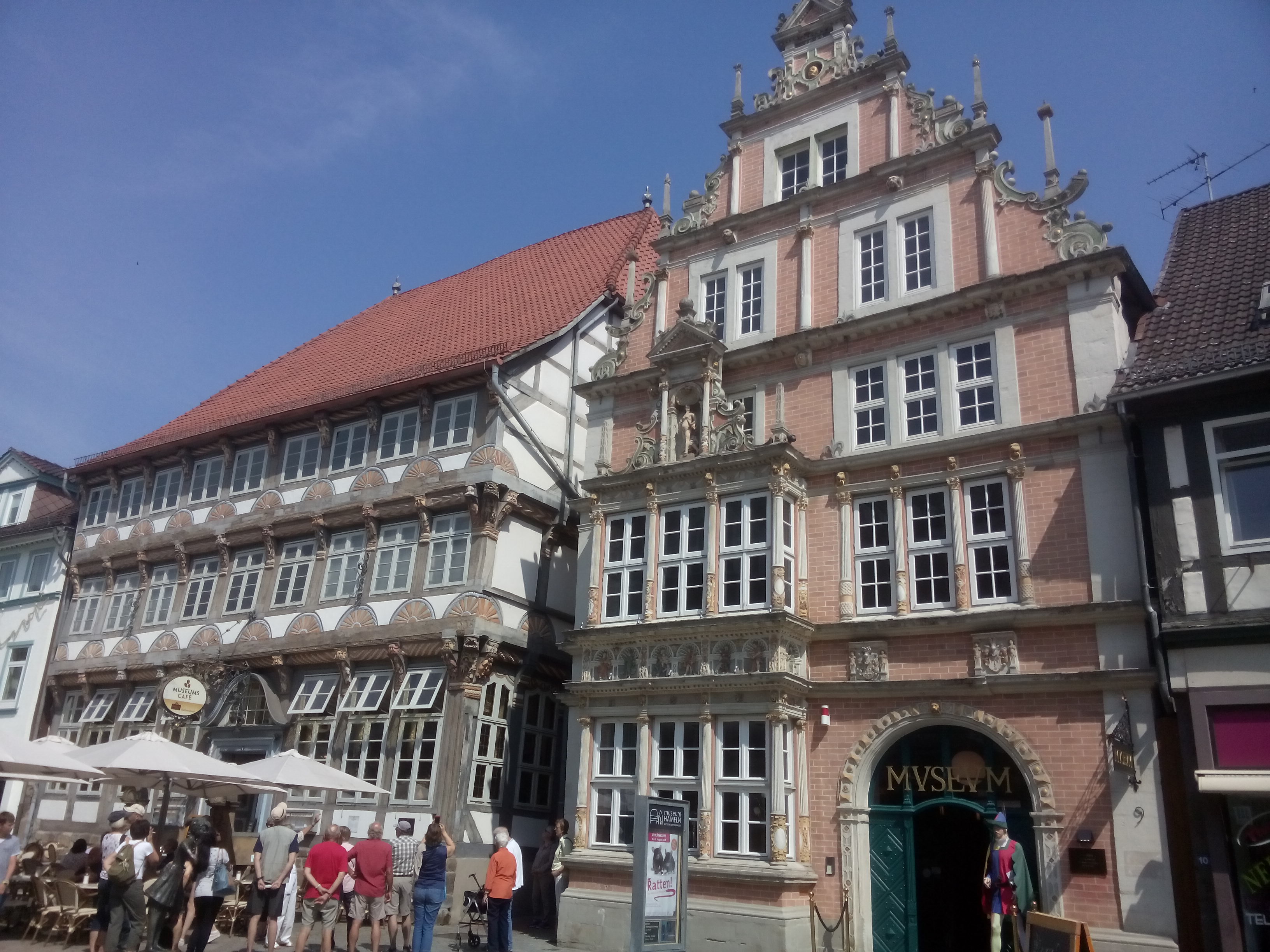
And then, to the reference in the title, to Hamelin, or Hameln to use the German name. Hameln is a charming town, famed for the Pied Piper story. There is an excellent town museum, in one of the most impressive timber-framed buildings in town (16th century and intricate carved wood working). There have been settlements in the area since Neolithic times, and there are displays in the museum of each period of history onwards. The museum also looks at the story behind the Pied Piper – what is the evidence for it? The first written references are of a rat catcher who rid the town of a rat infestation in the 13th century, whom the mayor refused to pay the agreed rate. There are separate references to a number of children who went missing from the town during the same century, but were not linked. A few centuries later, the stories were tied together – that the rat catcher led the children away as punishment for the major’s refusal of payment. Today, the town recreates (with puppets, rather than real rats and children – boo) the story each Sunday as a piece of live theatre during summer, and the museum provides an insight as to how well travelled the story is – there is a version of the story in many different languages across the world, particular after Browning’s poem (the title quote) and the Brothers Grimm version of the story.
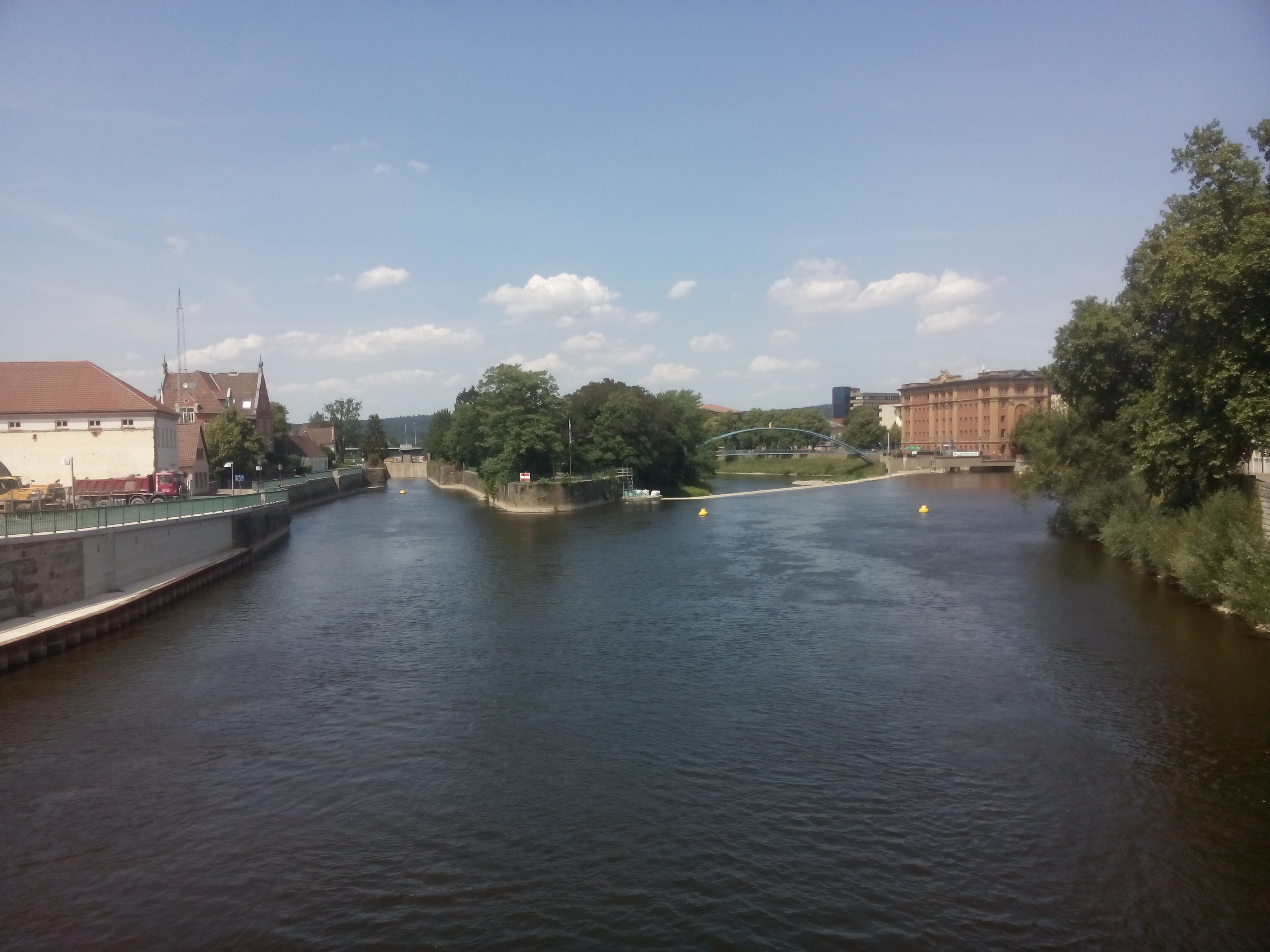
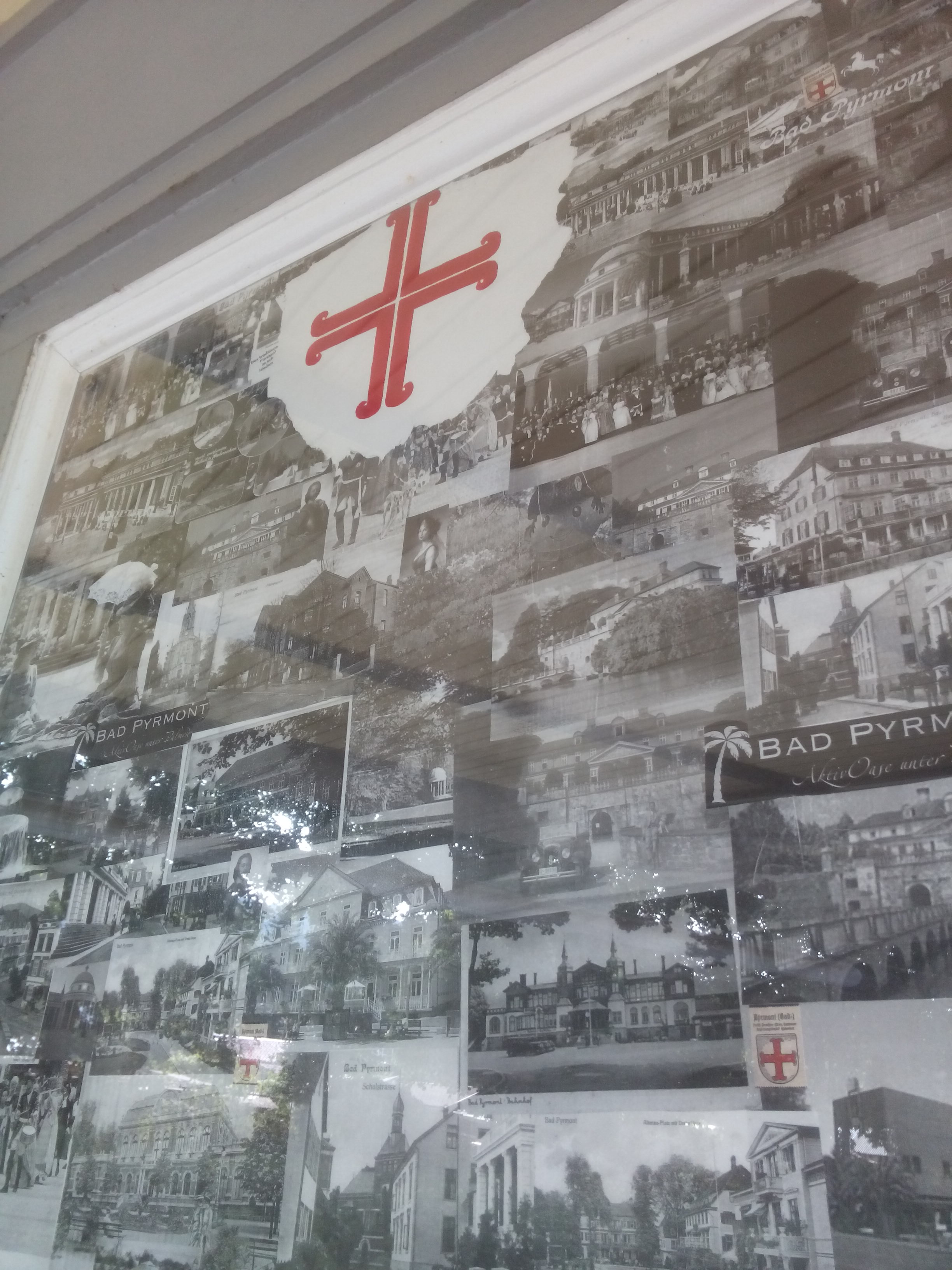
Hameln is well worth a wonder around. Some photos follow below. One of the photos should be of a collection of black and white postcards. These are from Bad Pyrmont, a small town about 20 minutes further along the river Weser from Hameln. A lot of you know that I quite like trains. One of my constant travelling companions is a railway map of Europe (of course it is) and the section of track between Hameln and Bad Pyrmont is highlighted as particularly scenic. One of the bonuses of German rail travel are the day travel cards that cover a whole (and sometimes a few) Bundesland – the equivalent would be a day travel card for the whole of Yorkshire but in this case, for 23 euros, plus 4 euros for each additional person you put on the ticket. On this one ticket, you can cover hundreds of kilometres in a day. J and I used these extensively on a holiday a few years ago. Normally, you cannot use them before 9 am, but there is a Sommerferienbonus (love those compound nouns) at the moment, removing the restrictions during the summer holidays. So I bundled on to the 0755 train to Bad Pyrmont and had a look around this charming little town. True to the ‘Bad’ name, it is a spa town – in the sense of taking the local waters for health purposes. There remain 11 natural springs around the town from which the waters are taken. Walking in town, the number of health-related services per block (audiologists, podiatrists, clinics, and many, many more) suggest that this is a town with a large population still drawn towards well-ness, to use the current terminology. After an hour around town, buying lunch for later, I popped on to the next train to Hameln. The route was indeed very scenic, trundling back up from the Weser river valley.
Tomorrow, onwards to Trier: Karl Marx’s birthplace, a town with a mixed history and close enough to the borders of other countries to have an identity crises. Marvellous.
 All the punks are pushing fifty years and are hardly feared