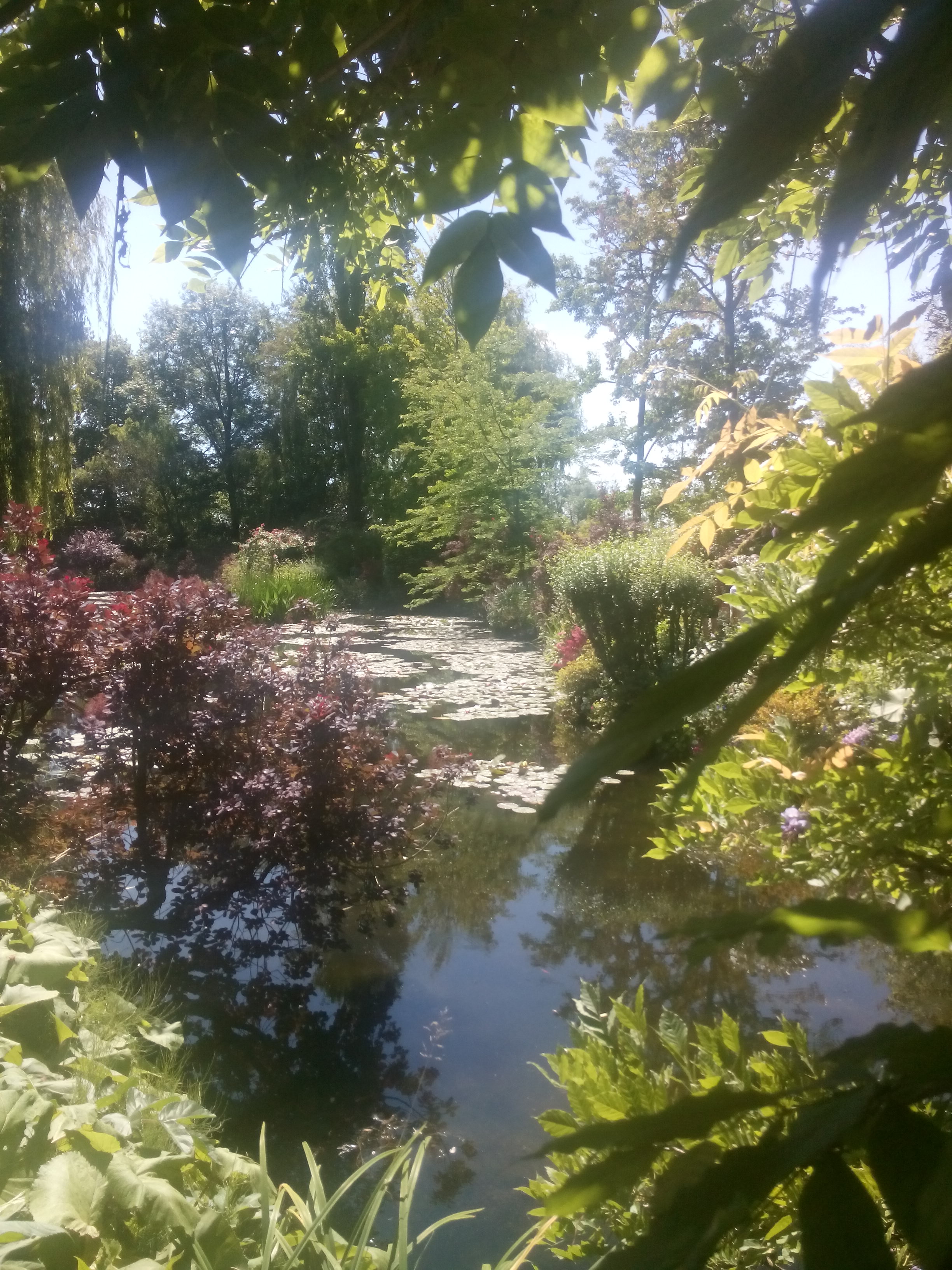
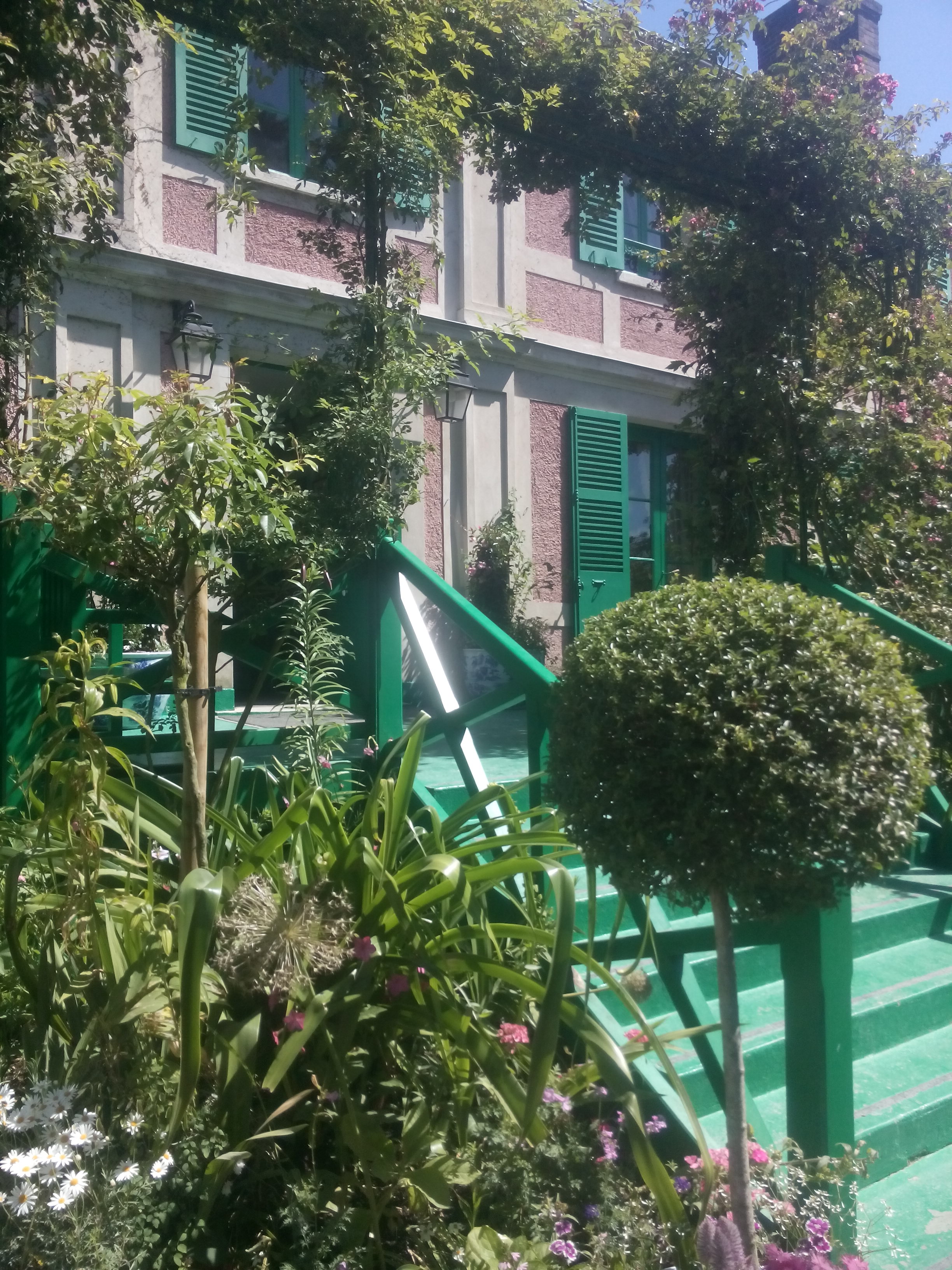
Today, a trip to Vernon and Giverny. Claude Monet’s house and gardens in Giverny are Normandy’s second-most visited tourist attraction, after Mont St-Michel. Bought by him in 1883, he lived there until his death in 1926, building up layers upon layers of beautiful colours through flowers in the garden, and painting rooms in the house excellent shades of blue and yellow to match the moods of the rooms. The gardens have been captured hundreds of times in his paintings, most memorably in his many his water-lily paintings.
To get to Giverny, there are a number of choices. Giverny is a gorgeous village in its own right and shares a railway station with its neighbouring village, Vernon, so whilst you can drive directly to Giverny, you can take the train to Vernon-Giverny, about an hour either way from Paris or Rouen, which many people do, including me.
Then there is a shuttle bus from the station to Giverny. Excellent for those who need it. Enterprisingly, the bar across the street from the station rents out bikes. Had the weather not been so lovely, I would have happily taken this option, as the option for the slightly more determined is to walk 5 km from the railway station to Giverny. Being an awkward so-and-so, I went for this. The suggested bike or walking route is directly through Vernon and then turning on to what has charmingly been translated as the ‘ancient rail road’. It is the track bed of the first railway that ran to Vernon, established in 1836. It is now a lovely, well-maintained and flat track, taking you to Giverny but keeping you off the road. The sides of the walk are a mass of wild flowers and grasses, and are a relaxing way to arrive in Giverny.
By 10.30 am, Giverny was already a collection of tourists of many stripes. I spotted a couple of river cruise ships on the banks of the Seine on the way through Vernon and their guests were all present and correct, and had to be back on the bus by noon, which didn’t give them a huge amount of time. There were several school trips, some students more understanding than others as to why they were visiting some flowers on a sunny day and not playing out. Just down the road, however, at the Impressionists Museum, a large area of grassland has been kept as meadow (which Monet painted a few times, including a gorgeous painting of his wife and first son), and they were given free reign in the afternoon.
I started at Giverny. My photos barely do the place justice, but I hope they give you an idea:
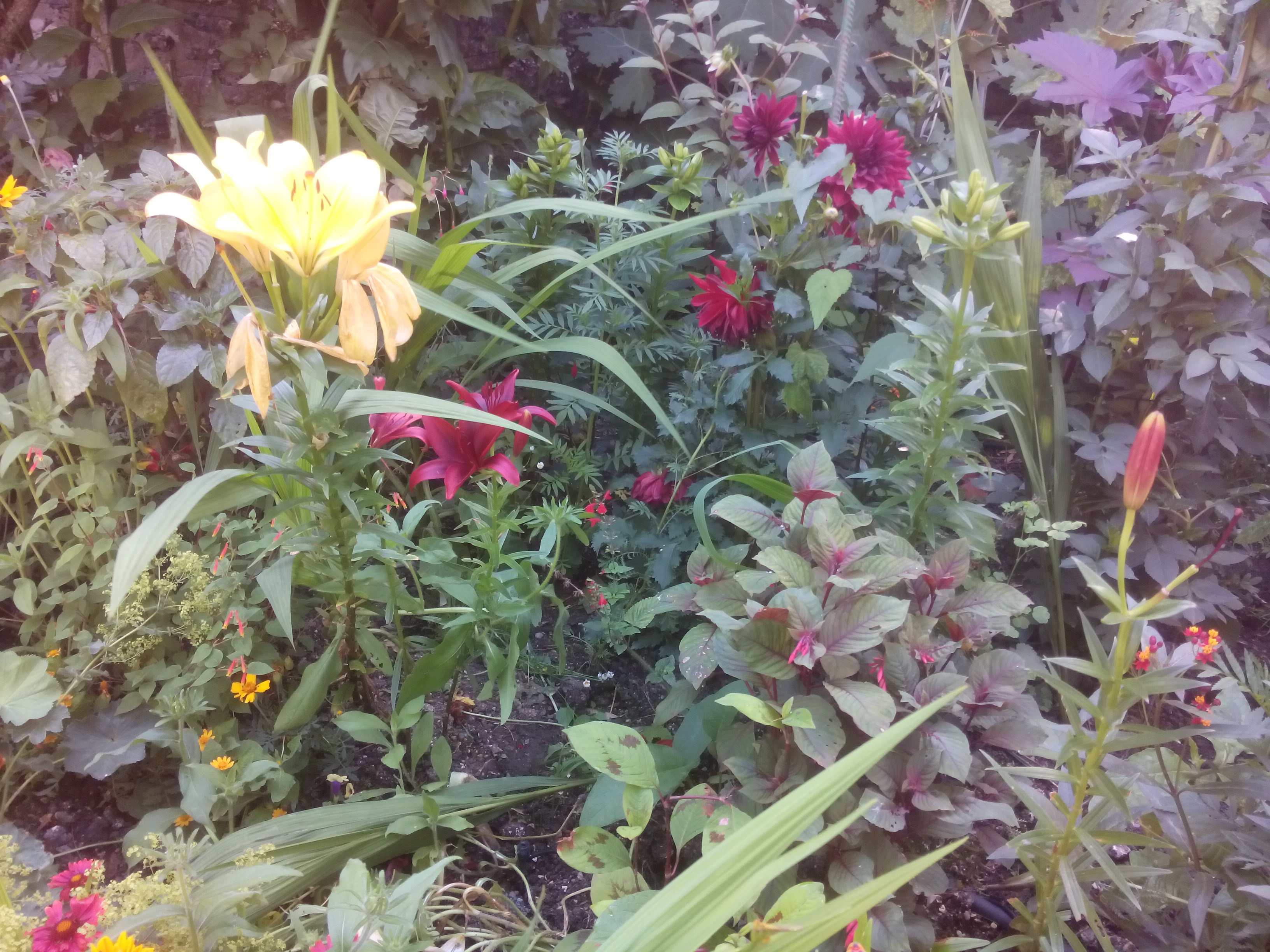
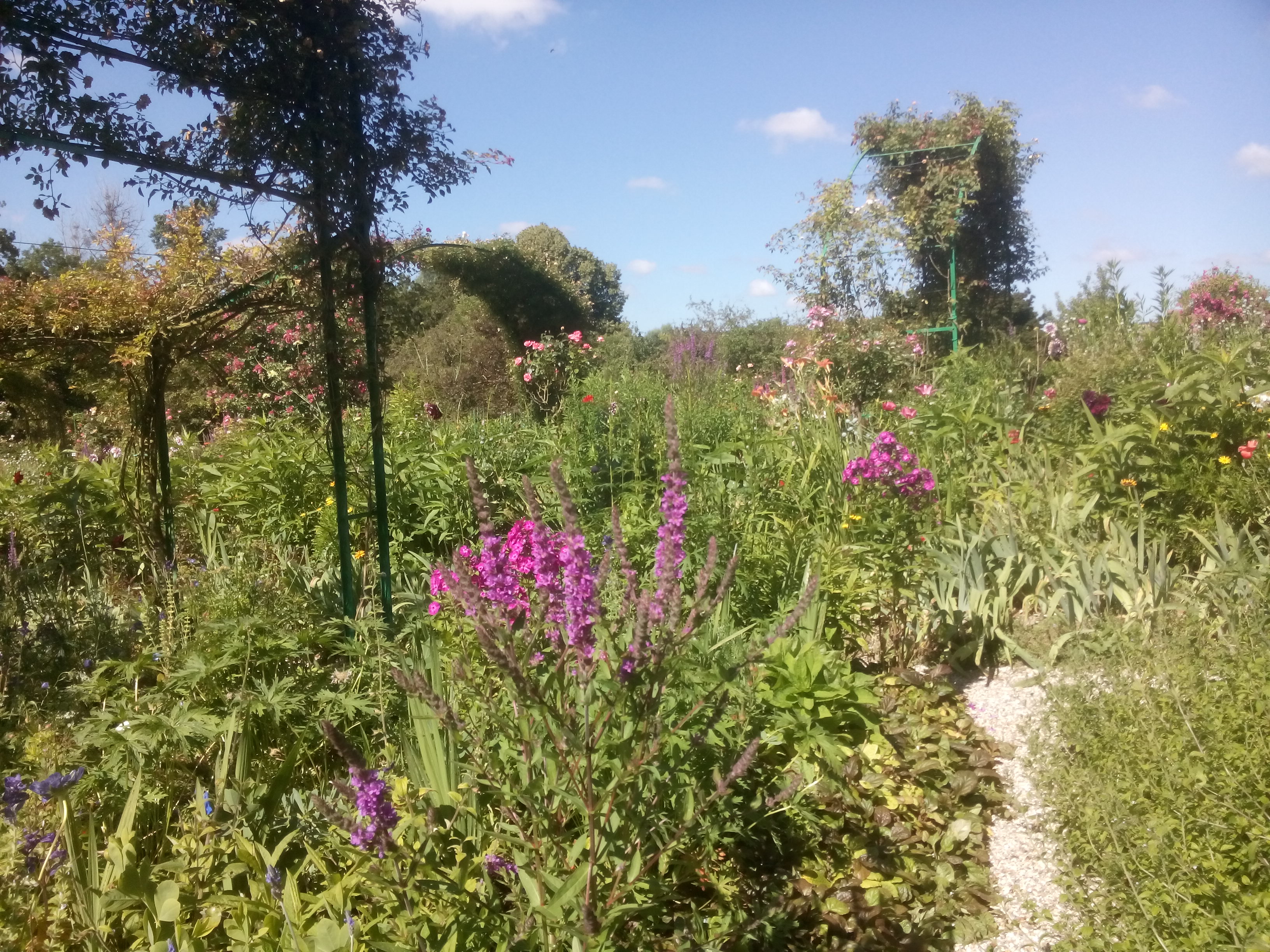
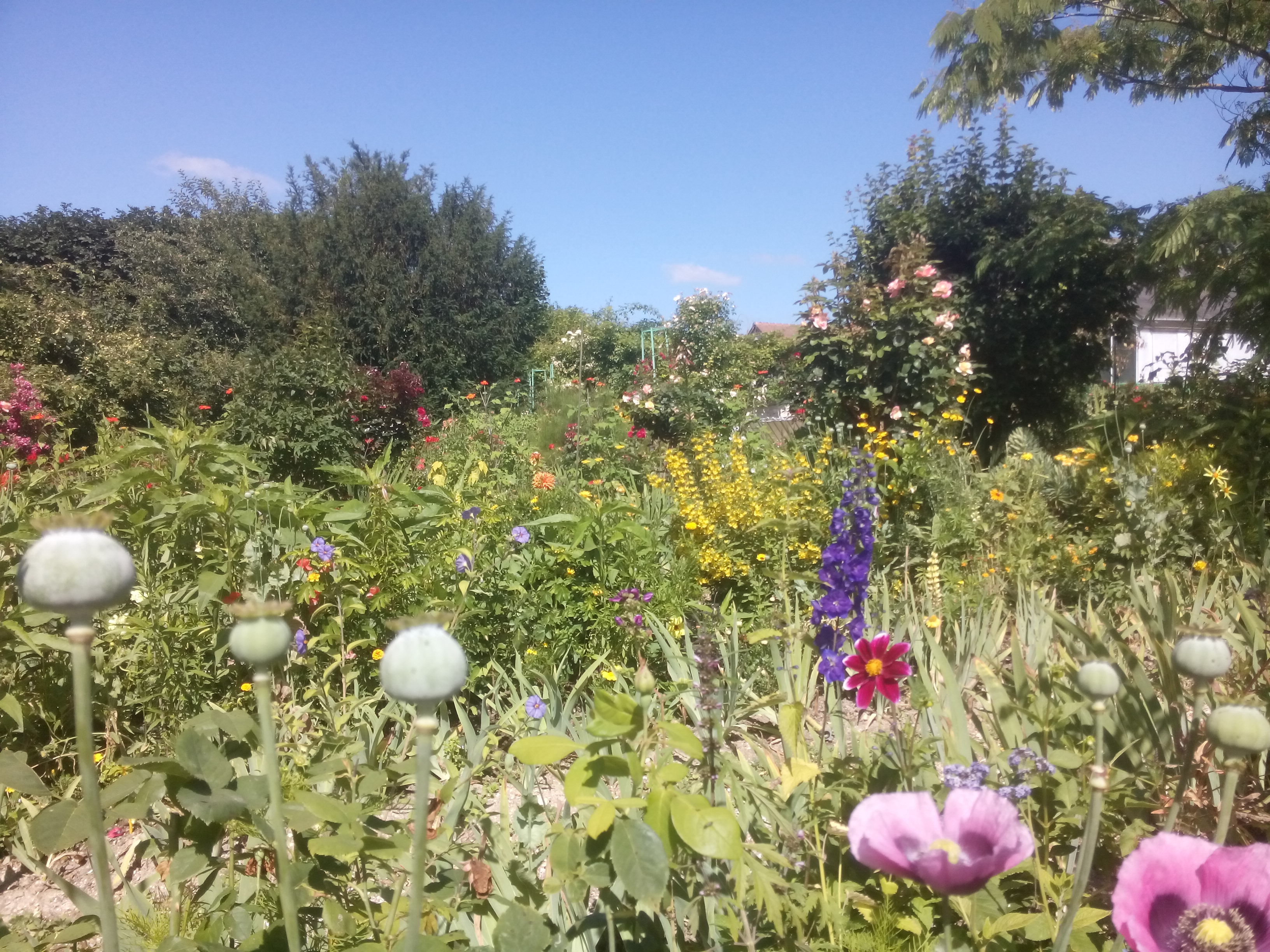
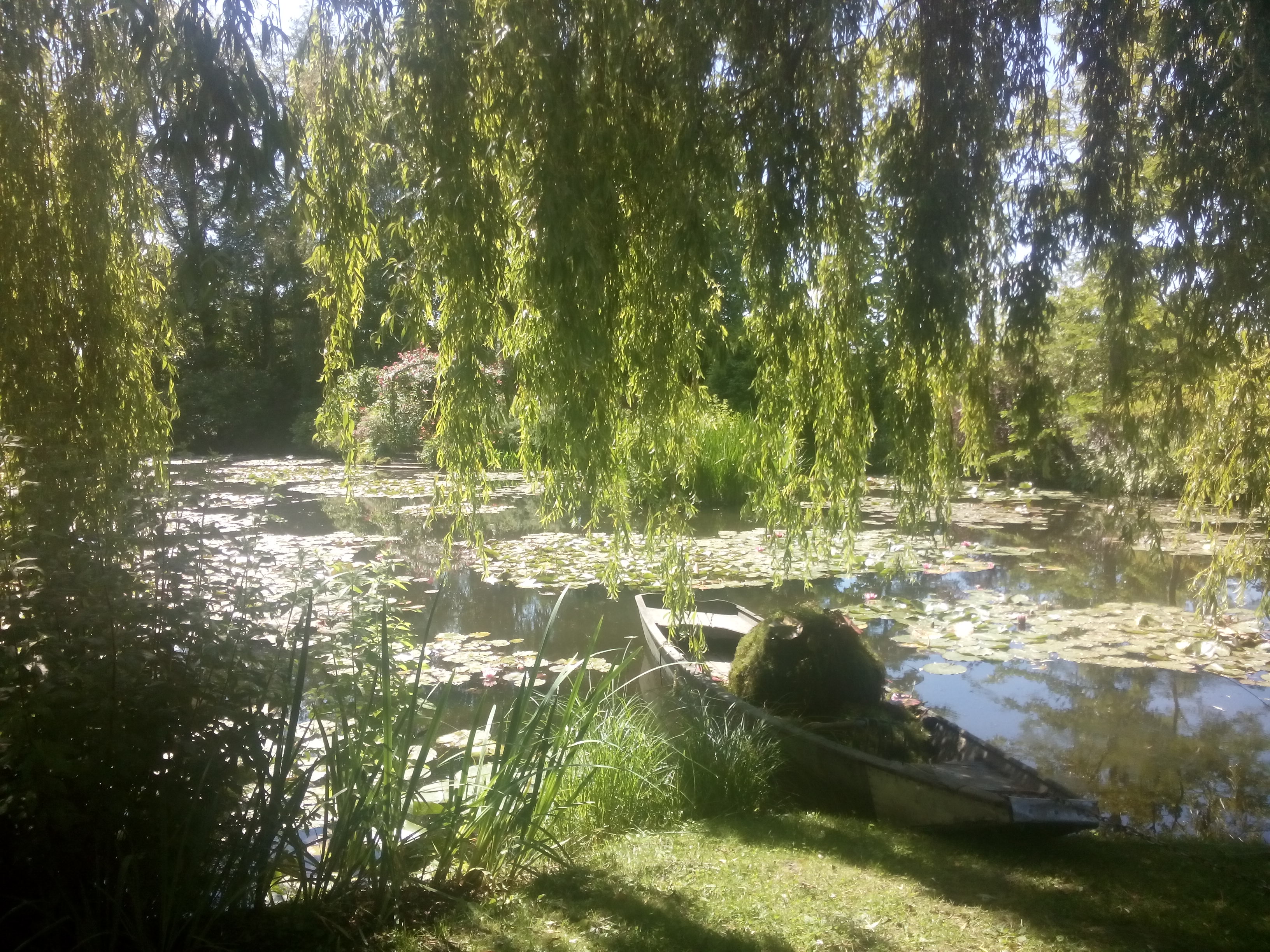
I then went to the Impressionists Museum, which started life as the Museum of American Art in Giverny. One of the reasons Monet did well in his career, and the reason that his house and gardens survive today, is due in large part to American love of Impressionist art. Monet was able to sell his paintings during his lifetime in America, at a time when other artists were really struggling to make a living, because American art collectors could not give two-hoots what the stuffy Salon said was acceptable art or not. American art enthusiasts started to visit Monet and Giverny within a couple of years of Monet moving there, setting up their own studios and investing the in village – at least two hotels still exist in Giverny due to American investment in the 19th Century.
Monet’s house and gardens were inherited by his youngest son, Michel. His son did not move back to Giverny and he found himself with a significant art inheritance – he had inherited not only the house and gardens, but his father’s entire art collection of hundreds of canvasses. Michel left the entire collection and inheritance, including the house and gardens, to the French national art collection on his death in 1966. The house and gardens by then were run-down and near destitute, having been left since 1947. The French Government decided to invest in it, given the significant French as well as international interest in Monet’s artwork, particularly since being put in to the national collection, meriting its own museum in Paris, the Orangerie. The former curator of the Palace of Versailles was appointed to bring Monet’s house and gardens back in to working order and open as a site of interest to the art and horticultural worlds. The most significant investors in this venture came, again, from America.
So, thanks to Monet’s family, the insight of the French government and the American dollar for giving so many people the opportunity to see a wonderful sight. It is so well maintained, there is a gardener specifically, and only, to maintain the water lilies. The gardens are a celebration of flowers and colours – not overly ordered or neat, but waves of colour and happy insects. It was a privilege great to hang back a little and listen to people’s reactions when they realised at the water-lily pond that they were inside what was often already their favourite painting.
Of further interest are some graves and memorials in Giverny church’s cemetary. Claude Monet and many members of his family, including Michel, are buried there, with a suitably colourful and disordered grave:
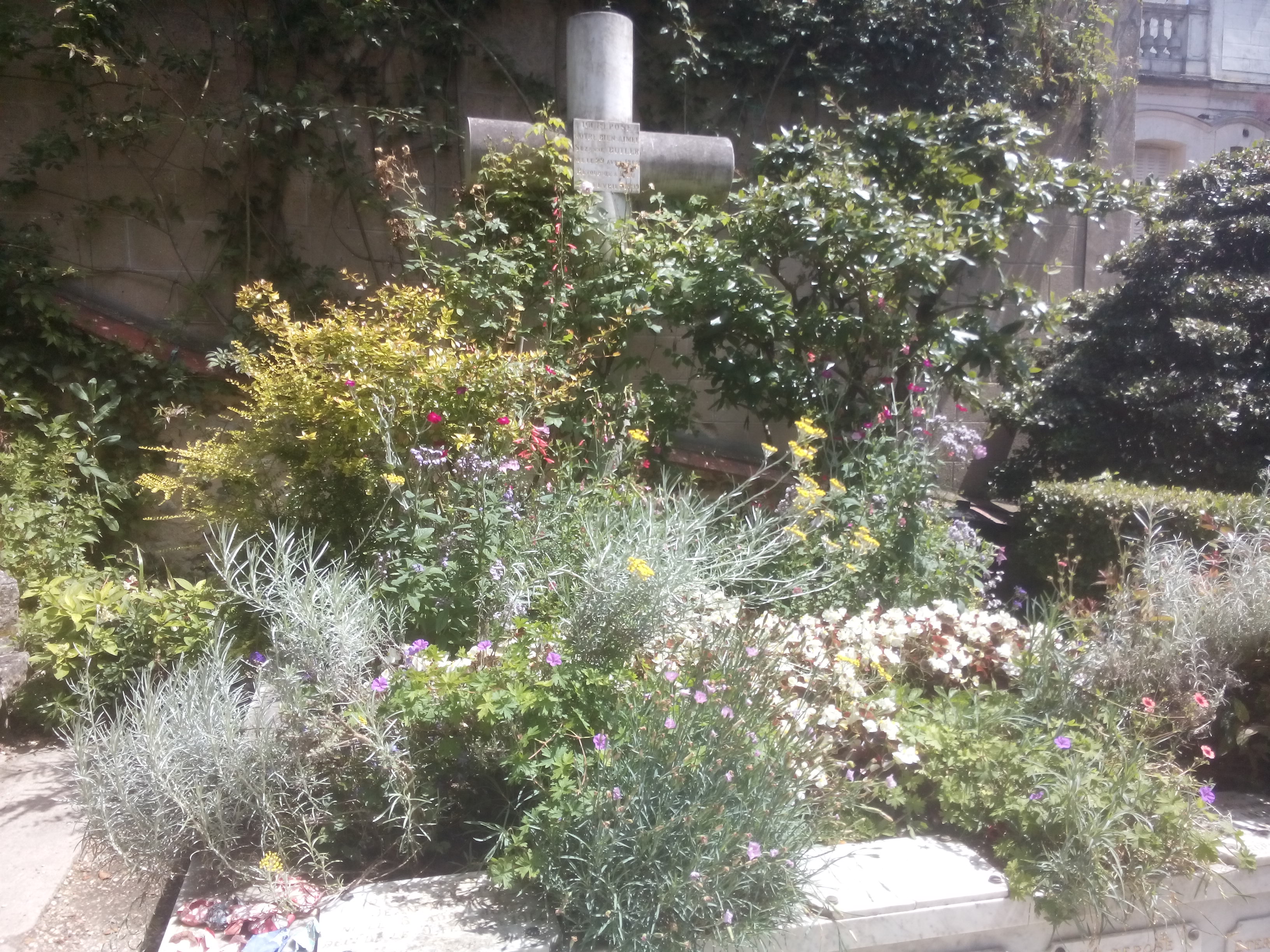
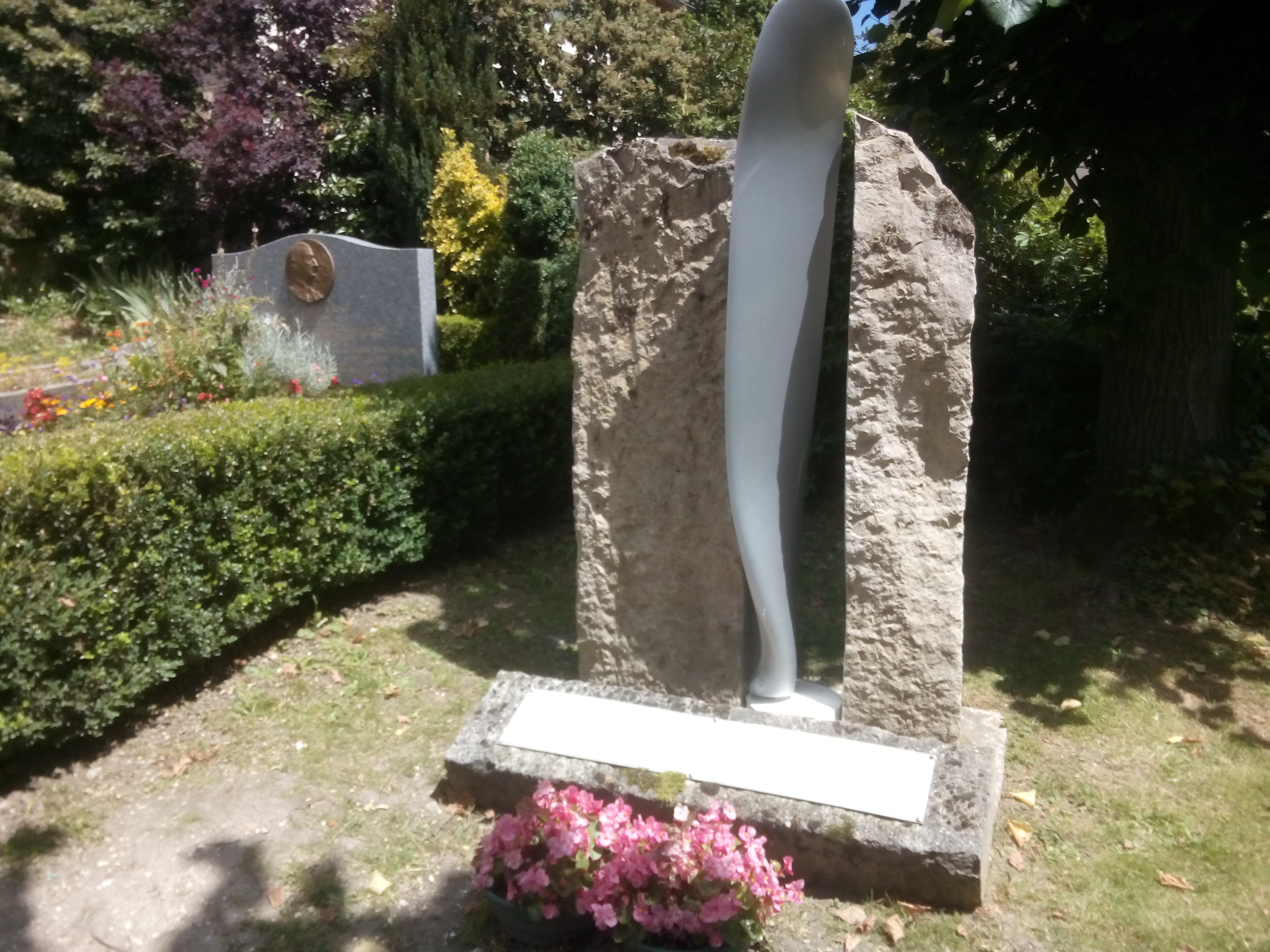
The grave to the right of the Monet family belongs to Gerald Van Der Kemp and his wife, Florence, those first installed directors of Monet’s House and Gardens who worked so incredibly hard to restore them. This is in the background of the second photo, to the left. In the foreground is a propeller blade of a Lancaster bomber, which was shot down nearby during World War II, killing the 7 British airmen on board. They are all buried in the churchyard in a grave maintained by the Commonwealth War Graves. The propeller is kept as a memorial and a thank you to the airman, who were part of the eventual liberation of that part of France. Elsewhere in the churchyard, there is a 2000 year-old burial chamber, reputed to have skin-disease healing properties, recycled in to a Christian burial chamber, vandalised, but then found and restored by volunteers in 2015.
I pottered back to the station after all of this, remembering to spend some money in the local economy (making me look all altruistic and awesome when really I was just buying a picnic for the train home).
Tomorrow, Ypres. Or Ieper. Or Wipers. What you will.
 All the punks are pushing fifty years and are hardly feared