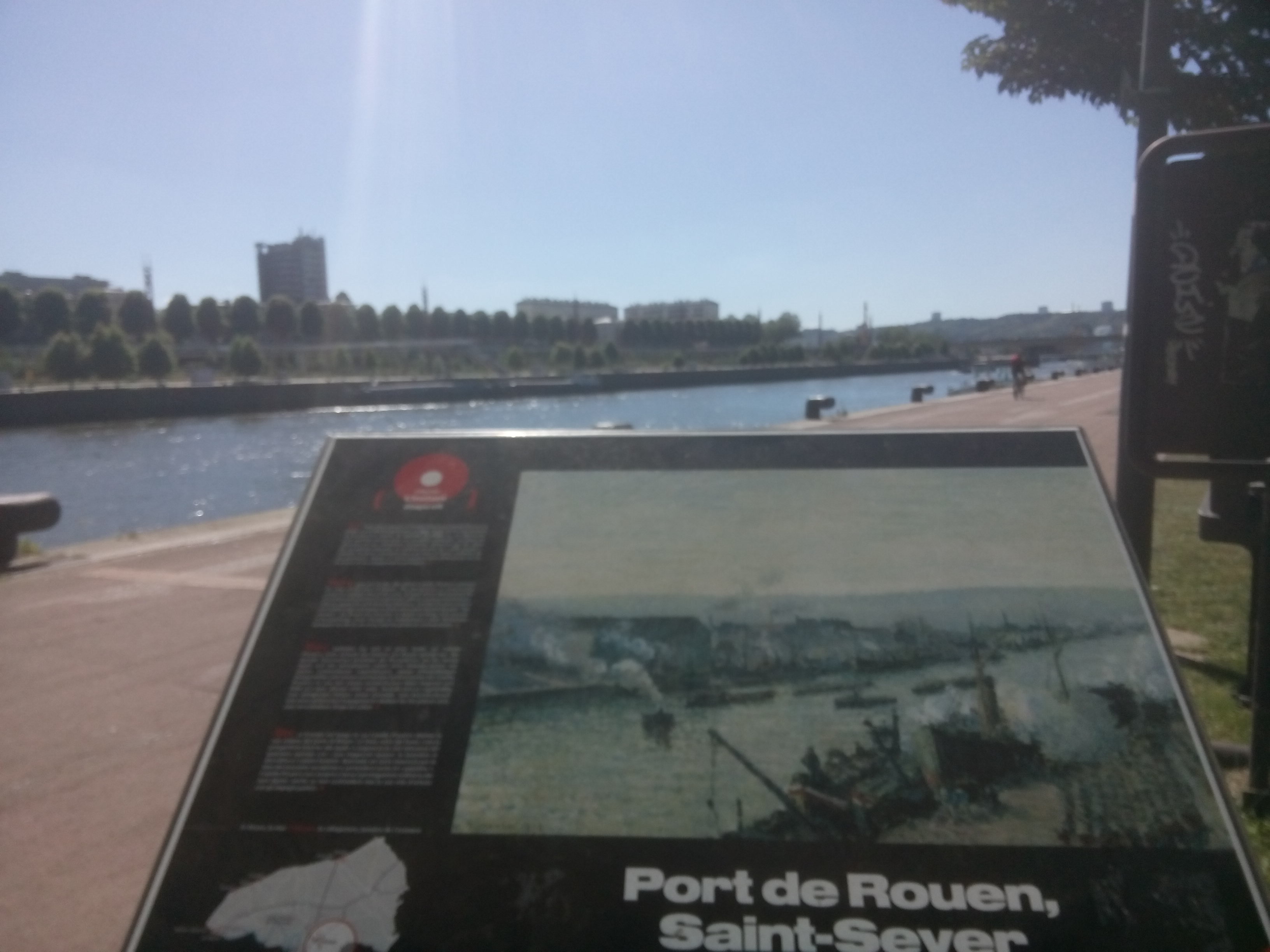
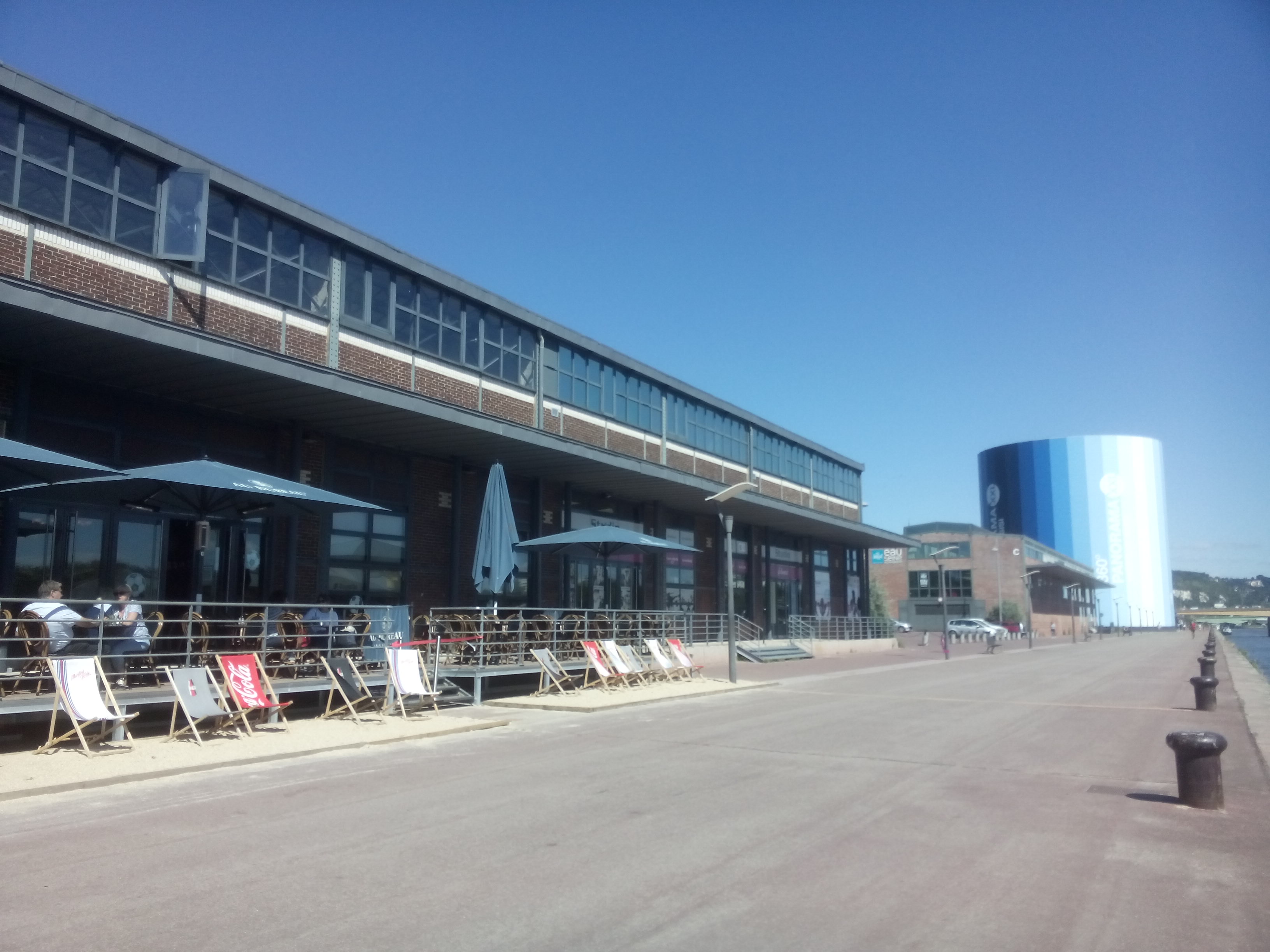
Rouen is a city with a proud maritime history. Maritime, even though it is 120 km in-land. Like Hull, it is an important river/estuary port with a long history of siege, drunken sailors and war-time bombardment.
Both cities have maritime museums and today, I went to Rouen’s. It was a lovely 45 minute bimble through town and along the bank of the river Seine to get there, and for 5 Euros, you too can enter an old warehouse with a (genuinely) interesting mix of interpretive panels. Rouen’s docks are still one of the most important in France – in very recent years, the docks at Le Havre, Rouen and Paris have formed a conglomerate, as the river Seine joins them all together; cereals, raw materials and other goods are taken by barge down the Seine to Paris, or steered by ship around the corner to Dieppe and Rotterdam to go throughout Europe. One of the main parts of Rouen’s museum was about the down-turn and eventual closure of part of the docks for ship maintenance, reminding me a lot of ship-building and maintenance cities in Britain that have faced similar fates. Rouen’s closed in the 1980s when the contracts moved to Dieppe. Logistically, this makes sense, as Dieppe is a sea port and ships being repaired in Rouen were all sea-faring vessels; steering or towing them 120 km down the Seine was no mean feat. The 311 workers affected held a sit-in protest lasting 117 days, however, that particular part of the docks was no longer viable. The goods-handling part is still thriving and there was no reference to massive (Thatcher-style without Thatcher to blame) lay-offs. Clearly there is a lot of close feeling about it, and reminds me of Hull for the lost industries connected with the river.
It is interesting walking along the particular part of the Seine where the ship-maintenance dock used to be, and I think the warehouse that now holds the museum was part of it. Back towards the centre of Rouen are the docks that were used for centuries, up until the Second World War, for small goods and boats, with the river-front buildings handsome structures with stone carvings celebrating the goods imported. Only one such building now still exists, which was pointed out to my cousin and to me when we were staying here a few years ago (it was a lovely bookshop at the time – now it is a local bar for local people). The rest of the row is post-war non-descript, but highly functional, accommodation structures. The museum covered this in part, and this felt familiar to an adopted Hullensian – unsurprisingly, Rouen was heavily bombed in the first part of the Second World War. The dock workers also blew up one of the key bridges and sabotaged some buildings in an attempt at the start of the war to push back the advancing German army. However, as the artillery gouges in the Palais de Justice in the city centre testify, Rouen was an occupied city until its liberation in 1944 and the dock workers were required to work for the German army. There was a strong branch of the French Resistance in Rouen and I start to see why. The part about a city being bombed to bits and looking at post-war architecture feels like a shared part of history. Having been to the museum today, and also to museums like the Resistance Museum in Amsterdam and an exhibition on the rise and resistance against Fascism and nationalism in Northern Italy, I find myself guilty and grateful for never having experienced occupation or oppression. I cannot even start to fathom it or the onerous feeling that comes with the concept.
On a flippant and final point of comparison, both museums have whale skeletons.
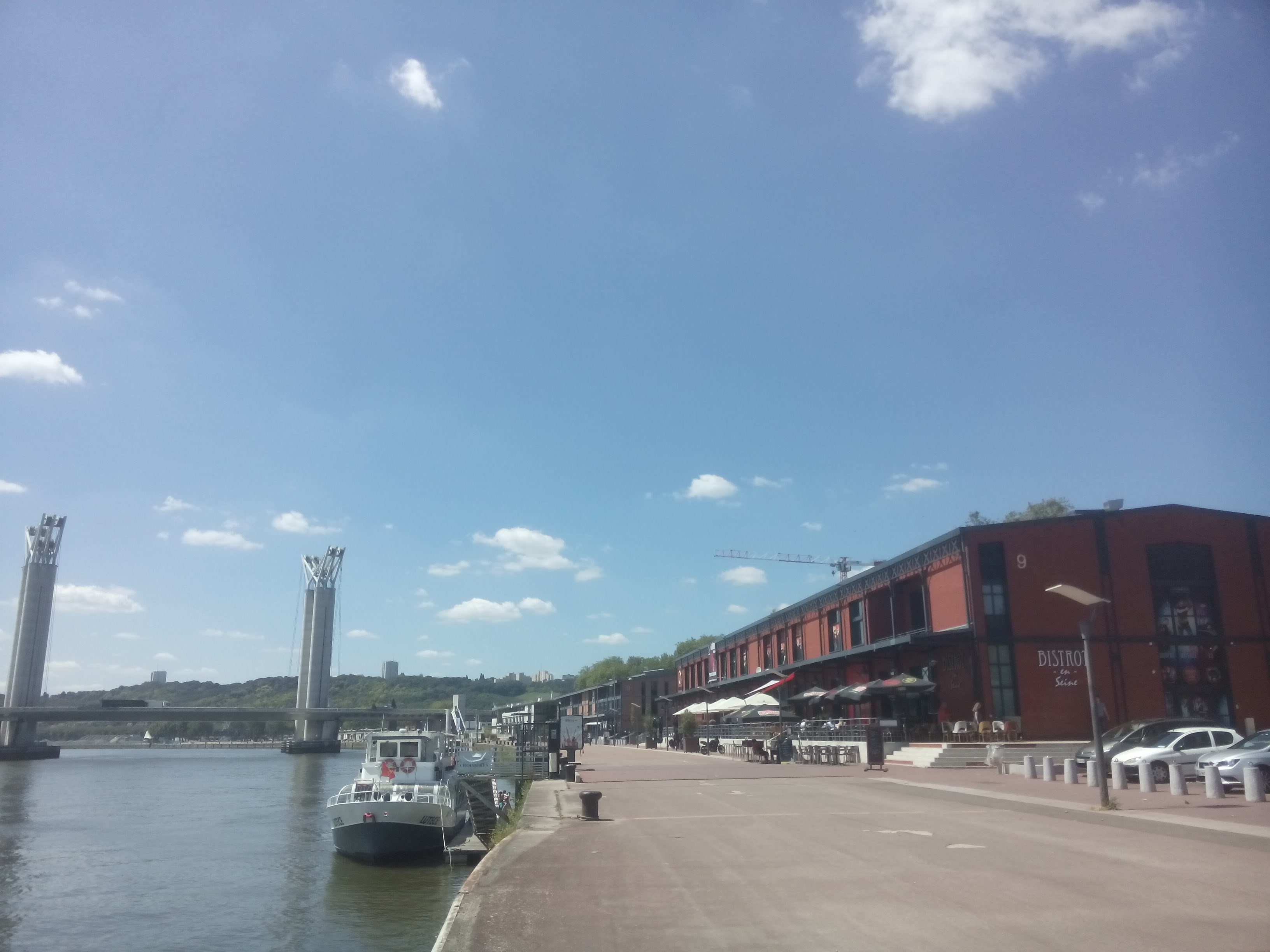
The compare and contrast I’m doing to Hull is not unexpected. In the past four days, I have run twice and these are the first two proper running sessions I’ve done since completing the half-marathon on Sunday 11 June 2018. I make a conscious effort to keep my ego in check, but I am really pleased with completing a half-marathon, a first for me, made much easier by the most amazing cheering squad on Princes Avenue, and by the thought of conveniently lame (said with love) colleague Lee Bond pony-ing up some sponsorship to my fellow runners for the hospital charity. A few hours after this, I was sitting on a train, realising that I would be leaving Hull for the longest stretch of time since I was last gadding about Europe as a language student, which was 18 years ago (bloody hell). Like so many people before me, my first view of coming in to Hull was sitting on a train, seeing the Humber Bridge in the distance (20 years ago). I made sure I watched the Humber Bridge coming out of Hull this time, as it would be 12 weeks until I saw it again. The third photo above is the equivalent of Rouen’s Humber Bridge, as a piece of iconic bridge-building. Utility-wise, it is different to the Humber Bridge – rather than being a tall suspension bridge to enable river traffic, it is the most funky platform-moving bridge that I’ve seen since the Transporter Bridge in Middlesbrough (or M’Bro to those in the know).
In the meantime, it’s Friday night, so that means – reading another book on cycling. Seriously, I’m well in to books about professional cycling at the moment. I had already read David Millar’s first book and Ned Boulting’s second book before this trip. I’ve now read Chris Boardman’s autobiography and I’ve just finished David Millar’s second book, which is an absolute delight of professional-level use of swear words. I’m now reading Jens Voigt’s book. I’d highly recommend them all.
 All the punks are pushing fifty years and are hardly feared